

BBQ Rub vs Seasoning Salt for Grilling
Last Updated: October 25, 2026
Quick Summary
BBQ rub vs seasoning salt comes down to texture and salt content: BBQ rubs are coarse blends with balanced salt, sugar, herbs, and spices that create a flavorful crust, while seasoning salts are fine-ground and salt-forward, working better as finishing touches. Every rub functions as a seasoning, but not every seasoning works as a rub.
- Apply balanced BBQ rubs 20 minutes to 2 hours before cooking, or overnight refrigerated, for best bark formation.
- Use about 1 tablespoon of dry rub per pound of meat, pressing it firmly onto the surface for color coverage.
- BBQ rubs typically contain 20-30% salt by weight, while seasoning salts contain 40-50% salt, making them saltier and sharper.
- Substitute seasoning salt for rub at half the amount due to finer texture and higher sodium content.
- Dry rubs work best for smoking and low-and-slow grilling; seasoning salt suits quick grilling and delicate proteins.
Table of Contents
- BBQ Rub vs Seasoning Salt: Key Differences
- Is Barbecue Seasoning the Same as Barbecue Rub?
- How Much Dry Rub per Pound of Meat
- Seasoning Salt Substitute for BBQ Rub
- Dry Rub vs Wet Rub for Ribs
- When to Apply Rub or Seasoning Before Cooking
- Choosing Your Seasoning for Your Next Cook
- Frequently Asked Questions
BBQ Rub vs Seasoning Salt: Key Differences
The difference between a BBQ rub and seasoning salt isn't just semantics, it shapes how your meat tastes and how the flavors develop on the grill.
A BBQ rub is a coarse, granular blend designed to create a flavorful crust on meat during cooking. A seasoning salt, by contrast, is typically finer and more versatile, working as an all-purpose coating or table seasoning.
Texture and Grind Size
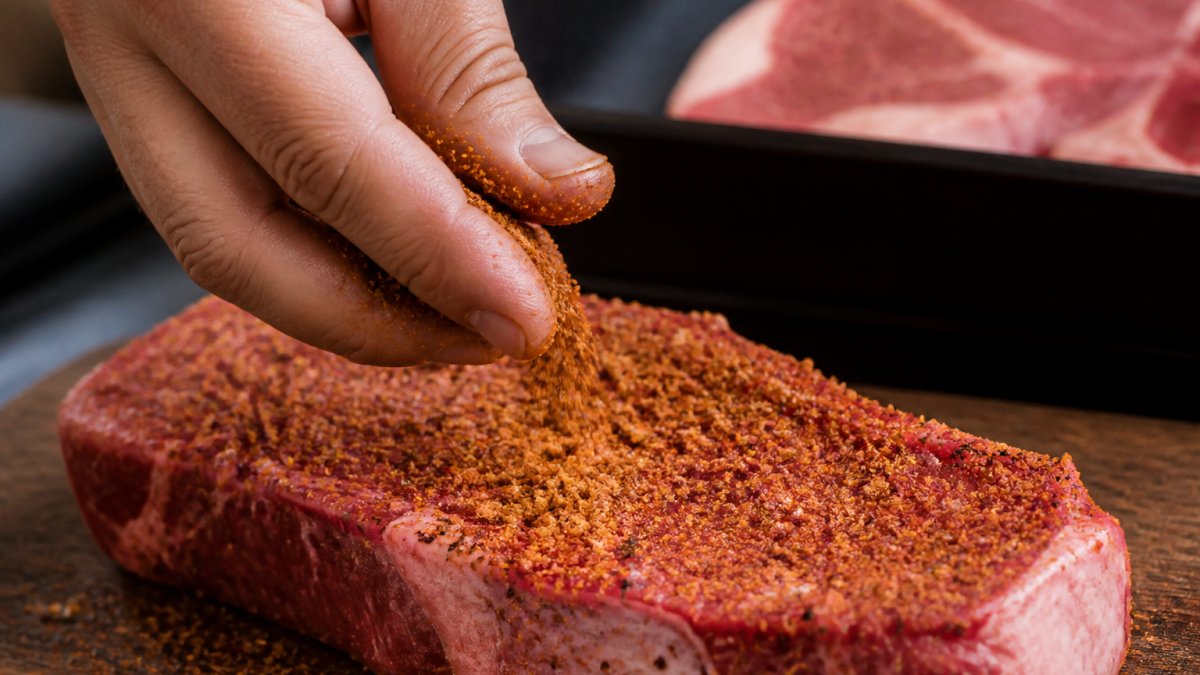
The most obvious difference between BBQ rub and seasoning salt lies in particle size. A BBQ rub features a coarse grind that you can feel between your fingers, larger granules of salt, sugar, and spices that cling to meat and form a crust as heat hits them.
Why does this matter? Coarse texture stays on the surface longer during cooking, creating what pitmasters call "the bark", that flavorful, caramelized exterior. Fine-ground seasoning salt penetrates faster and works better as a finishing touch or table condiment. If you use a fine seasoning salt as a rub, it'll absorb into the meat quickly and won't build that textured crust.
Ingredient Composition
BBQ rubs typically combine four main elements: salt, sugar, herbs, and spices. Learn how to balance salt and sugar in BBQ rubs for the best flavor development. The salt provides base seasoning, sugar caramelizes under heat to create color and depth, and herbs and spices deliver the flavor profile. The ratio matters, most rubs lean toward a balanced mix of all four.
Seasoning salt, by definition, is salt-based with added seasonings. It contains a higher concentration of sodium chloride, with herbs and spices as secondary players. This makes it sharper and more direct in flavor. A seasoning salt might be 40-50% salt by weight, while a BBQ rub typically sits closer to 20-30% salt, with the remaining volume split between sugar, herbs, and spices.
This composition difference explains why you can't always swap them 1:1. Using seasoning salt where a rub belongs means you're adding more sodium and less complexity. The reverse problem, using a rub as a finishing salt, leaves you with undissolved granules and an uneven flavor.
Is Barbecue Seasoning the Same as Barbecue Rub?
The terms "barbecue seasoning" and "barbecue rub" are often used interchangeably, but they describe slightly different applications. A barbecue rub is a specific type of dry seasoning formulated for rubbing onto meat before cooking.
In practice, most people use these terms to mean the same thing. When a recipe calls for "barbecue seasoning," it's typically referring to a dry rub. The distinction matters mainly when you're reading ingredient labels or deciding how to apply a blend. If the label emphasizes coarse texture and suggests pressing it onto meat, you're holding a rub.
How Much Dry Rub per Pound of Meat
The standard guideline is about 1 tablespoon of dry rub per pound of meat, though this varies by cut and your taste preference. For thicker cuts like brisket or ribs, you can go up to 1.5 tablespoons per pound. Thinner cuts like chicken breast or fish need less, about 0.5 to 1 tablespoon per pound prevents over-salting.
The key is pressing the rub firmly onto the meat so it adheres to the surface. A light dusting won't create that flavorful crust. Many pitmasters use what they call the "generous application", enough rub that you see color coverage on every visible surface.
Seasoning Salt Substitute for BBQ Rub
You can substitute seasoning salt for a BBQ rub in a pinch, but expect different results. Since seasoning salt is finer and saltier, use about half the amount you'd use of a rub.
The trade-off: you'll lose the textured crust and get a more direct, salty flavor profile. Seasoning salt works better on thinner, faster-cooking proteins like chicken breasts or fish fillets.
If you're managing sodium intake, seasoning salt often contains more sodium per tablespoon than a balanced BBQ rub. Reading the label helps, look for blends labeled "low sodium" or "light salt" to keep your intake in check.
Dry Rub vs Wet Rub for Ribs
A dry rub creates a flavorful, caramelized bark on ribs.
For ribs, dry rubs are the traditional choice. They build that signature crust and allow smoke to penetrate the meat. Wet rubs work too, especially if you're wrapping ribs or keeping them in a humid smoker environment.
The practical difference: dry rubs require you to apply them right before cooking so they stick. Wet rubs can be applied earlier, even the night before, because the paste doesn't dry out.
When to Apply Rub or Seasoning Before Cooking
Timing is where rubs and seasoning salts diverge most in practice, and it's the part most guides skip. The clock you're racing isn't about flavor preference, it's about how fast salt moves into meat and how much surface moisture you want to preserve for crust formation.
What Dry Brining Actually Does
When you apply a salt-containing rub, the salt first draws moisture to the surface through osmosis. That moisture dissolves the salt and forms a concentrated brine. Over the next period, the brine is reabsorbed into the meat, carrying salt and dissolved flavor compounds with it.
The practical consequence: the longer the rub sits, the deeper the salt penetrates and the more evenly seasoned the interior becomes. But there's a trade-off. The same moisture draw that carries salt inward also pulls moisture to the surface, and if you apply too early without refrigeration, that surface moisture becomes a food-safety risk and a barrier to browning.
Timing by Blend Type
- Balanced BBQ rubs (salt third or later on the label): Apply 20 minutes to 2 hours before cooking for a surface crust, or up to overnight in the refrigerator for deeper seasoning. The coarse texture and sugar content need time on the surface to build bark, but they don't overwhelm the meat with sodium if they sit longer.
- Salt-forward rubs and seasoning salts (salt first on the label): Apply closer to cook time, roughly 10 to 30 minutes before, unless you're deliberately dry brining. Because these blends deliver more sodium per tablespoon, extended contact can over-season the interior. If you want the dry-brine effect with a salt-forward blend, use less of it and treat it as your salt step, not an add-on.
- Salt-free blends: Timing is flexible. Apply whenever you like for flavor; add salt separately on your own schedule.
How Timing Affects Crust and Bark
Crust, the bark pitmasters chase, forms when surface moisture evaporates and the sugars and proteins on the surface caramelize and brown. A rub applied too early and left uncovered can draw so much moisture to the surface that the meat steams instead of crusts. A rub applied too late doesn't have time to adhere or dissolve into the surface.
Seasoning salt, being finer, dissolves faster and doesn't build the same textured crust. That's why it's better suited to quick cooks and finishing, where you want even seasoning rather than a bark.
The Refrigerator Rest
For overnight applications, set the rubbed meat on a wire rack over a sheet pan and refrigerate uncovered. The airflow dries the surface, a step that promotes better browning, while the salt penetrates. Covering the meat traps moisture and undermines the crust.
USDA guidance on safe meat handling recommends keeping rubbed meat refrigerated if you're applying it more than 2 hours before cooking. Watch out: if you apply rub and then leave meat at room temperature for extended periods, you risk bacterial growth. Keep it cold until you're ready to cook.
A Simple Timing Rule
Match the timing to the salt content, not the label. Get practical advice on how to prevent BBQ rub from burning during your cook. Salt-forward blends go on late or in smaller amounts for a dry brine; balanced rubs can go on early for deeper seasoning and better bark. When in doubt, apply closer to cook time and taste the result, you can always adjust the next cook.
Choosing Your Seasoning for Your Next Cook
The choice between rub and seasoning salt comes down to your cooking method, the cut of meat, and your flavor goals. Explore the best BBQ rubs for smoking to find the right blend for your next cook.
For quick grilling or finishing a dish, seasoning salt works better. It's faster to apply, dissolves evenly, and adds a sharp flavor punch without overwhelming delicate proteins.
Consider your sodium goals too. If you're managing intake, look for low-sodium blends that don't sacrifice flavor.
For your next cook, match the seasoning to the protein and method:
| Meat | Cooking Method | Best Choice | Why |
|---|---|---|---|
| Ribs | Smoking | BBQ Rub | Creates bark, handles long cook |
| Brisket | Smoking | BBQ Rub | Coarse texture withstands heat |
| Chicken Breast | Quick Grilling | Seasoning Salt | Fine texture, faster penetration |
| Fish Fillets | Pan Sear | Seasoning Salt | Delicate protein, quick cook |
| Steaks | Hot Grill | BBQ Rub | Bold crust, medium cook time |
Start with the right seasoning, apply it with intention, and you'll taste the difference. Whether you choose rub or seasoning salt, the key is understanding how each one works and matching it to your cook.
Frequently Asked Questions
What is the main difference between BBQ rub and seasoning salt?
BBQ rub is a coarse-textured blend of salt, sugar, herbs, and spices designed to create a flavorful crust on meat during grilling or smoking. Seasoning salt is a finer, salt-based blend meant for general seasoning of any food. BBQ rubs coat the surface and are applied before cooking, while seasoning salt is more versatile and can be used before, during, or after cooking. The texture and ingredient ratio make them suited for different purposes.
Can I use seasoning salt as a substitute for BBQ rub?
You can use seasoning salt instead of BBQ rub, but the results will differ. Seasoning salt is finer and salt-forward, so it won't create the same crust or bold flavor profile. If substituting, use less seasoning salt than you would rub, as it's more concentrated. For best results, look for a low-sodium seasoning salt option like Outlaws Season All, which won 3rd Place in Scovie Awards 2024 and 3rd Place in Scovie Awards 2025 and works on proteins, or stick with a dedicated BBQ rub for authentic grilling flavor.
How much dry rub per pound of meat should I use?
Apply approximately 1 to 1.5 tablespoons of dry rub per pound of meat, pressing it firmly onto all surfaces. The exact amount depends on your taste preference and the meat's surface area. For thicker cuts like steaks or brisket, use closer to 1.5 tablespoons per pound. Refrigerate the rubbed meat for 20 minutes to allow flavors to penetrate before grilling, smoking, or baking. More time allows deeper flavor absorption.
Is dry rub or wet rub better for ribs?
Dry rub is ideal for ribs because it creates a flavorful, caramelized bark on the surface during smoking or grilling. Wet rub (a paste made by mixing dry rub with oil or liquid) works too but can steam the meat rather than create a crust.
The difference between BBQ rub and seasoning salt shapes everything from flavor to texture to cooking time. Understanding when to use each one elevates your grilling game. Twisted Pepper Co. makes this easier with handcrafted, low-sodium blends designed for real home cooks who want bold flavor without the guesswork. Shop our seasonings and discover how the right rub transforms your next meal into something memorable.
