

How to Prevent BBQ Rub from Burning?
Last Updated: October 24, 2026
Quick Summary
How to prevent bbq rub from burning starts with matching grill temperature to your rub's sugar content: use 225°F to 275°F indirect heat for sugar-forward rubs, 250°F to 300°F for moderate-sugar blends, and 275°F to 325°F for salt-and-herb rubs. Pat meat dry before applying rub, set up a two-zone grill, and move the meat away from direct heat if the surface darkens too quickly.
- Sugar in rubs caramelizes around 320°F to 350°F and turns acrid shortly after, scorching before thick cuts cook through.
- Set up two grill zones with a 50°F to 100°F temperature difference so you can move meat from hot to cool without removing it.
- Apply rub 20 minutes to 2 hours before grilling after patting meat completely dry and pressing seasoning firmly onto the surface.
- Use indirect heat for the entire cook on long-smoking cuts like brisket and ribs, or sear briefly over direct heat then move to cool zone.
- If rub darkens faster than meat cooks, lower temperature 25°F to 50°F, close vents, or move meat farther from heat source.
Table of Contents
- Why BBQ Rub Burns During Cooking
- Best Temperature for Grilling with BBQ Rub
- When to Apply BBQ Rub for Maximum Flavor
- Using Indirect Heat to Prevent Burning
- How to Stop Marinade from Burning on Meat
- How to Get Seasoning to Stick to Chicken
- Troubleshooting Common Rub-Burning Problems
- Grilling Your Next Meal with Confidence
- Frequently Asked Questions
Why BBQ Rub Burns During Cooking
Learning how to prevent bbq rub from burning starts with understanding why it happens: the spices and seasonings in the blend make contact with direct, high heat. The sugars in many rubs caramelize and then scorch. Salt, spices, and oils in the mixture can also char when exposed to flames or extremely hot grill surfaces. This happens faster than the meat underneath cooks through.
Most dry rubs contain sugar, which is the primary culprit. When sugar hits high heat, it browns quickly. Beyond a certain temperature, browning turns to burning. The result is blackened, bitter spices that ruin the flavor you worked to build.
Here's what happens: the rub sits on the meat's surface. Direct heat scorches the rub before the meat's interior reaches the right temperature. You end up with burnt seasoning and undercooked meat, or you have to move the meat away from heat and cook it longer, losing that flavorful crust.
Best Temperature for Grilling with BBQ Rub
The right grill temperature depends less on the meat than on what is in your rub. Sugar is the ingredient that decides your ceiling. Table sugar begins to caramelize around 320°F to 350°F and turns acrid not long after, so a sugar-heavy rub exposed to 400°F direct heat will scorch before a thick cut's interior moves much at all.
Use these targets as starting points, then adjust to your rub:
- Sugar-forward rubs (brown sugar, honey powder, maple): 225°F to 275°F indirect. Keep the surface below the sugar's scorch point and let time do the browning.
- Moderate-sugar rubs (a few tablespoons per batch): 250°F to 300°F indirect, with a short direct sear only at the end if the crust needs color.
- Salt-and-herb rubs with little or no sugar: 275°F to 325°F indirect is safe, and a brief 400°F-plus sear is viable because there is little sugar to burn.
For thick cuts like brisket, pork butt, and ribs, hold 225°F to 250°F. For chicken parts and burgers, 275°F to 300°F works because the meat finishes before the rub has time to scorch.
Set up two zones, not one temperature. On a charcoal grill, bank lit coals on one half and leave the other half empty, with a drip pan on the cool side. On a gas grill, light only the burners on one side. Aim for a 50°F to 100°F difference between zones so you can move meat from hot to cool without pulling it off the grill.
Watch the surface, not just the clock. If the rub darkens faster than the meat is cooking, lower the temperature by 25°F to 50°F, close the vents or burners a notch, or move the meat farther from the heat source.
Uptown BBQ Rub Seasoning 5 oz(page:1) is formulated to perform best at these moderate temperatures, delivering rich flavor without charring.
Match your grill temperature to the sugar content of your rub to prevent burning.
| Rub Type | Temperature Range | Heat Method |
|---|---|---|
| Sugar-forward rubs | 225°F to 275°F | Indirect only |
| Moderate-sugar rubs | 250°F to 300°F | Indirect, brief direct sear at end |
| Salt-and-herb rubs | 275°F to 325°F | Indirect safe, brief 400°F+ sear viable |
| Thick cuts (brisket, ribs, pork butt) | 225°F to 250°F | Indirect |
| Chicken parts and burgers | 275°F to 300°F | Indirect |
| Thin steaks | Hot direct sear | Use sugar-free rub or add sugar after sear |
When to Apply BBQ Rub for Maximum Flavor
Apply your BBQ rub 20 minutes to 2 hours before grilling. This window lets the spices adhere to the meat and start releasing their flavors without drying out the surface.
For best results, pat the meat dry first. Moisture prevents the rub from sticking and creates steam, which can wash away seasoning. Use paper towels to remove surface water.
Apply the rub generously. Press it onto the meat with your fingertips so it bonds to the surface. Don't just sprinkle it on. A thick, even coating creates the bark that protects the meat and builds flavor.
If you're marinating, apply the rub after the marinade sits. Marinate for 2 to 4 hours, then remove the meat from the liquid. Pat it dry completely. Apply a fresh coat of rub and let it sit for 20 minutes before grilling.
For ribs and brisket, many pitmasters apply rub the night before, wrap the meat in plastic, and refrigerate. The rub pulls moisture from the meat, creating a sticky paste that bonds tightly. This is called the "Texas crutch" approach, and it produces exceptional results.
Using Indirect Heat to Prevent Burning
Indirect heat is your best defense against burnt rub. Set up your grill with a hot zone and a cool zone. Place your charcoal or turn on only half your burners on one side.
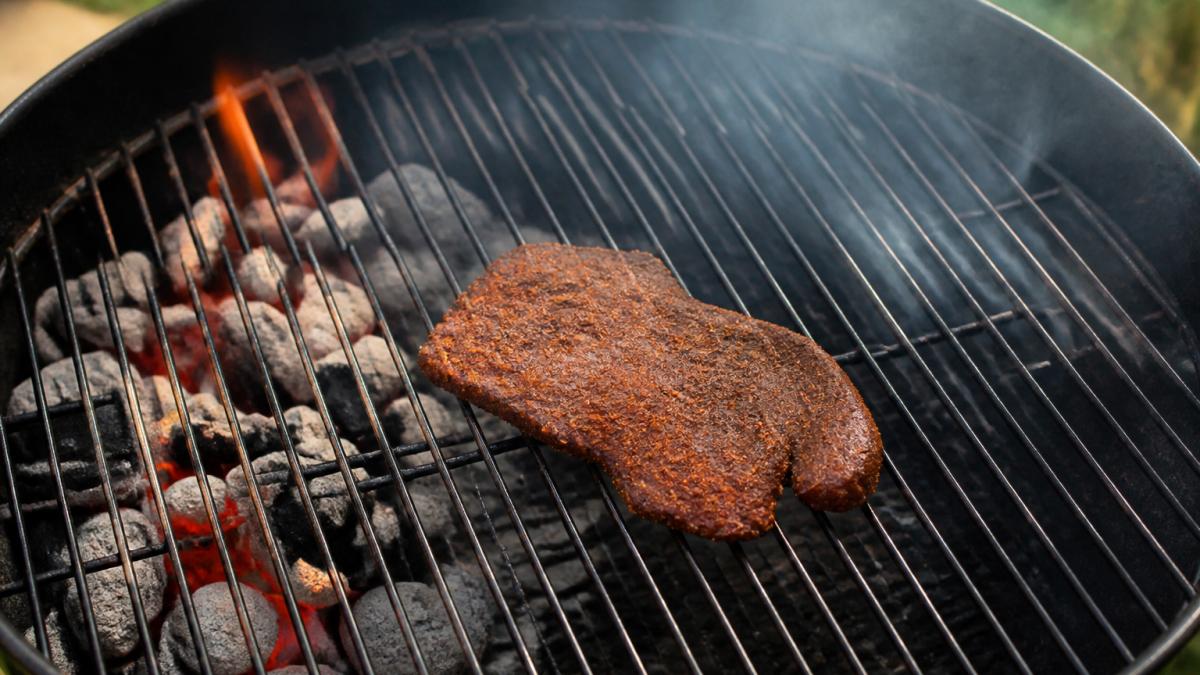
Sear the meat quickly over direct heat if you want a crust. Then move it to the indirect (cool) side to finish cooking. The rub stays protected from direct flames.
For long cooks like brisket or ribs, skip direct heat entirely. Place the meat on the cool side from the start.
Check the meat every 30 to 45 minutes. If the rub looks dark or smells burnt, move the meat farther from the heat source.
Many grills have a lid. Use it. The lid traps heat and allows the meat to cook more evenly. It also reduces the chance of flare-ups that can char the rub.
If you see flames touching the meat, move it immediately. Flare-ups happen when fat drips onto hot charcoal or burners. They create sudden, intense heat that burns rub in seconds.
How to Stop Marinade from Burning on Meat
Marinades with sugar, honey, or soy sauce are especially prone to burning. These ingredients caramelize and scorch quickly under direct heat.
If you're using a sweet marinade, pat the meat very dry before grilling. Excess liquid on the surface will steam and can cause the marinade residue to burn. Use paper towels and press firmly.
Apply the marinade 2 to 4 hours before grilling, then remove it completely. Don't let the meat sit in marinade while it cooks. The liquid burns off and leaves a charred crust of sugar and spices.
Coffee Chile Rub Seasoning 5 oz →
After marinating, pat the meat dry and apply a fresh, dry rub. This gives you flavor from both the marinade (which has soaked into the meat) and the rub (which creates the bark).
Use indirect heat for marinated meats. The cool side of the grill protects the exterior while the meat cooks through.
Keep the grill temperature moderate. For marinated meats, 250°F to 275°F is safer than 300°F or higher. The lower heat gives the marinade flavors time to develop without burning.
If marinade starts to burn, move the meat to a cooler part of the grill or reduce the heat.
How to Get Seasoning to Stick to Chicken
Chicken skin is slippery, and seasoning slides off easily. The fix is moisture and pressure.
Pat the chicken completely dry with paper towels. Moisture is the enemy of adhesion. Rub hard to remove all surface water.
Brush the skin lightly with oil. A thin coating of olive oil or melted butter helps the rub grip the meat. Don't soak it, just a light brush.
Press the seasoning onto the chicken with your fingertips. Don't sprinkle and shake. Push the rub into the skin so it bonds. Coat both sides evenly.
Let the seasoned chicken sit for 20 to 30 minutes before grilling. This resting time lets the rub absorb into the skin and adhere more firmly.
Best Spices for Grilled Chicken Breast(page:2) covers advanced techniques for maximizing seasoning adhesion on poultry.
For bone-in, skin-on chicken, season under the skin as well as on top. Gently lift the skin and rub seasoning directly onto the meat.
Grill chicken over indirect heat. Chicken cooks faster than beef or pork, and direct heat can burn the rub before the meat is done.
Troubleshooting Common Rub-Burning Problems
Most rub "burning" calls are actually one of three things: normal bark, smoke-darkened surface, or true scorching. Knowing which you have changes what you do next.
Bark versus burnt rub. Good bark is mahogany to deep brown, dry to the touch, and smells like roasted spice and smoke.
Rub is black and bitter but the meat is undercooked. Move the meat to the cool zone immediately and drop the grate temperature 25°F to 50°F.
Flare-ups are charring the surface. Close the lid and cut the oxygen for 30 to 60 seconds, or move the meat to the cool side.
Rub is falling off or looks soggy. The surface was too wet when seasoned, or the grill is running too steamy.
Rub tastes bitter on a sugar-free blend. Bitterness without sugar usually means the spices themselves charred against a hot grate or open flame.
Meat is done but the rub looks pale. The cook ran too cool for the rub to brown.
Grilling Your Next Meal with Confidence
Knowing how to prevent bbq rub from burning comes down to three things: moderate heat, indirect cooking, and proper preparation. Pat your meat dry, apply rub evenly, and let it rest. Use a grill temperature between 225°F and 275°F. Position the meat away from direct flames.
Pig Sweat BBQ Rub 5 oz(page:3) is designed for low-and-slow cooking and delivers bold flavor without charring. Fired Up BBQ Rub 3 Pack Collection 5 Oz Jars(page:4) gives you variety for different meats and cooking styles.
Start with these fundamentals and you'll see a dramatic difference in your results. Burnt rub is avoidable. Better flavor is within reach. Get started with proven BBQ rubs and the techniques that protect them.
Frequently Asked Questions
Why does my BBQ rub burn so easily on the grill?
BBQ rub burns because direct heat causes the spices and sugar to scorch before the meat finishes cooking. Sugar in rubs caramelizes and blackens at high temperatures, while spices lose their flavor compounds when exposed to intense, sustained heat. Direct flame creates hot spots that burn the seasoning faster than the meat cooks through. Using indirect heat, lower temperatures, and proper placement prevents this scorching.
Does sugar in BBQ rub make it burn faster?
Yes. Sugar caramelizes around 320°F and burns at higher temperatures, making high-sugar rubs more prone to scorching. If your rub contains brown sugar, honey, or molasses, use lower grill temperatures (below 300°F for the cooking zone) and indirect heat. Rubs with less sugar content burn more slowly, giving you more margin for error when managing grill temperature.
Should you apply BBQ rub before or after grilling?
Apply dry rub 20 minutes to 2 hours before grilling. This allows the seasoning to bond with the meat's surface moisture, helping it stick better and flavor the meat throughout cooking. Applying rub too early (overnight) can draw out moisture and make burning worse. For marinades, apply 2 hours ahead and pat the meat dry before grilling to reduce surface moisture that causes flare-ups.
What's the best way to get seasoning to stick to chicken?
Pat chicken completely dry with paper towels, then lightly coat with oil or mustard before applying your dry rub. The moisture barrier helps seasoning adhere. Press the rub onto the chicken firmly rather than just sprinkling it on. Let the seasoned chicken rest 20-30 minutes before grilling so the rub sets.
The difference between great grilled meat and disappointing burnt-tasting meat often comes down to heat management and seasoning strategy. Twisted Pepper Co.'s handcrafted, low-sodium BBQ rubs are formulated to shine at moderate temperatures without MSG or artificial additives. Shop our collection and master the art of grilling without the char.
