

Balance Salt and Sugar in BBQ Rubs: A Step-by-Step Guide
Last Updated: October 23, 2026
Quick Summary
To balance salt sugar bbq rubs, start with a 1:2 salt-to-sugar ratio by weight as your baseline, then adjust based on meat type and cooking temperature. Pork ribs work well at 1:3 or 1:4 ratios, while brisket needs 1:1.5, and chicken works best at 1:1. Use kosher salt and brown sugar for best results, measuring by weight to ensure consistency.
- Start with a 1:2 salt-to-sugar ratio by weight for most BBQ rubs
- Pork ribs can handle 1:3 to 1:4 ratios, while brisket needs 1:1.5 and chicken needs 1:1
- Low-and-slow smoking at 225-250°F gives sugar time to caramelize without burning
- Wrap meat after 3-4 hours of smoking to protect the rub from burning
- Measure salt by weight using a kitchen scale, not by volume, for consistent results
Table of Contents
- Understanding Why Salt and Sugar Matter in BBQ Rubs
- Finding the Right BBQ Rub Salt to Sugar Ratio
- Choosing Your Salt: Coarse, Kosher, and Crystal Size
- Creating a Homemade BBQ Rub Recipe with Brown Sugar
- Does Sugar Burn in a BBQ Rub During Smoking and Grilling
- How to Fix a Rub That Is Too Salty
- Applying and Adjusting Your Rub to Personal Taste
- Frequently Asked Questions
Understanding Why Salt and Sugar Matter in BBQ Rubs
Salt and sugar are the foundation of any great BBQ rub, and learning to balance salt sugar bbq rubs is essential to great barbecue.
Salt enhances flavor. It brings out the natural taste of the meat and makes all the other spices pop. Sugar adds sweetness and helps create that beautiful bark when the meat hits the heat.
The difference between a rub that tastes flat and one that sings comes down to this single balance. Too much salt and your guests will reach for water. Too much sugar and you'll get a burnt crust instead of caramelization.
Finding the Right BBQ Rub Salt to Sugar Ratio
Starting with a baseline ratio
The best starting point for most BBQ rub salt to sugar ratio work is simple: one part salt to two parts sugar by weight. This gives you a foundation that works across most meats and cooking styles.
Here's what that looks like in practice:
- 2 tablespoons kosher salt
- 4 tablespoons brown sugar
- 2 tablespoons chili powder
- 1 tablespoon smoked paprika
- 1 tablespoon black pepper
This ratio prevents either ingredient from dominating. The sugar sweetens without burning too fast. The salt doesn't make the rub taste like a salt lick.
But this is your starting point, not your final answer. Every grill runs different. Every cut of meat has different fat content. Every cook has different taste preferences.
Adjusting for meat type and cooking temperature
Pork and ribs are forgiving. They love sweetness. You can push the sugar higher here without risk.
Beef and brisket need restraint. These tougher cuts benefit from more salt and less sugar. A 1:1.5 ratio works better. The salt helps break down the muscle fibers.
Chicken is lean and neutral. It needs salt to taste like anything at all. Go closer to 1:1 here, or even add a touch more salt.
Temperature matters just as much as meat type. Low-and-slow smoking (225°F to 250°F) gives sugar time to caramelize without burning. You can use more sugar here. Hot grilling (350°F and above) burns sugar fast.
| Meat Type | Cooking Temperature | Salt:Sugar Ratio | Why |
|---|---|---|---|
| Pork ribs | 225-250°F | 1:3 to 1:4 | Fat content balances sweetness |
| Brisket | 225-250°F | 1:1.5 | Needs salt for tenderness |
| Chicken | 350°F+ | 1:1 | Lean meat needs salt flavor |
| Pork shoulder | 225-250°F | 1:2.5 | Forgiving, loves smoke |
Choosing Your Salt: Coarse, Kosher, and Crystal Size
Not all salt is the same. The size of the crystal changes how much salt you're actually using.
Kosher salt has large, hollow crystals. It dissolves slower and sits on the meat longer.
Table salt has tiny, dense crystals. One tablespoon of table salt contains way more actual salt than one tablespoon of kosher salt.
Sea salt and fleur de sel are fine for finishing, not for rubs. They're expensive and they dissolve too fast.
Coarse salt sits between kosher and table salt. It works, but it's less common.
The real pro move is measuring your salt by weight using a kitchen scale.
Creating a Homemade BBQ Rub Recipe with Brown Sugar
Brown sugar versus white sugar and alternatives
Brown sugar is your best choice when you balance salt sugar bbq rubs in homemade recipes. It has molasses mixed in, which adds depth and caramel notes.
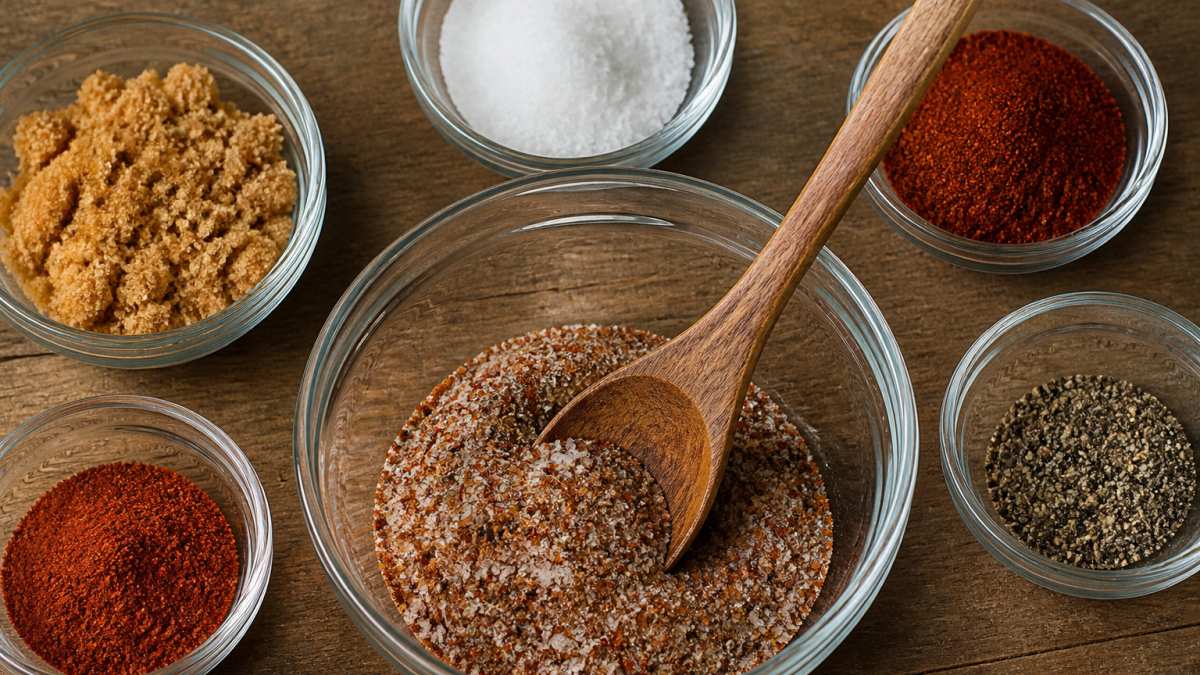
Raw cane sugar and turbinado sugar fall somewhere in between. They have bigger crystals than white sugar and a touch more molasses than brown sugar.
Never use powdered sugar. It contains cornstarch and dissolves into a paste when it hits the meat's moisture. It's a disaster.
Some people use honey or maple syrup. These add moisture to your rub, which can cause clumping. If you want to use them, do it in a marinade, not in a dry rub.
Building flavor with chili powder, smoked paprika, and black pepper
Once you've locked in your salt and sugar, the other spices are where you build personality into your rub.
Chili powder is the backbone. It brings heat and earthiness. Use 2 to 3 tablespoons per cup of rub.
These three work together. The chili powder carries the heat. The smoked paprika adds complexity. The black pepper adds bite. None of them should dominate.
A contrarian approach that works: salt your meat to taste first, then apply the spice blend separately. This gives you complete control over sodium intake while still building flavor.
Does Sugar Burn in a BBQ Rub During Smoking and Grilling
Temperature thresholds and caramelization timing
Yes, sugar burns. But the right amount of burn is actually caramelization, and that's where the magic happens.
Sugar starts to caramelize around 320°F. This is good. It creates that dark, crusty bark on your meat. Keep going, and at around 350°F, it starts to burn. Burnt sugar tastes bitter and acrid. You don't want that.
The window between caramelization and burning is narrow. It's maybe 30 minutes at smoking temperature (225-250°F), or just 10-15 minutes if you're grilling hot (350°F+).
Low-and-slow smoking gives you more time. The sugar has hours to caramelize slowly without burning. Hot grilling gives you almost no margin for error.
Preventing sugar from burning: wrapping and timing strategies
The best way to prevent burning is to wrap your meat partway through cooking. Wrapping protects the rub from direct heat and lets the interior cook without the exterior charring.
Here's the timing:
- Smoke unwrapped for the first 3 to 4 hours to build bark and let the sugar caramelize
- Wrap in foil for the next 2 to 3 hours to push through the stall and protect the rub
- Unwrap for the last 30 to 45 minutes if you want extra bark formation
This approach gives you the best of both worlds: caramelization without burning.
Temperature control matters too. If you're grilling, keep your heat below 300°F for the first part of cooking. Move the meat to hotter zones only in the final stages when the bark is already set.
How to Fix a Rub That Is Too Salty
If your rub tastes like the ocean, you have options.
The fastest fix is to add more of everything else.
For future batches, cut the salt by 25 percent and taste as you go. Salt is easy to add. It's impossible to remove.
A contrarian approach: don't pre-mix salt into your rub at all. Apply salt to the meat first, then dust the spice blend on top. This gives you total control.
Some people add a touch of sugar to mask oversalted rubs. This works temporarily, but it's a band-aid. The real fix is starting over with less salt next time.
Applying and Adjusting Your Rub to Personal Taste
Coating meat evenly and letting flavors develop
The way you apply your rub matters as much as the rub itself.
Start with dry meat. Pat it down with paper towels. Moisture on the surface prevents the rub from sticking. Next, apply a thin layer of mustard or oil to the meat. This acts as a binder.
Now apply your rub generously. Learn how to properly apply dry rubs to chicken and other proteins to develop maximum flavor. Don't be shy. Press it into the meat so it adheres.
Let it sit. If you have time, let the meat rest with the rub on for 20 to 30 minutes before cooking.
Testing and tweaking your custom blend
The only way to know if your rub is right is to cook with it and taste the results.
Start a rub journal. Write down your recipe, the meat you used, the cooking temperature, and how long you cooked.
Next time, adjust one thing only. If it was too salty, cut the salt by 10 percent.
You can learn from finished products too. The Brisket Rub Texas Seasoning 5 oz demonstrates how a professional blend balances salt and sugar for beef. Study it.

After three or four test runs, you'll have a rub that's perfectly tuned to your taste, your grill, and your favorite meats.
Frequently Asked Questions
What is a good salt-to-sugar ratio for a BBQ rub?
A common starting point is a 2:1 salt-to-sugar ratio by weight, though this varies by preference and meat type. For example, 2 tablespoons kosher salt to 1 tablespoon brown sugar creates a balanced foundation. Low-sodium enthusiasts may prefer 3:2 or even 1:1 ratios to reduce sodium while maintaining sweetness. The key is starting conservative, applying your rub to a small portion of meat first, and adjusting upward based on taste. Twisted Pepper Co.'s handcrafted rubs like Pig Sweat BBQ Rub are formulated with this balance already perfected, saving you the trial-and-error process.
Does sugar burn in a BBQ rub during smoking?
Yes, sugar can burn, especially at temperatures above 300°F and during extended low-and-slow cooking. Brown sugar and white sugar both caramelize and char over time. To prevent burning, apply your rub closer to the end of cooking, wrap the meat in foil partway through, or use the Texas Crutch method. Alternatively, reduce sugar content in your homemade rub if you cook at high temperatures. The bark (the flavorful outer crust) benefits from some caramelization, but excessive charring turns bitter. Monitor your cooking temperature and adjust rub timing accordingly.
How do I fix a BBQ rub that tastes too salty?
If your rub is overly salty, you can dilute it by mixing in more of the other dry ingredients, chili powder, paprika, black pepper, and sugar. Add these gradually until the saltiness backs off. For future batches, reduce kosher salt by 25-50% and increase brown sugar or other spices to maintain flavor complexity. If you've already applied an overly salty rub to meat, you can't reverse it, but you can balance it by pairing the meat with a sweeter sauce or serving it alongside unseasoned sides. Twisted Pepper Co.'s low-sodium rubs eliminate this guesswork.
Should I use kosher salt or sea salt in a BBQ rub?
Kosher salt is the better choice for BBQ rubs because its larger crystals dissolve more slowly and distribute flavor more evenly across meat. Sea salt crystals vary in size and can create salty pockets. Kosher salt also has a milder, less metallic taste. When measuring, remember that kosher salt weighs less than table salt per tablespoon, so volume measurements matter. If you must substitute, use about 3/4 the amount of table salt since it's denser. Always measure by weight for consistency, especially when scaling your homemade rub recipe.
Balancing salt and sugar in your BBQ rubs is a skill that improves with practice. Start with a solid baseline ratio, adjust for your specific meat and cooking temperature, and test your results. The investment in getting this right pays off every single time you fire up the grill. At Twisted Pepper Co., we've handcrafted our signature rubs to hit that perfect balance so you don't have to guess. Shop Now and discover how simple delicious can be.
