

Natural Flavor Enhancers for Heart-Healthy Cooking
Last Updated: November 7, 2026
Quick Summary
Natural flavor enhancers build taste without relying on sodium, added sugar, or artificial additives, using herbs, spices, citrus, vinegars, and aromatics instead. Stock two or three from each category and you can season almost anything without reaching for salt. A 2024 review found adding herbs and spices may help enhance flavor when reducing added sugars, saturated fat, and sodium.
- Most sodium in home cooking hides in canned broths, bottled sauces, boxed mixes, and deli meats.
- Use roughly three times as much fresh herb as dried when swapping, adding fresh herbs off the heat.
- Warm two tablespoons of olive oil, add garlic and ginger for thirty seconds, then dried spices for thirty.
- Keep one salt-free blend, one low-sodium blend, and one acid on hand, reaching for them before salt.
- Start with three blends: one Italian-style, one chile-based, and one garlic-forward for everyday cooking.
Table of Contents
- Why Natural Flavor Enhancers Matter for Heart Health
- A Practical Natural Flavor Enhancers List for Your Kitchen
- How to Flavor Food Without Salt Using Aromatics and Oils
- Natural Flavor Enhancers for Chicken and Lean Proteins
- Reading Labels and Choosing Low-Sodium Seasonings
- Flavor-Building Methods and Timing That Boost Taste
- Picking Seasonings That Fit Your Heart-Healthy Kitchen
- Frequently Asked Questions
Why Natural Flavor Enhancers Matter for Heart Health
Natural flavor enhancers are ingredients that build taste without relying on sodium, added sugar, or artificial additives. At Twisted Pepper Co., we hear from home cooks every week who want food that tastes like something without the salt shaker doing all the work. A 2024 review in the Journal of the Academy of Nutrition and Dietetics found that adding herbs and spices may help enhance flavor when reducing added sugars, saturated fat, and sodium.
The Sodium Problem in Everyday Cooking
Most sodium in a home-cooked meal hides in canned broths, bottled sauces, boxed mixes, and deli meats, not the salt you sprinkle at the table. The fix is layering flavor from ingredients that bring taste and nothing else. Once your palate notices herbs, acid, and aromatics, missing salt becomes far less noticeable.
How Herbs and Spices Fit Into Heart-Healthy Cooking
Herbs and spices are the backbone of heart-healthy cooking because they deliver aroma and depth with no sodium. Add fresh herbs at the end so their oils stay bright; add dried herbs and ground spices early so they bloom in oil or liquid.
A Practical Natural Flavor Enhancers List for Your Kitchen
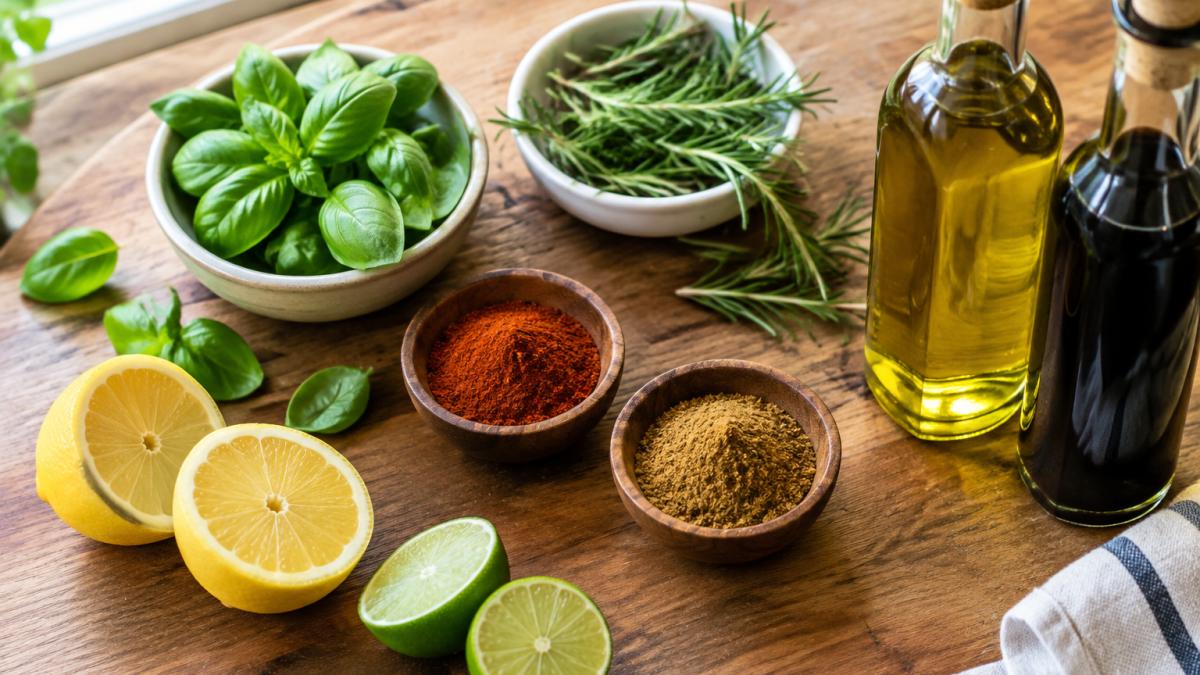
Here is our working natural flavor enhancers list: eight categories, each doing a different job. Stock two or three from every group and you can season almost anything without reaching for salt.
Herbs: Fresh and Dried
Fresh basil, parsley, mint, and cilantro finish a dish with a clean, green lift. Rosemary, thyme, oregano, and dill hold up better dried in long-cooked food. Use roughly three times as much fresh herb as dried when swapping, and add fresh herbs off the heat so they keep their color.
Spices and Spice Blends
Cumin, paprika, black pepper, turmeric, cinnamon, and nutmeg carry warmth and depth. A good spice blend does the measuring for you, and this is where a handcrafted mix earns its place in the pantry. Our Tuscan Roasted Garlic Seasoning is low sodium, gluten free, and no MSG added, and it works on vegetables, chicken, or a quick bread dip.
Citrus Juice and Zest
Lemon, lime, and orange bring acidity and aroma that make rich food taste lighter. Zest holds the oils, so grate it before you juice. A squeeze of lemon at the end of a soup or roasted vegetables can replace a whole pinch of salt.
Vinegars and Acidic Ingredients
Balsamic, red wine, and rice vinegar sharpen flavors that taste flat. If a dish is missing something and you cannot name what, add a teaspoon of acid before you add salt. For dressings built on this idea, our guide to salt-free salad dressings walks through ratios that actually taste good.
How to Flavor Food Without Salt Using Aromatics and Oils
Learning how to flavor food without salt starts with aromatics: garlic, onion, ginger, and toasted spices cooked in a little oil. Heat releases their oils, which carry flavor through the dish, and olive oil doubles as cooking fat and flavor carrier.
Try this sequence: warm two tablespoons of olive oil over medium heat, add chopped garlic and ginger for thirty seconds, then stir in dried spices for another thirty. Add the vegetables or protein and cook as usual. That two-minute step builds a base that tastes seasoned before a single grain of salt goes in.
Watch out: garlic burns fast at medium-high heat and turns bitter, so keep the pan moving and lower the flame if it starts to brown too quickly.
Measured Aromatic Pairings You Can Apply Immediately
Cooks who cut salt successfully work from ratios rather than pinches. These amounts are starting points for a four-serving dish; adjust after the first taste.
- Vegetables (about 1 pound, roasted or sauteed): 1 tablespoon olive oil, 2 cloves garlic (minced), 1/2 teaspoon ground cumin or paprika, and a squeeze of lemon at the end. The acid is what makes the missing salt least noticeable.
- Grains (1 cup dry rice, farro, or quinoa): 1 tablespoon olive oil, 1/4 cup chopped onion, 1 bay leaf, and 1 teaspoon grated citrus zest stirred in after cooking. Cook the grain in low-sodium broth rather than water for more depth.
- Fish (four 5-ounce fillets): 1 tablespoon olive oil, 1 teaspoon grated ginger, 1 teaspoon chopped garlic, and 1 tablespoon lime juice. Ginger and lime together read as "seasoned" even with no salt added.
Flavor-Building Methods and Timing for Aromatics
When you add an aromatic changes what it contributes. Garlic added at the start mellows and sweetens; added in the last thirty seconds it stays sharp.
Toasting whole spices in a dry pan for thirty seconds before grinding wakes up their oils, and blooming ground spices in oil for thirty seconds pulls their fat-soluble flavor compounds into the cooking fat.
Heart-Health Trade-Offs in Oils, Sweeteners, and Condiments
Flavor boosters are not automatically free of heart-health concerns. Olive oil is calorie-dense, so measure it rather than pouring freely, especially when cutting salt.
Condiments are the quieter problem. Choosing one concentrated flavor at a time keeps sauces and sweet accents in balance, while a Haitian flavor profile guide can suggest other ways to build depth without relying on salt.
Cuisine and Dietary Adaptations
The same aromatic framework adapts to almost any cuisine by swapping the spice and acid. Mediterranean: olive oil, garlic, oregano, lemon. Latin American: olive oil, garlic, cumin, lime.
For plant-based cooking, aromatics and acids do more of the work because there is no meat to carry salt. For gluten-free cooking, check that spice blends and condiments are labeled gluten free, since some blends include fillers.
Natural Flavor Enhancers for Chicken and Lean Proteins
Chicken, fish, and lean pork absorb flavor best when seasoned early and cooked hot. A dry rub pressed on twenty minutes ahead gives the surface time to take on the spices. A marinade with oil, acid, and seasoning does more, especially on thicker cuts.
For chicken, we reach for our Jalapeno Lime Seasoning or Mediterranean Seasoning, both low sodium blends that work as a rub or a marinade base.
Reading Labels and Choosing Low-Sodium Seasonings
Label reading is where most heart-healthy cooking succeeds or fails. Check the serving size first, then the sodium number, then the ingredient list.
Anchor on the Daily Value for sodium, the reference amount printed on Nutrition Facts panels. The percent Daily Value is a quick way to compare products on the same label scale.
Seasonings are one of the easier places to cut back on sodium without changing how you cook.
Two more things to scan for: added MSG and anti-caking agents. Neither is a villain, but if you are managing sodium and want a clean label, they are worth noticing. Our low sodium gluten free seasoning blends page compares sodium-to-flavor ratios if you want a shortcut.
Low-Sodium Packaged Seasonings and Salt Substitutes
There are three broad categories on the shelf, and they behave differently in cooking.
- Salt-free blends: These rely on dried herbs, spices, garlic, onion, and sometimes citric acid or vinegar powder. They add essentially no sodium but do not provide the salty taste some dishes need, so pair them with acid and aromatics.
- Low-sodium blends: These contain some salt, usually enough to read as seasoned, at a fraction of the sodium of a standard blend. Compare the percent DV per serving rather than relying only on the front-of-package claim.
- Potassium-based salt substitutes: These replace some or all of the sodium chloride with potassium chloride (the FDA). They taste salty and can help lower sodium intake, but people with kidney disease, those taking ACE inhibitors, angiotensin receptor blockers, or potassium-sparing diuretics, and anyone with a history of high potassium should talk to a clinician before using them regularly.
A common pattern is to keep one salt-free blend, one low-sodium blend, and one acid (lemon or vinegar) on hand, and to reach for them in that order before reaching for the salt shaker. That habit alone can cut a dish's sodium by half without a noticeable loss of flavor.
| Flavor Booster | Best Used For | Sodium Impact | Watch Out For |
|---|---|---|---|
| Fresh herbs | Finishing soups, salads, grilled food | None | Add off heat to keep color |
| Dried spices | Rubs, roasts, long-cooked dishes | None | Bloom in oil first |
| Citrus juice and zest | Fish, vegetables, dressings | None | Zest before juicing |
| Vinegars | Dressings, braises, finishing | None | A little goes far |
| Aromatics | Base for almost any dish | None | Garlic burns quickly |
| Low-sodium blends | Rubs, marinades, dips | Low (check % DV) | Check serving size |
| Salt-free blends | Everyday seasoning | None | Pair with acid for balance |
| Potassium-based substitutes | Table and finishing salt | Replaces sodium with potassium | Not for kidney disease or certain medications |
Flavor-Building Methods and Timing That Boost Taste
Timing separates good home cooking from great home cooking. Season in layers rather than all at once: a little at the start, a little mid-cook, a little at the end. Roasting and grilling concentrate flavor through browning, which is why a roasted vegetable tastes sweeter than a boiled one.
Picking Seasonings That Fit Your Heart-Healthy Kitchen
Start with three blends, not ten: one Italian-style for vegetables and chicken, one chile-based for grilling, and one garlic-forward for everyday cooking. Our Savory Italian Seasoning and Tex-Mex Seasoning Mix both fit that rotation, and both are low sodium, gluten free, and made without MSG.
If you are deciding between handcrafted and store-bought, our guide on why handcrafted spice blends work better explains the freshness and sodium-control differences in plain terms. Buy what you will actually use in a month, and replace dried herbs once a year.
Building a heart-healthy kitchen is not about giving up flavor. It is about choosing ingredients that bring taste without the sodium, and that is exactly what we make at Twisted Pepper Co.
Frequently Asked Questions
What is the best seasoning for heart patients?
There is no single best seasoning, but heart-healthy choices lean on salt-free blends built from herbs, spices, garlic, onion, and citrus. Look for products labeled low sodium or no-salt-added, and check the Nutrition Facts panel for the sodium amount per serving. Blends like Twisted Pepper Co.'s Tuscan Roasted Garlic Seasoning are low sodium, gluten free, and made with no MSG, so you can season chicken, vegetables, or marinades without leaning on salt for flavor.
Can natural flavors be healthy?
The word natural on a label does not automatically make a flavoring healthier than an artificial one. The term natural alone does not prove a health advantage, and natural flavoring agents can come from plant or animal sources. What matters more is the full ingredient list and the sodium, sugar, and fat per serving. A natural seasoning blend that is also low in sodium is a better fit for heart-healthy cooking than a natural blend loaded with salt.
How can I make food taste flavorful without adding salt?
Build layers of flavor with ingredients that hit different taste notes. Use garlic, onion, and ginger for savory depth; lemon or lime juice for brightness; vinegar for tang; and toasted spices like cumin or paprika for warmth. Herbs and spices can help add flavor when you cut back on added sugars, saturated fat, and sodium. Finish dishes with fresh herbs or a squeeze of citrus right before serving to keep aromas sharp.
Which herbs and spices work well in heart-healthy cooking?
Basil, oregano, thyme, rosemary, parsley, and mint cover most vegetable, chicken, and fish dishes. For warmth, reach for cumin, paprika, turmeric, cinnamon, and black pepper. Spice blends save time and add consistency. Twisted Pepper Co.'s Mediterranean Seasoning works on fish, chicken, seafood, veggies, salads, and pasta salads, and its Savory Italian Seasoning is a low-sodium, gluten-free option for marinades and bread dipping. Start with small amounts and taste as you go.
How can I add flavor to chicken without using a lot of salt?
Marinate or dry-rub chicken with low-sodium blends, citrus, and oil before cooking. Twisted Pepper Co.'s Jalapeno Lime Seasoning is low sodium, gluten free, and made with no MSG or anti-caking agents; its listing suggests a marinade of 1 to 2 tablespoons seasoning, 2 tablespoons olive oil, 2 tablespoons honey or light agave, and 2 tablespoons orange juice, with a one-hour marinate. Pat chicken dry, rub generously, and refrigerate for at least 20 minutes so the flavor penetrates before grilling, baking, or broiling.
