

How to Make Salt-Free Salad Dressings That Taste Great
Last Updated: November 4, 2026
Quick Summary
Make salt-free salad dressings by whisking three parts oil to one part vinegar, adding acid, mustard, garlic, or herbs first, then shaking hard for 20 seconds and resting 10 to 30 minutes. A homemade version can drop to as little as 50 mg sodium per serving versus 320 mg in store-bought balsamic vinaigrette.
- Every vinaigrette starts with three parts oil to one part vinegar, so you never need a recipe again.
- Add acid and flavor builders to the jar before the oil, then emulsify hard for 20 seconds.
- Let the dressing rest 10 to 30 minutes so dried herbs and garlic hydrate and open up.
- Homemade vinaigrette keeps about one to two weeks in the fridge in a sealed jar.
- Creamy dairy dressings should be used within three to four days and kept cold.
Table of Contents
- Why Salt-Free Salad Dressings Beat the Bottle
- The 3-to-1 Formula: Oil, Vinegar, and Flavor
- No Sodium Salad Dressing Recipes to Mix in Minutes
- A Low Sodium Balsamic Vinaigrette Recipe You'll Repeat
- No Salt No Sugar Salad Dressing Recipes for Every Craving
- Salt-Free Salad Dressing for Chicken and Beyond
- Storing, Label Reading, and Food Safety
- Stock Your Pantry With Twisted Pepper Co. Seasonings
- Frequently Asked Questions
Why Salt-Free Salad Dressings Beat the Bottle
A standard store-bought balsamic vinaigrette can carry 320 mg of sodium in just 2 tablespoons, according to the Kidney Nutrition Institute's sodium comparison. A homemade version can drop to as little as 50 mg per serving. That gap is the whole argument for learning how to make salt-free salad dressings at home.
Here at Twisted Pepper Co., we make low and light sodium seasonings, so we think about sodium a lot. The bottle is the problem. Two tablespoons of dressing can eat a chunk of your daily sodium before the salad even starts.
And the fix takes just a jar and a few ingredients you probably own.
Below, we'll show you the ratio that makes every dressing work, five recipes you can mix tonight, and how to read a label so "low sodium" means what you think it means.
The 3-to-1 Formula: Oil, Vinegar, and Flavor
Every vinaigrette starts with one ratio: three parts oil to one part vinegar (standard vinaigrette preparation ratio). Master that and you never need a recipe again.
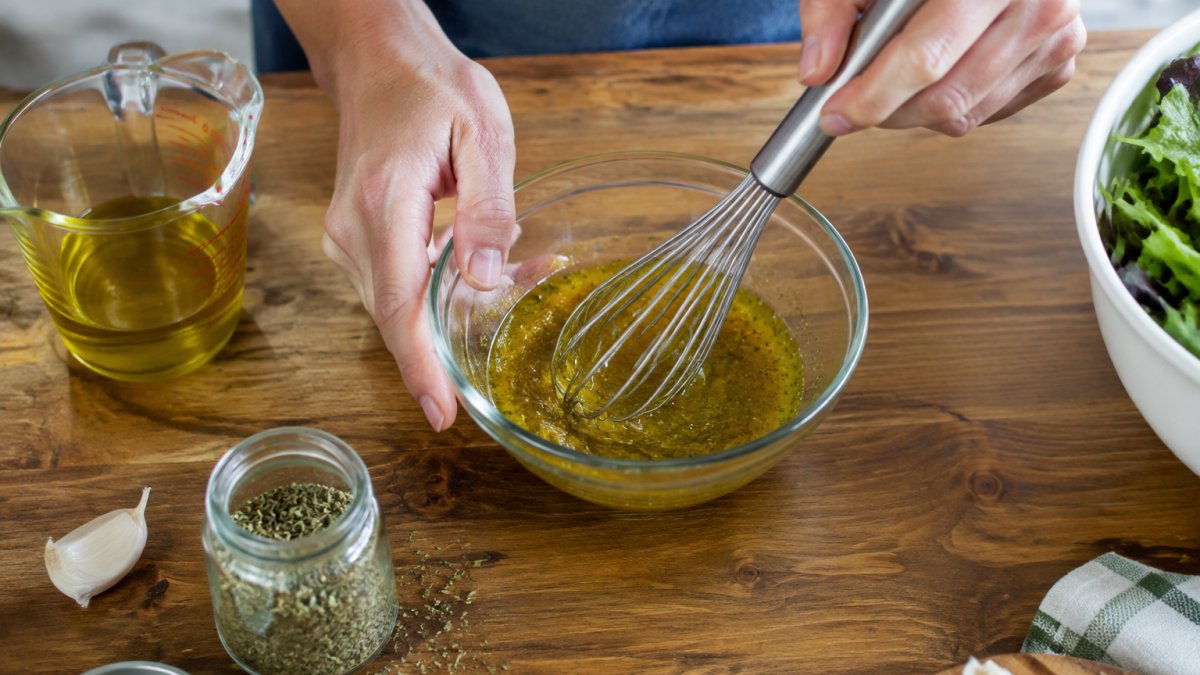
Most recipes stop at the ratio. The useful part is the build order, because it determines whether your dressing emulsifies or separates, and whether the flavor tastes flat or finished. Use this five-step method for any style:
- Start with the acid and the flavor builders. Put vinegar or citrus juice in the jar first, then add mustard, minced garlic, dried herbs, pepper, or fruit puree. Acid and mustard help suspend oil, so they need to be in the jar before the oil goes in.
- Add the oil in a slow stream while whisking, or all at once if shaking. For a 3-to-1 batch, that means 3 tablespoons oil to 1 tablespoon vinegar for a single large salad, or 6 tablespoons oil to 2 tablespoons vinegar for a jar that lasts a few days. Scale up or down by keeping the 3:1 ratio and adjusting flavor to taste.
- Emulsify hard for 20 seconds. Whisking or shaking breaks the oil into tiny droplets that stay suspended long enough to coat greens. A sealed jar is the most reliable tool because you can shake vigorously without splashing.
- Rest for 10 to 30 minutes. Dried herbs and garlic need time to hydrate and open up. A dressing tasted immediately will often seem weak; the same dressing after 15 minutes tastes rounded.
- Taste and adjust before dressing the salad. Adjust the balance in the jar, not on the leaves. A salad absorbs dressing unevenly, so fixing it after tossing takes more dressing than fixing it before.
Choosing Your Oil and Vinegar
Extra-virgin olive oil brings fruitiness and body. Canola or grapeseed oil keeps things neutral so herbs and citrus lead. For vinegar, red wine vinegar is sharp and classic, white wine vinegar is softer, and balsamic vinegar adds sweetness without sugar.
A low-sodium Italian seasoning blend does the heavy lifting on flavor here. Our Savory Italian Seasoning is a low sodium option for this: mix 2 to 3 tablespoons with 3 oz. olive oil and 2 oz. vinegar, then let it fuse for 15 to 30 minutes.

Emulsification and Troubleshooting
Oil and vinegar separate because they don't mix. Whisk hard, or shake in a sealed jar, and they hold together long enough to coat your greens. Mustard is the most common home emulsifier because its proteins and mucilage help bind oil and water; a teaspoon per batch is usually enough.
If your dressing breaks or tastes flat:
- Add a teaspoon of mustard. It helps bind oil and water.
- Whisk in a few drops of honey or pureed fruit for body.
- Too sharp? More oil. Too oily? A splash more vinegar.
- Adjust to taste before you dress the salad, not after.
Watch out: if you add oil to a jar that already contains a lot of oil and only a little acid, shaking can still leave a thin, separated layer. Add the acid first, then the oil, and shake immediately before each use.
A common pattern is that dressings taste bland not because they lack salt but because they lack acid, aroma, or texture. Before you reach for a salt substitute, check whether the dressing needs another teaspoon of vinegar, a pinch of cracked pepper, or a spoonful of mustard.
No Sodium Salad Dressing Recipes to Mix in Minutes
These no sodium salad dressing recipes prove you don't need a salt shaker to get real flavor. Each one takes under five minutes.
- Lemon-herb vinaigrette: 3 tbsp olive oil, 1 tbsp lemon juice, 1 tsp dried Italian herbs, black pepper. Shake and serve.
- Garlic-balsamic: 3 tbsp olive oil, 1 tbsp balsamic vinegar, 1 tsp Tuscan Roasted Garlic Seasoning, whisked smooth.
- Citrus-mustard: 3 tbsp olive oil, 1 tbsp orange juice, 1 tsp Dijon mustard, citrus zest.
- Red wine classic: 3 tbsp olive oil, 1 tbsp red wine vinegar, 1 minced garlic clove, cracked pepper.
The British Heart Foundation recommends exactly this approach: swap salt for lemon juice, mustard, and garlic to build flavor (heart-healthy dressing guidance).

A Low Sodium Balsamic Vinaigrette Recipe You'll Repeat
This low sodium balsamic vinaigrette recipe is a simple one to make at home.
What you need:
- 6 tbsp extra-virgin olive oil
- 2 tbsp balsamic vinegar
- 1 tsp Dijon mustard
- 1 tsp dried Italian herbs
- 1 small garlic clove, minced
- Fresh black pepper to taste
How to make it:
- Add vinegar, mustard, herbs, and garlic to a jar.
- Pour in the olive oil.
- Seal and shake for 20 seconds until creamy.
- Taste and adjust. Let it sit 10 minutes for the herbs to open up.
No salt. No sugar. Just flavor that holds up on any salad.
No Salt No Sugar Salad Dressing Recipes for Every Craving
Sweet dressings usually lean on sugar or honey, but fruit does the job better. These no salt no sugar salad dressing recipes cover creamy, fruity, and bold.
Savory Italian Seasoning 4.0 oz →
- Strawberry vinaigrette: 3 tbsp olive oil, 1 tbsp white wine vinegar, 3 mashed strawberries.
- Raspberry-balsamic: 3 tbsp olive oil, 1 tbsp balsamic, a handful of crushed raspberries.
- Blackberry-thyme: 3 tbsp olive oil, 1 tbsp red wine vinegar, 4 blackberries, a pinch of dried thyme.
- Herb-packed Italian: 3 tbsp olive oil, 1 tbsp vinegar, 2 tsp Italian seasoning, whisked well.
For pasta salads and veggie platters, our bread dipping oil and veggie seasonings collection gives you ready-made flavor without measuring.
Creamy Dressings Without the Salt Shaker
Creamy doesn't mean heavy on sodium. Whisk sour cream or mayonnaise with lemon juice, garlic, and fresh herbs. Add a spoonful of goat cheese for tang. Thin with a splash of buttermilk until it pours.
The University of Florida IFAS Extension offers a useful framework for building healthier homemade dressings to replace high-sodium commercial options (homemade dressing guidance).
Salt-Free Salad Dressing for Chicken and Beyond
A salt-free salad dressing for chicken can double as a marinade. Whisk 3 tbsp olive oil, 1 tbsp vinegar, and 1 tbsp seasoning, then coat chicken and rest it 30 minutes before grilling.
Our Tex-Mex Seasoning Mix is a low salt blend suited to grilled foods, and the Mediterranean Seasoning can be used on fish, chicken, and pasta salads.
One dressing, many dinners. That's the point.
Storing, Label Reading, and Food Safety
Homemade vinaigrette keeps about one to two weeks in the fridge in a sealed jar. Shake before each use, since separation is normal. Creamy dressings made with dairy should be used within three to four days.
Reading labels matters more than the front of the bottle. Check the sodium per serving line, not per container.
Use this label-reading routine when you buy a bottled dressing or a seasoning blend:
- Find the serving size first. Dressing servings can vary, so compare sodium per the same amount.
- Read the sodium line in milligrams. Compare the number listed on the label to the amount you want to keep to.
- Check the ingredient list for sodium-containing additives. Salt, sodium benzoate, monosodium glutamate, and sodium-containing preservatives all add to the total even when the front label says "no salt added."
- Compare per serving, not per bottle. A small bottle with a low per-serving number can still deliver a large dose if you use more than the listed serving.
For homemade dressings, keep jars clean, refrigerate promptly, and toss anything that smells off. Clean jars and prompt refrigeration help keep homemade dressings fresh, while thoughtful seasoning can bring depth without salt when you choose small-batch artisanal seasonings.
Note that standardized dressings fall outside 21 CFR Part 114 acidified food rules, so homemade versions rely on your own safe handling (food safety guidance).
For more on building flavor without additives, see our guide on cooking flavorful food without MSG.
Here's how long homemade dressings keep and what to check on the label.
| Item | Value | Note |
|---|---|---|
| Homemade vinaigrette | 1 to 2 weeks in fridge | Sealed jar; shake before each use |
| Creamy dairy dressings | 3 to 4 days | Treat like other dairy foods |
| Vinaigrettes with fresh garlic or herbs | About 1 week | Shorter window than plain oil-and-vinegar mixes |
| Vinaigrette left at room temperature | More than 2 hours | Discard rather than refrigerate |
| Store-bought balsamic vinaigrette | 320 mg sodium per 2 tbsp | Compared with as little as 50 mg homemade |
| Label check | Sodium per serving | Not per container |
Stock Your Pantry With Twisted Pepper Co. Seasonings
The hardest part of salt-free cooking isn't the technique. It's proving to yourself that less salt can still taste like more.
Start with one jar and one ratio. Whisk 3 parts oil, 1 part vinegar, and a spoonful of seasoning, then taste. You'll know within a minute whether it works.
At Twisted Pepper Co., our seasonings are handcrafted, gluten-free, and made with no MSG added, with low and light sodium options across the lineup. One customer shared: "I am absolutely addicted to your soups and dips/cheese ball mixes," says Doris & Mark.
Ready to build dressings that don't taste like a compromise? Get started with Twisted Pepper Co.
Frequently Asked Questions
How do you make a low-sodium salad dressing without losing flavor?
Start with the standard three parts oil to one part vinegar, then build flavor with ingredients that carry natural punch: minced garlic, Dijon mustard, lemon juice, citrus zest, black pepper, and dried herb blends. A homemade low-sodium balsamic vinaigrette can be made with far less sodium than many store-bought versions. Let the dressing sit 15 to 30 minutes so the herbs hydrate and the flavors fuse before you taste and adjust.
Can you make salad dressing without salt, oil, or sugar?
You can skip salt and sugar easily, but oil-free dressings need a different base. Try pureed fruit such as strawberries or blackberries, citrus juice, vinegar, and a spoon of mustard for body. These no salt no sugar salad dressing recipes work well on sturdy greens and grain bowls. Keep in mind that oil-free dressings separate faster, so shake or whisk right before serving and use them within a few days.
How should homemade salt-free salad dressing be stored?
Store vinaigrettes in a sealed glass jar in the refrigerator; the oil may solidify, so let the jar sit at room temperature for a few minutes and shake well. Always label the jar with the date, and discard anything that smells off or shows mold.
What is a good salt-free salad dressing for chicken?
A Mediterranean-style vinaigrette works well as both a marinade and a finishing dressing for chicken. Whisk olive oil with red wine vinegar, lemon juice, and a spoon of Mediterranean or Italian seasoning, then coat the chicken and let it sit 30 minutes before grilling or baking. The same mixture drizzles over the finished plate.
