

How to Season Chicken for Meal Prep: 7 Easy Steps
Table of Contents
- Step 1: Pick the Best Chicken for Meal Prep
- Step 2: Master the Seasoning Formula: How Much Seasoning Per Pound of Chicken
- Step 3: Meal Prep Chicken Seasoning Ideas: 5 Flavor Profiles That Never Get Boring
- Step 4: How to Keep Chicken Breast Moist for Meal Prep
- Step 5: Cook Seasoned Chicken for Meal Prep: Oven, Skillet, and More
- Step 6: How Long Does Cooked Chicken Last in the Fridge?
- Step 7: Portion, Store, and Reheat Without Losing Flavor
- Common Mistakes That Ruin Meal Prep Chicken
- Frequently Asked Questions
Last Updated: October 8, 2026
Step 1: Pick the Best Chicken for Meal Prep
Boneless, skinless chicken thighs are the best chicken for meal prep, followed closely by chicken breast.
Here at Twisted Pepper Co., we hear the same question every week: why does meal prep chicken taste so flat by Thursday? The cut you pick and how you season chicken for meal prep in the first place.
Pick your cut based on how you'll reheat it:
- Chicken thighs: Best for microwaves and busy weeks. Hard to overcook.
- Chicken breast: Leaner and higher in protein per serving. Needs more attention.
- Chicken tenderloins: Fastest to cook. Great for skillet nights.
Buying in bulk saves money and time. A family pack of thighs or breasts gives you four to six meals.
The USDA food safety guidance on poultry handling recommends refrigerating raw chicken within two hours of purchase. Keep it cold until you're ready to season.
Step 2: Master the Seasoning Formula: How Much Seasoning Per Pound of Chicken
Use 1 to 1.5 tablespoons of total seasoning per pound of chicken. That breaks down to roughly 3/4 teaspoon of kosher salt and 2 to 3 teaspoons of spices and herbs per pound.
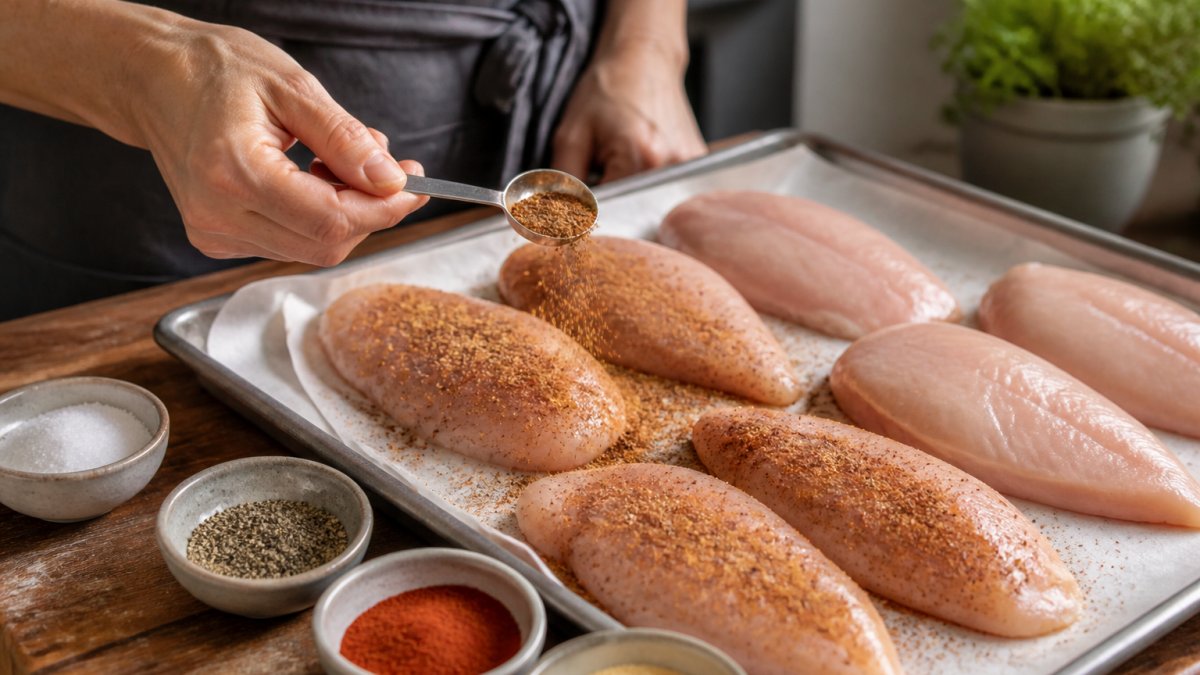
This is the formula most recipes skip. They say "season to taste" and leave you guessing. Here's the math that actually works:
| Chicken Amount | Total Seasoning | Salt | Spices & Herbs |
|---|---|---|---|
| 1 lb | 1 to 1.5 Tbsp | 3/4 tsp | 2 to 3 tsp |
| 2 lbs | 2 to 3 Tbsp | 1.5 tsp | 4 to 6 tsp |
| 3 lbs | 3 to 4.5 Tbsp | 2.25 tsp | 6 to 9 tsp |
A common mistake is under-seasoning. Bland chicken is almost always under-salted chicken, not under-spiced.
If you're watching sodium, cut the salt and lean on garlic powder, smoked paprika, cumin, and black pepper. Our low and light sodium blends are built for exactly this.
Salt First, Then Everything Else
Salt is the only seasoning that penetrates deep into the meat. Spices sit on the surface.
So salt first. Let it sit 20 to 30 minutes if you have time. Then add your rub, spice blend, or marinade.
Timing: When to Season for the Most Flavor
Season chicken 30 minutes to 24 hours before cooking. Even 20 minutes helps. Overnight gives you the deepest flavor.
Short on time? Season right before cooking. It still beats unseasoned chicken.
Step 3: Meal Prep Chicken Seasoning Ideas: 5 Flavor Profiles That Never Get Boring
Five seasoning profiles cover almost every meal you'll make in a week: Tex-Mex, Italian, smoky BBQ, honey sriracha, and garlic herb. Rotate them so Monday's chicken doesn't taste like Friday's.
Most guides name the profiles and stop there. The problem is that "chile powder, cumin, garlic, and lime" doesn't tell you how much of each. Below, every blend is written for 1 pound of chicken and built on the base formula from Step 2: about 3/4 teaspoon kosher salt plus 2 to 3 teaspoons of spices and herbs.
Tex-Mex (rice bowls, tacos, burrito filling)
- 3/4 tsp kosher salt
- 1 tsp chile powder
- 1/2 tsp ground cumin
Italian (pasta, sheet-pan vegetables, salads)
- 3/4 tsp kosher salt
- 1 tsp dried oregano
- 1/2 tsp dried basil
Smoky BBQ (grill, oven, sandwiches)
- 3/4 tsp kosher salt
- 1 tsp smoked paprika
- 1/2 tsp brown sugar
Honey Sriracha (sweet with a slow burn)
- 3/4 tsp kosher salt
- 1 Tbsp honey
- 1 Tbsp sriracha or red pepper sauce
Whisk the honey, sriracha, and vinegar together first, then toss the chicken to coat. This one is a glaze, not a dry rub, so add it in the last few minutes of cooking or brush it on after.
Garlic Herb (the flexible default)
- 3/4 tsp kosher salt
- 1 tsp garlic powder
- 1/2 tsp dried parsley
How to Rotate Without Repeating
A simple pattern: cook two profiles on Sunday (say Tex-Mex and garlic herb), then two more on Wednesday (BBQ and Italian), and keep honey sriracha for a fast skillet night.
Our Chicken Rub covers the smoky BBQ lane with no MSG, no anti-caking agents, and low sodium. For Tex-Mex nights, the Tex-Mex Seasoning Mix doubles as a salt substitute. The Tuscan Roasted Garlic Seasoning handles the garlic herb profile in one shake.


Step 4: How to Keep Chicken Breast Moist for Meal Prep
Brine chicken breast in salt water for 30 minutes before cooking to keep it moist. The salt pulls water into the meat, so it survives reheating.
Other tricks that work:
- Cook to 165°F, not beyond. Overcooking is the real culprit.
- Let chicken rest 5 to 10 minutes before slicing.
- Store with a spoonful of pan juices or broth.
The USDA's safe minimum internal temperature chart lists 165°F as the safe minimum for poultry. Hit that number and stop.
Thighs need less help here. Their fat content does the work for you.
Step 5: Cook Seasoned Chicken for Meal Prep: Oven, Skillet, and More
The oven is the best method for meal prep because it cooks in bulk with no babysitting. The skillet wins when you need dinner fast.
Oven Method: 450°F for 15-20 Minutes
Heat the oven to 450°F. Arrange seasoned chicken on a sheet pan in a single layer. Bake 15 to 20 minutes for breasts, 20 to 25 for thighs.
Check with a thermometer. Pull at 165°F.
Skillet Method for Weeknight Speed
Heat a skillet over medium-high with a tablespoon of oil. Cook breasts 5 to 7 minutes per side. Thighs take 6 to 8 minutes per side.
Let the chicken rest before slicing. This keeps the juices in the meat, not on the cutting board.
Step 6: How Long Does Cooked Chicken Last in the Fridge?
Cooked chicken lasts 3 to 4 days in the fridge when stored in a sealed container at 40°F or below. Freeze anything you won't eat by day four.
The USDA refrigerator and freezer storage chart confirms the 3-to-4-day window for cooked poultry. Label your containers with the cook date so you're not guessing.
The Day-Four Rule, Explained
The 3-to-4-day window is a safety limit, not a flavor limit. In practice, most meal-preppers find that chicken hits its quality ceiling around day three, the texture starts to turn mealy and any dry rub or glaze has faded. If your week runs longer than four days, plan to freeze the back half of your batch on cook day rather than waiting to see how it holds up.
Freezing: What Actually Works
- Freeze cooked chicken within 2 hours of cooking, or within 24 hours if it's been refrigerated first.
- Portion before freezing. A 4-ounce serving in its own container thaws faster and reheats more evenly than a whole batch.
- Press out excess air or use a vacuum sealer. Freezer burn is a texture problem, not a safety one, but it makes chicken stringy.
Thawing: Fridge, Not Counter
Thaw overnight in the refrigerator, roughly 24 hours for a single 4-ounce portion, longer for larger containers. The USDA's guidance is consistent on this point: never thaw poultry on the counter, because the outer surface enters the temperature danger zone while the center is still frozen.
In a hurry? A sealed container of cooked chicken can be thawed under cold running water or in the microwave using the defrost setting, as long as you reheat it immediately afterward.
Reheating Without Ruining the Texture
- Reheat to 165°F, the same safe minimum you cooked to.
- Microwave at 50% power in 30-second bursts, covered with a damp paper towel.
- Add a spoonful of broth, pan juices, or water before reheating. Steam is what keeps the meat from drying out.
- If you're reheating from frozen, go straight from freezer to microwave at 50% power, no need to thaw first for a single portion.
A Simple Weekly Storage Plan
Cook on Sunday. Refrigerate what you'll eat by Wednesday. Freeze Thursday and Friday portions the same day you cook. Move a frozen portion to the fridge the night before you plan to eat it. That single habit solves the "is this still good?" question before it comes up.
Step 7: Portion, Store, and Reheat Without Losing Flavor
Portion chicken into 4-ounce servings for a solid protein hit per meal. Most adults need 20 to 30 grams of protein per meal, and 4 ounces of chicken delivers roughly 25 to 35 grams depending on the cut.
For a full week of food safety, follow these steps:
- Cool cooked chicken within 30 minutes of cooking
- Divide into meal-prep containers while slightly warm
- Add rice and vegetables to the same container
- Seal and refrigerate within 2 hours
Reheat at 50% power and cover with a damp paper towel. It sounds fussy. It keeps chicken tender instead of rubbery.
Common Mistakes That Ruin Meal Prep Chicken
The biggest mistake is seasoning everything the same way. By Wednesday, you're bored and ordering takeout.
Other mistakes we see often:
- Salting after cooking instead of before
- Skipping the rest time before slicing
- Storing hot chicken in sealed containers, which traps steam
- Reheating on full power until the meat turns tough
Fix those five things and your weekly meal prep chicken will taste fresh every day.
Frequently Asked Questions
How do you season chicken for meal prep without it tasting bland by day three?
Season raw chicken at least 20 minutes before cooking so the salt and spices absorb into the meat, not just sit on the surface. Use about 1 tablespoon of seasoning blend per pound of chicken, plus 3/4 teaspoon kosher salt per pound. Store cooked chicken with a spoonful of its pan juices or a drizzle of olive oil in each meal-prep container. The fat keeps the seasoning in contact with the meat and prevents the dry, flat taste that shows up after a few days in the fridge.
How much seasoning should you use per pound of chicken?
A reliable starting point is 1 tablespoon of seasoning blend per pound of chicken, plus 3/4 teaspoon kosher salt per pound if your blend is salt-free. If you are using a pre-mixed rub that already contains salt, skip the extra salt and use the full tablespoon of blend. For a 4-ounce serving, that works out to roughly 3/4 teaspoon of total seasoning. Adjust up or down based on whether your blend is low-sodium or full-salt, and taste a small piece before cooking the whole batch.
Is it okay to meal prep chicken for a week?
Cooked chicken stays safe in the refrigerator for 3 to 4 days, according to USDA food safety guidance. If you want chicken for a full seven days, cook enough for four days and freeze the rest. Frozen cooked chicken keeps for 2 to 6 months and thaws overnight in the fridge. Portion it into meal-prep containers before freezing so you can pull out one day's worth at a time without reheating the entire batch.
Should you season chicken before or after cooking it?
Season before cooking for the deepest flavor. Apply your rub or marinade at least 20 minutes ahead, and up to 24 hours if you have time, so the salt can work into the meat. You can also add a light sprinkle of seasoning after cooking, especially if your blend is low-sodium, to refresh the flavor on day three or four. A finishing pinch of smoked paprika or garlic powder right before eating brings back the aroma that fades during refrigeration.
Meal prep only works when the food actually tastes good by day four. That's where seasoning makes or breaks your week. At Twisted Pepper Co., we make handcrafted, gluten-free, no MSG rubs and seasonings built for exactly this kind of cooking. Our low and light sodium blends let you control the salt without losing flavor, and every jar ships fast to your door. Shop now and make your next batch of meal prep chicken the one you actually look forward to eating.