

How to Season Chicken for Air Fryer Recipes
Table of Contents
- Why Air Fryer Chicken Needs the Right Seasoning
- How to Season Chicken Breast for the Air Fryer
- Best Seasoning for Air Fryer Chicken: Flavor Profiles That Work
- Air Fryer Chicken Seasoning Mix: Make Your Own or Use a Blend
- How Long to Cook Chicken Breast in Air Fryer
- Common Seasoning Mistakes to Avoid
- Conclusion
- Frequently Asked Questions
Last Updated: October 6, 2026
Why Air Fryer Chicken Needs the Right Seasoning
At Twisted Pepper Co., we hear the same complaint: "My air fryer chicken always tastes flat." The fix is almost never the machine, it is the seasoning approach.
Most guides hand you a random spice list with no amounts, oil guidance, or timing, so you guess and the chicken comes out dusty or soggy.
Below, we break down how to season chicken for air fryer recipes, with real measurements, flavor profiles, and a timing chart.
How to Season Chicken Breast for the Air Fryer
To season chicken breast for the air fryer, pat the meat dry, brush it with a thin coat of oil, then press a spice blend onto both sides and rest at least 20 minutes before cooking. This order matters more than any single ingredient.
- Pat dry. Use paper towels to remove surface moisture. Wet chicken steams instead of sears.
- Oil lightly. A thin coat helps the spices stick and aids browning.
- Season generously. Press the blend in with your hands so it clings.
- Rest 20 minutes. This lets the salt and spices soak past the surface.
Choosing Your Oil and Coating
Olive oil is the go-to coating, and a light brush helps seasoning adhere without pooling. Avocado oil works for high heat, or use a thin layer of Dijon mustard for a tangy base.
Skip heavy marinades with sugar for air frying. Sugar burns fast at high heat.
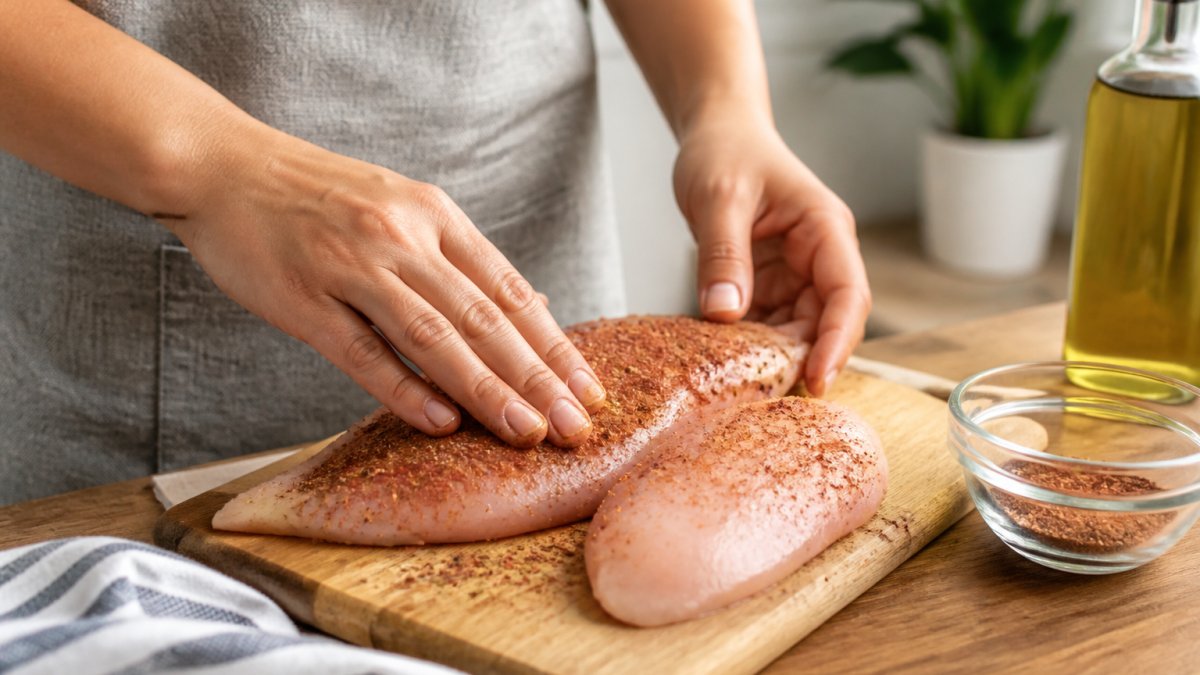
How Much Seasoning Per Pound of Chicken
Use about 1 to 1.5 tablespoons of seasoning blend per pound of chicken breast. That covers roughly 2 to 3 boneless, skinless breasts.
| Chicken Amount | Seasoning | Oil |
|---|---|---|
| 1 lb (2-3 breasts) | 1 to 1.5 tbsp | 1 tbsp |
| 2 lbs (4-6 breasts) | 2 to 3 tbsp | 2 tbsp |
| 3 lbs (6-8 breasts) | 3 to 4.5 tbsp | 3 tbsp |
Best Seasoning for Air Fryer Chicken: Flavor Profiles That Work
The best seasoning for air fryer chicken depends on what you are serving it with. Use this flavor-profile guide with measured blends you can match to the dish and scale up or down. Each blend makes about 4 tablespoons, enough for roughly 3 pounds of chicken at the 1-to-1.5-tablespoon-per-pound baseline.
Smoky and Savory (BBQ, Tacos, Meal Prep Bowls)
- 2 tbsp smoked paprika
- 1 tbsp garlic powder
- 1 tbsp onion powder
Use this on chicken for tacos, sandwiches, rice bowls, or meal prep. The smoked paprika carries the profile; the brown sugar helps the surface brown without burning at 375°F.
Spicy and Bold (Tex-Mex, Buffalo, Nashville-Style)
- 1 tbsp chili powder
- 1 tbsp cumin
- 1 tsp cayenne pepper
Use less cayenne than you think you need, the fan concentrates heat. For a Buffalo-style finish, season with just salt, garlic powder, and black pepper, then toss the cooked chicken in sauce after it leaves the basket so the sugar does not burn.
Herb-Forward and Bright (Mediterranean, Pasta Night, Salads)
- 1 tbsp dried oregano
- 1 tbsp dried basil
- 2 tsp dried thyme
This profile suits pasta night, grain salads, and anything served with lemon. Mix with olive oil for a quick marinade, or press it dry onto the chicken for a lighter coating.
Smoky-Sweet (BBQ Rub, Sheet-Pan Sides)
- 2 tbsp smoked paprika
- 1 tbsp brown sugar
- 1 tbsp garlic powder
Keep the brown sugar to about 1 tablespoon per 4 tablespoons of blend. More than that and the surface can scorch before the interior reaches 165°F.
Globally Inspired (Shawarma, Jerk, Curry)
- Shawarma: 1 tbsp cumin, 1 tbsp coriander, 1 tsp cinnamon, 1 tsp turmeric, 1 tsp garlic powder, 2 tsp kosher salt
- Jerk: 1 tbsp allspice, 1 tbsp thyme, 1 tsp cayenne, 1 tsp cinnamon, 1 tsp garlic powder, 2 tsp kosher salt
- Curry: 1 tbsp curry powder, 1 tsp turmeric, 1 tsp cumin, 1 tsp garlic powder, 2 tsp kosher salt
These blends work on thighs as well as breasts and hold up to the air fryer's dry heat better than wet, sugar-heavy marinades.
How to Pick a Profile
Match the profile to the side dish, not to habit. Smoky and savory pairs with rice, beans, and slaw; spicy and bold with tortillas, pickled onions, and cooling sauces; herb-forward with pasta, tomatoes, and greens; smoky-sweet with cornbread and grilled vegetables; globally inspired with flatbread, yogurt sauce, and citrus.
A light coating of fat helps these spices adhere to the surface while ensuring the meat remains succulent, though achieving the perfect crispness requires careful attention when frying with olive oil.Air Fryer Chicken Seasoning Mix: Make Your Own or Use a Blend
You can make an air fryer chicken seasoning mix at home in about two minutes, or use a pre-made blend for consistent results without measuring. The trade-off is control versus speed, and the bigger variable is how you scale, salt, and apply it.
A Scalable Base Blend
This base blend makes about 4 tablespoons and seasons roughly 3 pounds of chicken at the 1-to-1.5-tablespoon-per-pound baseline.
- 1 tbsp smoked paprika
- 1 tsp garlic powder
- 1 tsp onion powder
To scale, multiply every ingredient by the number of 3-pound batches you need. For a single pound, use about 1 to 1.5 tablespoons of the finished blend. Store in an airtight jar away from heat and light up to six months; after that the spices fade but do not spoil.
Seasoning by Weight and by Count
Season by weight, not by eye: 1 to 1.5 tablespoons of blend per pound of chicken, which covers roughly 2 to 3 boneless, skinless breasts.
| Chicken Amount | Seasoning | Oil |
|---|---|---|
| 1 lb (2-3 breasts) | 1 to 1.5 tbsp | 1 tbsp |
| 2 lbs (4-6 breasts) | 2 to 3 tbsp | 2 tbsp |
| 3 lbs (6-8 breasts) | 3 to 4.5 tbsp | 3 tbsp |
| 5 lbs (10-13 breasts) | 5 to 7.5 tbsp | 5 tbsp |
For batch meal prep, mix the full amount of seasoning with the full amount of oil in a large bowl, then toss the chicken in it.
Salt, Sodium, and Substitutions
Salt does more than flavor in the air fryer: it draws moisture to the surface, which helps the skin or coating brown. Cutting salt changes texture, not just taste.
- Kosher salt vs. table salt: kosher salt flakes are larger, so 1 teaspoon of kosher salt is less salty by volume than 1 teaspoon of table salt. If you swap, use about half as much table salt.
- Low-sodium option: cut the kosher salt in the blend by half, then add acid (lemon, lime, or vinegar) after cooking to brighten the flavor.
- Salt-free swaps: garlic powder, onion powder, smoked paprika, cumin, and dried herbs add flavor without sodium. A common pattern is to double the garlic and onion powder when you halve the salt.
Fresh, Frozen, and Unevenly Sized Chicken
How you season depends on the chicken's starting condition, not just the blend.
- Fresh: pat dry with paper towels, oil lightly, season, and rest 20 minutes. This is the ideal case.
- Frozen: do not season frozen chicken and air fry it. The ice melts into the coating and steams the surface. Thaw fully in the refrigerator, then pat dry before seasoning. If you must cook from frozen, cook plain first, then season and return to the air fryer for 2 to 3 minutes to set the spices.
- Unevenly sized breasts: pound thick breasts to an even 1-inch thickness with a flat mallet or the bottom of a skillet. Even thickness means even seasoning and even cooking. If you skip pounding, season the thick parts more heavily and expect a longer cook time.
Dry Brine vs. Wet Marinade
A dry brine is salt (and sometimes sugar) applied to the surface and rested, usually 30 minutes to overnight in the refrigerator. It seasons the meat through and helps it hold moisture.
For air fryer chicken, a dry brine or a dry rub is usually the better choice. If you want a marinade, drain and pat the chicken dry before it goes in the basket so the surface can brown.
How Long to Cook Chicken Breast in Air Fryer
Cook boneless, skinless chicken breast in an air fryer at 375°F for 18 to 22 minutes, flipping halfway through. Cooking time shifts with thickness, so always check internal temperature rather than trusting the clock.
Temperature and Timing Chart
| Thickness | Temperature | Time | Flip At |
|---|---|---|---|
| Thin (under 1 inch) | 375°F | 12-15 min | 7 min |
| Medium (1 inch) | 375°F | 18-22 min | 10 min |
| Thick (1.5 inch+) | 375°F | 22-26 min | 12 min |
Preheat the air fryer for 3 to 5 minutes before adding chicken. This helps the coating set fast.
How to Tell When Chicken Is Done
Chicken is done when the thickest part reaches 165°F on a meat thermometer, the USDA's safe minimum internal temperature for poultry.
Do not rely on color alone. Pink near the bone can be normal, and white meat can look done while still undercooked in the center.
Common Seasoning Mistakes to Avoid
The biggest seasoning mistakes are adding spices after cooking, over-salting, and using wet marinades that steam instead of sear. Each costs you flavor and texture.
- Seasoning after cooking. Spices need heat to bloom. Add them before.
- Too much salt. Start with less and taste. You can always add.
- Wet marinades with sugar. They burn before the chicken cooks through.
If you deal with gluten sensitivities, check labels. Our blends are gluten-free and made with no MSG added, which matters if you are reading every package.
Conclusion
Seasoning air fryer chicken well comes down to three things: dry the meat, coat it in oil, and season by weight before you cook.
If you want to skip the guesswork, Twisted Pepper Co. makes handcrafted, gluten-free blends with no MSG added and low-sodium options. Our Chicken Rub alone covers smoky, savory, and marinade-style cooking in one jar.

Shop now and get 30-minute meals that actually taste like you worked for them.
Frequently Asked Questions
Should you use oil when seasoning chicken for the air fryer?
Yes, a light coating of oil helps the seasoning stick and encourages browning. Brush or rub about 1 teaspoon of olive oil per chicken breast before adding your spice blend. Without oil, dry rubs tend to fall off during cooking and the chicken may come out pale. For the best seasoning for air fryer chicken, combine oil and seasoning together, then coat the meat evenly on both sides.
How much seasoning should you use per pound of chicken?
A good rule is 1 to 2 tablespoons of seasoning blend per pound of boneless skinless chicken breast. If your blend contains salt, start with 1 tablespoon and adjust after tasting. For a salt-free blend, you can use up to 2 tablespoons. This range works whether you are making a simple air fryer chicken seasoning mix or using a store-bought rub.
When should you season chicken before air frying?
For the deepest flavor, season chicken breast 20 to 30 minutes before cooking and let it sit in the refrigerator. If you are short on time, season right before it goes into the air fryer. Salt needs at least 20 minutes to penetrate the meat, but even a quick coating adds plenty of flavor. Pat the chicken dry first so the seasoning adheres well.
How do you keep seasoning from falling off chicken in an air fryer?
Pat the chicken dry, apply a thin layer of oil, then press the seasoning into the meat with your fingers. Let it rest for 10 to 20 minutes before cooking. The air fryer's circulating air can blow off loose spices, so pressing them in and using oil as a binder makes a big difference. Avoid overloading the basket, which can cause uneven cooking and more rub loss.