

How to Season Frozen Chicken Before Cooking
Table of Contents
- Why Seasoning Frozen Chicken Is Different
- How Salt Interacts With a Frozen Surface
- Best Dry Rubs for Chicken That Stick to Frozen Meat
- Cooking Frozen Chicken Breast in Oven: Timing and Temperature
- Marinades and Moisture: Getting Flavor Into Frozen Meat
- Low Sodium Seasoning Tips for Frozen Chicken
- Searing, Baking, and Post-Cooking Adjustments
- Common Mistakes That Leave Frozen Chicken Bland
- Conclusion: Season With Confidence, Cook With Flavor
- Frequently Asked Questions
Last Updated: September 29, 2026
Why Seasoning Frozen Chicken Is Different
Learning how to season frozen chicken starts with one hard truth: ice blocks flavor. Ice crystals stop salt, spices, and herbs from clinging the way they do on fresh meat.
The fix isn't more spice, it's a different technique.
How Salt Interacts With a Frozen Surface
Salt draws out moisture, then works inward over time. On a frozen surface, that first step stalls, the salt sits on ice instead of dissolving into the meat.
Here's what happens instead:
- Salt lands on ice crystals and starts to melt them
- That meltwater dilutes the salt into a weak brine
- The brine pools on the surface rather than soaking in
- Most of it runs off before the chicken even hits the pan
Best Dry Rubs for Chicken That Stick to Frozen Meat
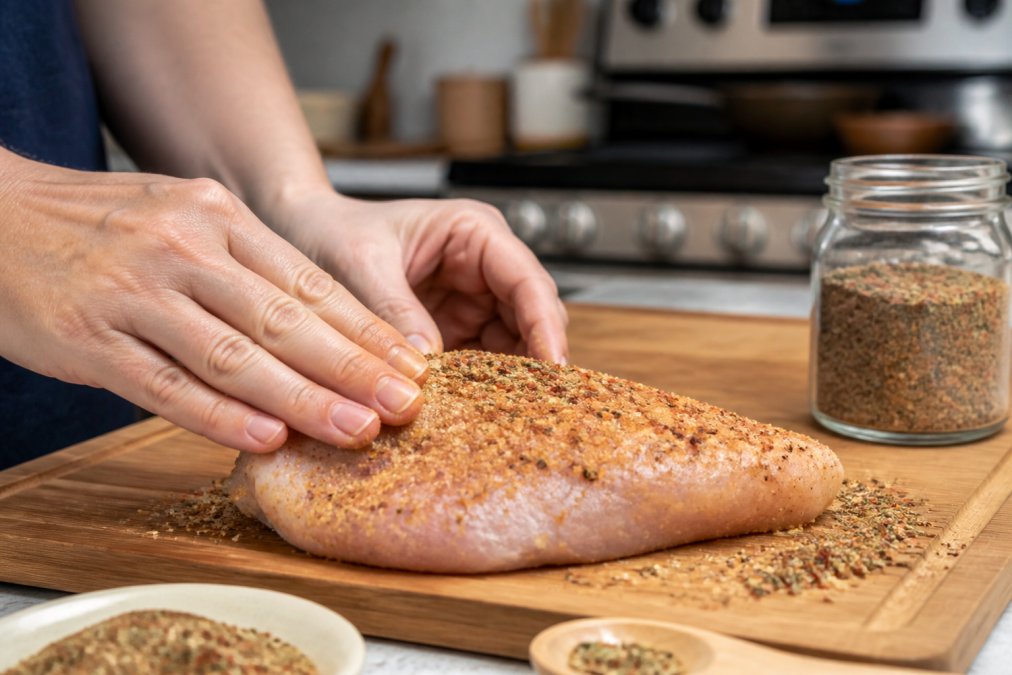
Most dry rubs fail on frozen chicken because of physics. A frozen surface sits at or below 32°F, so its thin film of water is locked up as ice crystals. Dry particles can't dissolve into ice, so they slide off the moment the chicken hits a hot pan. Coarse blends are worse, larger particles have more mass and less contact area per grain.
What Makes a Rub Actually Stick
Three traits separate a rub that clings from one that runs off:
- Fine grind. Particles under roughly 1 mm pack into the micro-pits of a frosty surface. If you can see individual flakes of pepper or herb, it's too coarse.
- Low moisture. Wet rubs and pastes freeze into a shell that cracks off; dry blends stay put.
- Salt-forward base with oil-soluble spices. Paprika, garlic powder, onion powder, cumin, and black pepper carry flavor in fat, which matters once the surface renders.
Dry Rub Adhesion Techniques
Getting a rub to stay put comes down to four moves, in order:
- Pat the surface dry with a paper towel to knock off loose ice crystals, loose frost turns to water and floats the rub off.
- Apply a binder. A thin coat of neutral oil, yellow mustard, or mayonnaise gives spices a tacky layer to grip. Most guides skip this step, and it's the difference between a rub that stays and one that pools in the pan.
- Press, don't sprinkle. Work the rub in with your fingertips or the back of a spoon; sprinkling from height bounces particles off the ice.
- Rest in the fridge 20 to 30 minutes. The surface softens just enough for salt to draw moisture and dissolve into a concentrated brine at the meat's edge.
Why This Beats the Sprinkle-and-Bake Approach
Dusting a frozen breast and going straight to the oven yields a pale, patchy crust and a bland interior, the rub slid off or sat on ice that never absorbed it. The binder-plus-rest method costs about 25 minutes of hands-off time and keeps the rub bonded through the first 15 minutes of cooking, when the surface finally thaws enough for real flavor transfer.
Cooking Frozen Chicken Breast in Oven: Timing and Temperature
Cooking frozen chicken breast in the oven is safe and simple, but it takes longer and needs a lower starting temperature than thawed meat. The USDA recommends cooking poultry to a minimum internal temperature of 165°F, and that rule applies whether you start frozen or fresh (USDA food safety guidance on poultry).
| Starting State | Approx. Time at 375°F | Notes |
|---|---|---|
| Frozen breast, seasoned | 50-60 min | Cover first 30 min |
| Thawed breast, seasoned | 25-30 min | Uncovered throughout |
| Frozen thighs | 60-75 min | Higher fat, more forgiving |
Marinades and Moisture: Getting Flavor Into Frozen Meat
Marinades behave differently on frozen meat because it can't absorb liquid until its surface thaws. A marinade poured over a rock-solid breast mostly sits on top for the first hour.
A simple working marinade:
- 2 Tbsp chicken rub
- 2 Tbsp honey
- 2 Tbsp olive oil
- 1/4 cup orange juice
Low Sodium Seasoning Tips for Frozen Chicken
Low sodium seasoning tips matter more on frozen chicken because you can't taste as you go. The meat is cold, the surface wet, and it's easy to overcorrect with salt.

A few habits that help:
- Build flavor from aromatics first. Garlic powder, onion powder, cumin, and paprika carry plenty of taste without sodium.
- Use acid and smoke. A squeeze of lime or a pinch of smoked paprika reads as "seasoned" even when salt is light.
- Salt late, not early. Add a small finish of salt after cooking, when you can actually taste it.
- Pick low-sodium blends. A pre-mixed rub with reduced salt takes the guesswork out.
Searing, Baking, and Post-Cooking Adjustments
Searing frozen chicken is tricky for a chemical reason. A frozen surface releases water as it heats, and that water must boil off before the surface can exceed 212°F and begin the Maillard reaction that browns meat. Until then, the meat is essentially steaming, high heat just burns the outside while the inside stays cold. Managing this moisture barrier is a fundamental challenge when cooking meat slices, a process that requires careful heat regulation to ensure the exterior develops a proper crust before the interior overcooks.
For pan-fry and oven-baked methods, the order matters:
- Oven-baked: Season, cover, bake at 375°F, uncover for the last 15 minutes to brown
- Pan-fry: Thaw partially first, pat dry, then sear in a hot skillet with oil
- Basting: Spoon pan juices over the chicken in the last few minutes to build a glaze
Why Frozen Chicken Tastes Flat Even When It's Seasoned
Most guides leave this out: pre-cook seasoning has a hard ceiling on frozen meat. Salt can't penetrate ice, so it flavors only the outermost millimeter or two. Spices that need heat to bloom, cumin, paprika, chile powder, don't release aromatics until they hit fat at temperature, by which point the surface is losing moisture. The result smells seasoned but tastes under-seasoned in the middle.
Post-Cooking Adjustments That Actually Work
Finishing seasonings save frozen chicken. Heat and fat wake up spices, and acid resets your palate so it registers flavor even when salt is light. Apply within a minute of pulling the chicken off the heat, while the surface is still hot enough to bloom dried spices:
- Finishing dust. Sprinkle a pinch of the same rub over the hot surface; residual heat releases volatile oils that never bloomed during the cook.
- Citrus. A squeeze of fresh lemon or lime adds brightness and tricks your palate into reading the meat as more seasoned.
- Fat-and-spice drizzle. Whisk olive oil with a pinch of rub and spoon it over, fat carries fat-soluble flavor compounds that water can't.
- Finishing salt. Flaky salt at the table gives a sharp, uneven hit of salinity that reads as deliberate seasoning.
- Pan sauce. Deglaze the skillet with stock or wine, scrape up the fond, and spoon it over. The browned bits carry concentrated flavor the meat never developed.
Matching the Method to the Cut
Not every cut needs the same treatment. Thin cutlets thaw fast enough for a pre-cook rub plus a quick sear. Bone-in thighs and whole breasts hold cold longer, so they benefit most from the oven-first, sear-last approach and a finishing dust. The thicker the cut, the more you should lean on post-cook seasoning.
Common Mistakes That Leave Frozen Chicken Bland
- Seasoning and cooking immediately. No rest time means no absorption. Give it 20 to 30 minutes in the fridge.
- Using coarse rubs on ice. They slide off. Go fine-ground.
- Skipping the oil layer. Spices need something to cling to.
- Cooking at high heat from frozen. The outside burns before the inside thaws. Start lower.
- Forgetting to check internal temperature. Undercooked poultry is a food safety risk, not just a texture problem (the CDC).
- Cross-contamination. Wash hands, boards, and knives after handling raw frozen poultry.
- Not tasting at the end. A quick finish adjustment fixes more than any pre-cook step.
One more thing most guides miss: surface area matters. A whole frozen breast seasons unevenly because the ice layer varies across the meat. Cutting larger pieces into thinner cutlets before freezing, or buying thinner cuts, gives more even coverage.
Conclusion: Season With Confidence, Cook With Flavor
Seasoning frozen chicken isn't about working harder. It's about working with the ice instead of against it. Pat it dry, oil it lightly, press in a fine rub, and give it a short rest before it hits the heat.
Frequently Asked Questions
Can you cook frozen chicken without thawing it first?
Yes, you can cook frozen chicken without thawing, but it takes longer and needs careful temperature monitoring. The USDA recommends cooking frozen poultry directly in the oven at 350°F or higher, adding about 50% more cooking time than thawed chicken. Always verify doneness with a meat thermometer: chicken must reach an internal temperature of 165°F. Seasoning frozen chicken before cooking works well with dry rubs, which adhere to the icy surface and penetrate as the meat thaws during cooking.
Does seasoning stick to frozen chicken?
Dry rubs stick better to frozen chicken than wet marinades, which tend to slide off the icy surface. Press the rub firmly into the frozen meat with your hands or the back of a spoon. The slight frost on the surface actually helps the seasoning grip. For best adhesion, pat the chicken briefly with a paper towel to remove loose ice crystals, then apply your rub immediately before cooking. Marinades work better once the chicken has partially thawed in the refrigerator.
Is it safe to season frozen chicken before putting it in the oven?
Yes, seasoning frozen chicken before cooking is safe as long as you follow food safety guidelines. Apply your dry rub or seasoning to the frozen surface, then cook immediately. Do not let seasoned frozen chicken sit at room temperature for more than two hours, as bacteria can multiply rapidly in the danger zone between 40°F and 140°F. Always cook chicken to an internal temperature of 165°F and use separate utensils for raw and cooked meat to prevent cross-contamination.
How long to cook chicken at 400 from frozen?
At 400°F, frozen chicken breasts typically take 45 to 60 minutes to reach an internal temperature of 165°F. Bone-in pieces may take 60 to 75 minutes. Cooking times vary based on the size and thickness of the chicken and your oven's accuracy. Start checking at 45 minutes with a meat thermometer. For even cooking and better flavor penetration, season your frozen chicken with a dry rub before placing it in a preheated oven or baking dish.