

How to Prep Vegetables Quickly: A 30-Minute Guide
Table of Contents
- Why Fast Vegetable Prep Matters for Weeknight Cooking
- Essential Time-Saving Kitchen Tools for Vegetables
- Master Vegetable-Specific Prep Guides
- How to Store Prepped Vegetables for Maximum Freshness
- Batch Cooking and Meal Prep Scheduling
- Quick Dinner Ideas for Busy Parents Using Prepped Vegetables
- Reduce Waste While Prepping Vegetables Quickly
- Frequently Asked Questions
Last Updated: September 1, 2026
Why Fast Vegetable Prep Matters for Weeknight Cooking
Getting dinner on the table shouldn't mean spending an hour in the kitchen. When you know how to prep vegetables quickly, you cut your total cooking time in half and reclaim your evening. This is especially true for busy parents juggling work, kids, and everything else competing for attention after 5 PM.
The real advantage isn't just speed. When you prep vegetables efficiently, you're more likely to actually eat them. Pre-cut produce sits in your fridge ready to go into stir-fries, soups, or salads without friction. You're also less likely to order takeout when dinner feels manageable instead of overwhelming.
At Twisted Pepper Co., we understand that convenience and flavor aren't mutually exclusive. Our handcrafted seasonings and dip mixes are designed to work with prepped vegetables so you can create restaurant-quality meals in 30 minutes or less. The foundation of that speed starts with smart prep techniques and the right tools.
Essential Time-Saving Kitchen Tools for Vegetables
The right tools make prep work feel less like a chore and more like flow. You don't need much, but what you do have should earn its space in your drawer.
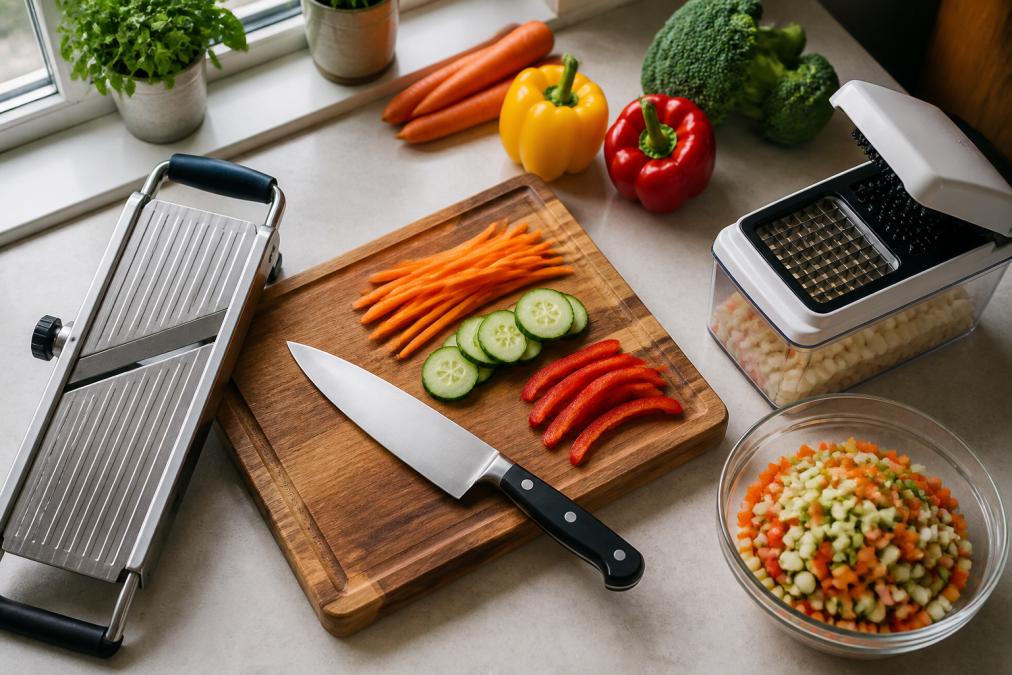
Sharp knives and cutting boards
A sharp chef's knife is non-negotiable. Dull knives slow you down and are actually more dangerous because they require more pressure and are more likely to slip. A good 8-inch chef's knife handles 90% of vegetable work. Keep it sharp using a honing steel once a week and a proper sharpener every few months.
Your cutting board matters too. A large wooden or plastic board (at least 12 by 18 inches) gives you room to work without constant rearranging. Plastic is easier to sanitize between tasks, especially if you're cutting raw vegetables after handling other ingredients. Wood is gentler on knife blades and naturally antimicrobial over time.
Mandolines and vegetable choppers
A mandoline slicer cuts vegetables into uniform, paper-thin slices in seconds. It's perfect for potatoes, cucumbers, zucchini, and root vegetables. The consistency matters for even cooking. The trade-off is a learning curve and a serious blade, use the guard that comes with it every single time.
A vegetable chopper (sometimes called a food processor or mini chopper) handles the repetitive work of dicing onions, garlic, and herbs. A hand-crank chopper works without electricity and takes minimal storage space. An electric food processor is faster if you're prepping large quantities. Either way, you're trading 15 minutes of knife work for 2 minutes of machine time.
Master Vegetable-Specific Prep Guides
Different vegetables need different approaches. Learn these core techniques and you'll handle almost anything that comes your way.
Leafy greens: washing and chopping
Leafy greens are fast to prep but require proper washing to remove dirt and grit. Submerge them in cold water, agitate gently, and let sediment settle for 30 seconds. Lift the greens out (don't pour, the dirt stays at the bottom) and spin dry. Wet greens wilt faster and dilute dressings.
For chopping, stack leaves, roll them tightly, and slice across the roll in one smooth motion. This gives you consistent pieces and takes about 60 seconds for a full bunch of spinach or kale. Store chopped greens in an airtight container with a paper towel to absorb excess moisture.
Root vegetables: peeling and dicing
Root vegetables (carrots, potatoes, beets, parsnips) benefit from a vegetable peeler for speed. A Y-shaped peeler works faster than a knife for most people. Peel over a bowl to catch scraps, then rinse the vegetable.
For dicing, cut the vegetable in half lengthwise for stability, then slice into planks. Stack the planks and cut into strips, then dice across the strips. Uniform pieces cook evenly. A mandoline handles this in half the time if you're comfortable with it.
Cruciferous vegetables: cutting and steaming
Broccoli, cauliflower, and Brussels sprouts prep quickly once you know the technique. For broccoli and cauliflower, cut the crown into florets by slicing down from the top, following the natural breaks in the head. Peel the stem, slice it into rounds or sticks, this part is edible and cooks faster than you'd expect. healthy meal prep tools.
For Brussels sprouts, trim the stem end and any yellowed leaves, then halve them lengthwise. If they're large, quarter them. The flat cut side caramelizes beautifully when roasted or pan-seared.
How to Store Prepped Vegetables for Maximum Freshness
Prepped vegetables only stay fresh if you store them correctly. The goal is to minimize moisture while preventing them from drying out completely.
Airtight containers and moisture control
Glass or plastic airtight containers are your best bet. They seal out air and keep ethylene gas (which speeds ripening and decay) from accumulating. Fill containers loosely, don't pack vegetables tight, which traps moisture and causes rot.
Paper towels are your secret weapon. Line the bottom of containers with a paper towel to absorb excess moisture, then add your prepped vegetables. Place another paper towel on top before sealing. Change the paper towel every 2-3 days if moisture builds up.
Some vegetables (like leafy greens) benefit from a slightly damp paper towel instead of a dry one, since they dry out faster. Others (like cut potatoes) need dry conditions. Learn the difference and your vegetables will last significantly longer.
Vegetable-specific storage duration chart
Different vegetables have different shelf lives once prepped. This chart shows how long you can expect prepped vegetables to stay fresh in airtight containers in your refrigerator:
| Vegetable | Prep Style | Storage Duration | Best Use |
|---|---|---|---|
| Carrots | Peeled, sliced | 5-7 days | Stir-fries, soups, snacks |
| Broccoli | Florets | 3-5 days | Steaming, roasting, stir-fries |
| Bell peppers | Diced or sliced | 3-5 days | Stir-fries, fajitas, salads |
| Leafy greens | Washed, chopped | 2-3 days | Salads, sautéing, soups |
| Onions | Diced | 3-5 days | Cooking (not raw after day 2) |
| Potatoes | Peeled, diced | 2-3 days (in water) | Roasting, soups, stews |
| Zucchini | Sliced | 3-4 days | Stir-fries, grilling, roasting |
| Cauliflower | Florets | 4-5 days | Roasting, steaming, stir-fries |
Raw potatoes and other starchy vegetables benefit from being stored in water, which prevents browning (usda.gov). Change the water every 2 days. Non-starchy vegetables should stay dry.
Batch Cooking and Meal Prep Scheduling
Batch cooking is where prep speed becomes a real time investment. Instead of prepping vegetables once, you're doing it strategically so you have options all week.
The most practical approach is a Sunday or Wednesday prep session where you tackle 2-3 hours of work upfront. Wash, peel, chop, and store everything in containers. Then during the week, you grab what you need without the friction of prep work slowing you down.
The key is prepping for meals you'll actually eat. If you hate roasted Brussels sprouts, don't prep them hoping you'll change your mind. Prep vegetables that fit into your normal rotation: the ones you know you'll use in stir-fries, salads, soups, or sides.
Many busy parents find that prepping vegetables for 2-3 specific meals works better than prepping everything. For example: prep ingredients for Monday's stir-fry, Wednesday's sheet pan dinner, and Friday's soup. This gives you flexibility without overwhelming your fridge with containers.
Consider pairing your vegetable prep with Twisted Pepper Co.'s seasonings and dip mixes. Our Garden Veggie Dip Mix transforms prepped vegetables into an instant appetizer or snack. Our Savory Italian Seasoning and Tuscan Roasted Garlic Seasoning work beautifully with roasted or sautéed prepped vegetables, turning simple prep into restaurant-quality flavor in minutes.

Quick Dinner Ideas for Busy Parents Using Prepped Vegetables
Once your vegetables are prepped, dinner becomes a matter of choosing your cooking method and adding seasoning.
Stir-fry and microwave steaming methods
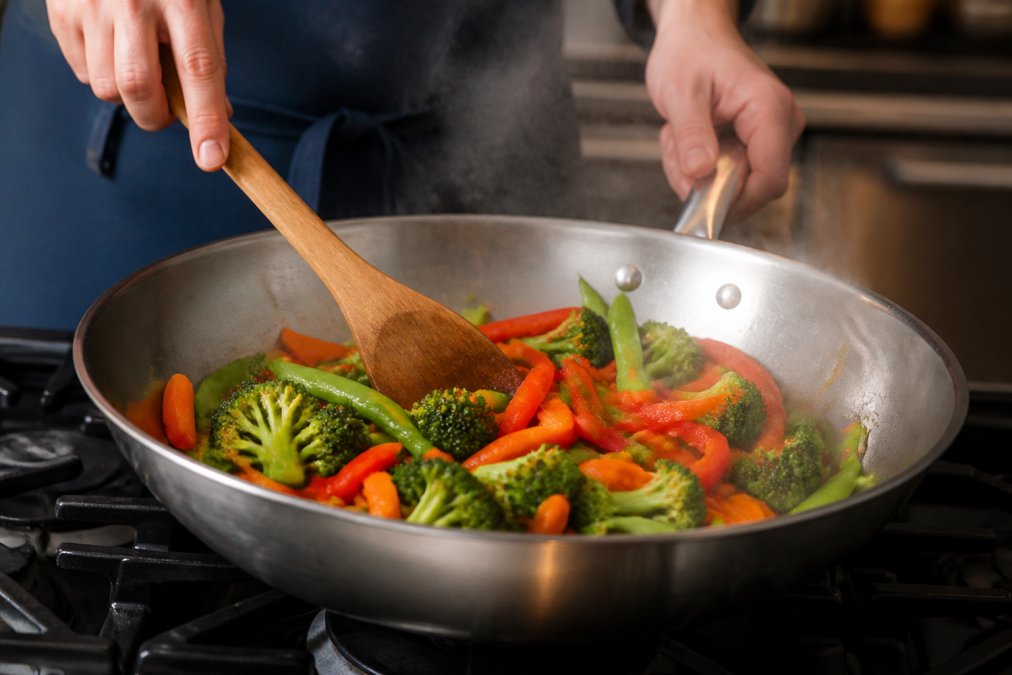
A stir-fry is the fastest way to turn prepped vegetables into a meal. Heat oil or butter in a hot pan, add your prepped vegetables (start with the ones that take longest to cook), and keep the heat high. Stir constantly for 5-8 minutes until vegetables are tender-crisp. Add protein, sauce, and you're done.
Microwave steaming is even faster for some vegetables. Place prepped broccoli, cauliflower, or green beans in a microwave-safe container with a tablespoon of water, cover loosely, and microwave on high for 3-5 minutes (peer-reviewed research). The vegetables steam in their own moisture and stay bright and crisp.
Blanching vs. raw storage for texture preservation
Blanching is a technique where you briefly boil vegetables, then plunge them into ice water to stop the cooking. This sets the color, softens the texture slightly, and extends storage life. It's especially useful for vegetables you plan to use in soups or stews later in the week.
Raw storage keeps vegetables crisper but limits their shelf life. If you're eating them within 2-3 days, raw storage is fine. If you're prepping for later in the week, light blanching gives you more flexibility and better texture when you finally cook them.
The choice depends on your cooking style. If you like tender vegetables, blanch them. If you prefer them crisp, store them raw and cook them fresh when you use them.
Reduce Waste While Prepping Vegetables Quickly
Vegetable scraps don't have to be trash. Carrot peels, broccoli stems, and onion skins can all become stock or compost. This saves money and reduces what you're throwing away.
Keep a container in your freezer specifically for vegetable scraps. Collect peels, stems, and trimmings throughout the week. When it's full, boil everything with water and salt for 45 minutes to make a simple vegetable stock (usda.gov). Strain and freeze in ice cube trays for easy portioning.
The stems of broccoli and cauliflower are entirely edible and often sweeter than the florets. Peel away the tough outer layer and slice the tender interior. They cook faster than you'd expect and add bulk to stir-fries or soups without waste.
Leafy greens that are starting to wilt but not yet spoiled can be sautéed or added to soups. Slightly soft vegetables work fine in cooked dishes, they're only a problem if you're eating them raw.
The math is simple: less waste means you're buying less produce to get the same amount of usable food. It also means your prep work is more efficient because you're using more of what you've already cut and cleaned.
Learning to prep vegetables quickly transforms how you approach weeknight cooking. The techniques are simple, the tools are affordable, and the time savings are real. Within a few sessions, you'll develop a rhythm that makes 30-minute meals feel genuinely achievable instead of aspirational.
Start with the vegetables your family actually eats. Master one prep technique at a time. Build your tool collection gradually. The goal isn't perfection, it's consistency. A reliable 20-minute prep beats a perfect 15-minute one you never actually do.
When you're ready to turn prepped vegetables into finished meals, Twisted Pepper Co.'s seasonings make the flavor work effortless. Our handcrafted blends are gluten-free, contain no MSG, and deliver authentic taste without the sodium overload. Shop our Garden Veggie Dip Mix, Savory Italian Seasoning, and Tuscan Roasted Garlic Seasoning to elevate your prepped vegetables from simple to special. Get started today and discover how simple delicious can be.


Frequently Asked Questions
How far ahead can I prep vegetables without them going bad?
Most prepped vegetables last 3-5 days when stored in airtight containers in the refrigerator. Hardy vegetables like carrots and beets stay fresh longer, while delicate greens wilt faster. Use airtight containers with paper towels to absorb excess moisture. For longer storage, blanch vegetables first, then freeze them. This method preserves texture and nutrients for up to three months, making it ideal for batch cooking and meal prep.
What are the best tools to speed up vegetable preparation?
A sharp 8-inch chef's knife is the foundation of fast prep work. Add a mandoline slicer for uniform cuts, a vegetable chopper for bulk dicing, and a good cutting board. These tools reduce prep time significantly. Invest in quality equipment that feels comfortable in your hands, dull knives actually slow you down and increase injury risk. With proper tools and technique, you can prep vegetables for an entire week in under an hour.
How do professional chefs chop vegetables so quickly?
Professional speed comes from three things: sharp knives, proper technique, and practice. Chefs use a claw grip to hold vegetables safely, keeping fingertips tucked. They rock the knife blade using the tip as a pivot point, which is faster than chopping up and down. They also organize their prep station efficiently, positioning all ingredients and tools within arm's reach. This is called mise en place. Start with proper grip and technique, then build speed through repetition.
What's the fastest way to cook prepped vegetables without losing nutrients?
Microwave steaming and stir-frying preserve the most nutrients while cooking fast. Microwave steaming takes 3-5 minutes for most vegetables and retains water-soluble vitamins better than boiling. Stir-frying over high heat cooks vegetables in 5-10 minutes while maintaining crisp texture and nutrient content. Blanching prepped vegetables for 2-3 minutes before storage also locks in color and nutrients. Avoid boiling, which leaches nutrients into water. These quick-cook methods align perfectly with 30-minute meal prep routines.
This article was written using GrandRanker