

How to Cook Flavorful Meals in 30 Minutes
Table of Contents
- The Foundation: Understanding Flavor Layers
- Best Pantry Staples for Flavor
- How to Season Food Properly
- Quick Dinner Ideas for Busy Parents
- Essential Cooking Techniques for Flavor
- Budget-Friendly Flavor Hacks
- Customizable Base Recipes You Can Master
- Conclusion
Last Updated: August 29, 2026
The Foundation: Understanding Flavor Layers
Learning how to cook flavorful meals starts with understanding the three pillars that make food taste extraordinary: umami, acid, and salt balance. These aren't complicated concepts, they're the backbone of every delicious dish you've ever eaten. When you understand how they work together, you'll stop following recipes blindly and start creating meals that genuinely taste exceptional.
The reason most home cooks struggle with flavor isn't a lack of skill. It's that they treat seasoning as an afterthought, something you sprinkle on at the end. Professional cooks approach it differently. They build flavor in layers, starting from the moment heat hits the pan.
Umami, Acid, and Salt Balance
Umami is the savory depth that makes food satisfying. It's found in aged cheeses, tomatoes, mushrooms, soy sauce, and fermented ingredients. Salt amplifies flavors and brings out the natural taste of ingredients. Acid, from vinegar, lemon juice, or wine, brightens dishes and prevents them from tasting flat or one-dimensional.
The magic happens when these three work together. Too much salt without acid tastes harsh. Umami without acid feels heavy. Acid alone tastes sharp and unbalanced. But get the proportions right, and suddenly a simple sautéed vegetable becomes something memorable.
A practical example: a basic tomato sauce needs salt to enhance the tomato flavor, umami from garlic and herbs to deepen it, and a splash of vinegar or lemon juice to keep it from tasting dull. That's the entire formula. Master this balance, and you've mastered flavor.
Building Flavor Through Technique
Flavor isn't just about ingredients, it's about how you treat them. Sautéing vegetables until they're golden brown creates caramelization, which develops complex flavors that boiling or steaming can't achieve. Roasting concentrates flavors by removing moisture. Deglazing a pan with wine or vinegar after browning meat captures all the flavorful browned bits stuck to the bottom.
These techniques take minutes, not hours. A properly sautéed onion takes 5-7 minutes (usda.gov). Roasting vegetables at high heat takes 15-20 minutes (usda.gov). The time investment is minimal, but the flavor payoff is enormous.
Best Pantry Staples for Flavor
You don't need a massive spice collection to cook flavorful meals. You need the right ones, the ones that deliver the most impact with the least effort.
Dried Spices and Seasonings
Cumin, smoked paprika, garlic powder, and black pepper are your foundation. These four alone can transform basic proteins and vegetables into something worth eating. Add dried oregano and thyme, and you can season almost anything from Mediterranean dishes to roasted chicken.
The mistake most people make is buying spices and letting them sit for years. Spices lose potency over time. Buy smaller quantities and replace them every 6-12 months. Fresh spices make a noticeable difference.
For quick dinners, blended seasonings save time without sacrificing quality. A Tex-Mex blend combines cumin, chili powder, garlic, and oregano in one jar. An Italian seasoning mix brings together oregano, basil, thyme, and marjoram. These aren't shortcuts, they're smart efficiency. Twisted Pepper Co.'s Tex-Mex Seasoning Mix delivers exactly this kind of balanced flavor in one reach for the pantry, with the bonus of being gluten-free and low-sodium, so you control the salt in your dishes.

Aromatics and Fresh Ingredients
Onions, garlic, and ginger are the aromatic base of countless cuisines. They're inexpensive, they last weeks in your pantry, and they're the first step in building flavor in nearly every savory dish.
Fresh herbs, parsley, cilantro, basil, dill, finish dishes with brightness and complexity that dried herbs can't match. A handful of fresh cilantro transforms a taco. Fresh basil elevates a simple pasta. Keep these on hand during cooking season, and your meals instantly feel more polished.
Salt and acid matter too. Keep good olive oil, vinegar, and lemon juice accessible. These three ingredients balance nearly every dish you'll make.
How to Season Food Properly
This is where most home cooks go wrong. They either under-season everything or dump in salt at the end and hope it works.
Timing Your Seasoning
Season in stages, not all at once. When you sauté aromatics, salt them lightly, this helps them release moisture and cook faster. When you add protein, season it before it hits the pan. When you add liquids or finish the dish, taste and adjust.
This approach prevents oversalting and ensures flavors are distributed evenly. It also gives you control. You taste as you go, so you know exactly how much seasoning you need.
For busy parents looking for quick dinner ideas, this matters because proper seasoning means you don't need complicated sauces or extra ingredients to make food taste good. A well-seasoned protein and vegetable side can be a complete, satisfying meal in under 30 minutes.
Tasting and Adjusting
Taste your food constantly while cooking. This isn't optional, it's the difference between mediocre and excellent. A pinch more salt, a squeeze of lemon, a dash of hot sauce, a sprinkle of fresh herbs. Small adjustments compound into genuinely delicious meals.
Keep a small spoon dedicated to tasting. Dip it in, taste, rinse, repeat. This prevents cross-contamination and keeps you from double-dipping.
Quick Dinner Ideas for Busy Parents
When you understand flavor fundamentals, you can cook flavorful meals quickly because you're not relying on long cooking times or complex recipes to develop taste.
Sheet Pan and One-Skillet Meals
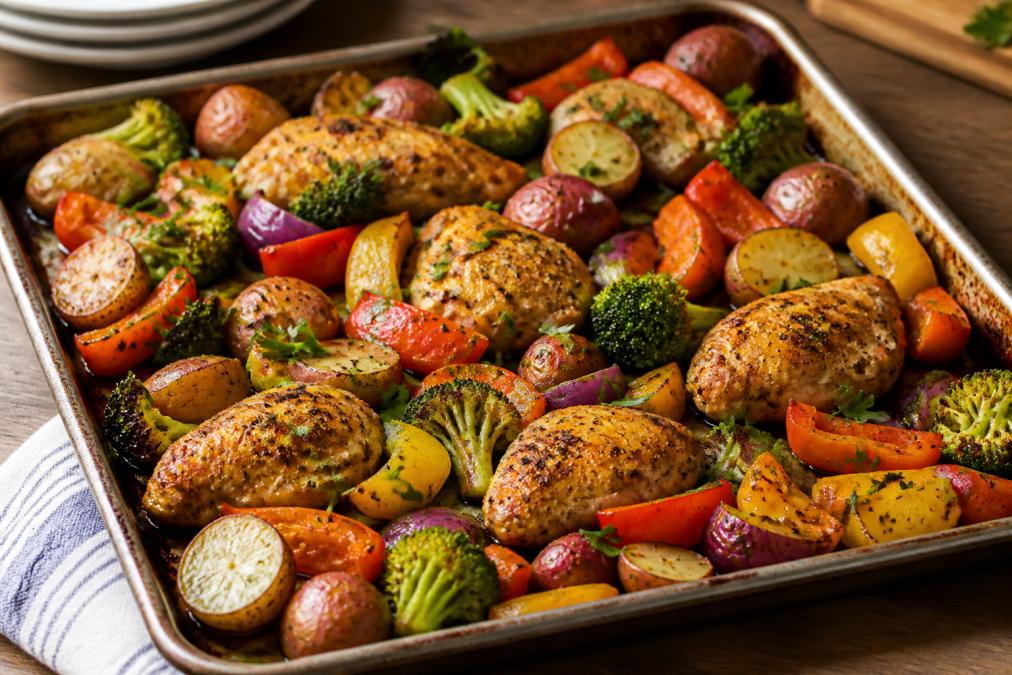
Sheet pan dinners are the weeknight workhorse. Toss protein and vegetables with olive oil, seasonings, and aromatics on a single pan. Roast at high heat until everything is golden and cooked through. Dinner is ready in 20-25 minutes.
The key is cutting everything to similar sizes so it cooks evenly. A 1-inch chicken breast chunk cooks at the same rate as a 1-inch broccoli floret. Season generously, roasting concentrates flavors, but you need enough seasoning to start with. kitchen gadgets for faster cooking.
One-skillet meals work the same way. Sauté aromatics, add protein, cook until done, add vegetables, finish with fresh herbs and acid. Everything happens in one pan, which means less cleanup and more time for what matters.
Flavor-Boosting Shortcuts
Pre-minced garlic saves time but loses flavor compared to mincing fresh garlic yourself. The trade-off is worth it on weeknights. Frozen vegetables work just as well as fresh for cooked dishes, they're already blanched, so they cook faster. Canned beans are a complete protein and cook in seconds.
The shortcut that actually matters: keep quality seasoning blends on hand. Rather than measuring individual spices, reach for a blend that's already balanced. Twisted Pepper Co.'s Taco Seasoning Mix and Savory Italian Seasoning are designed specifically for this, they're mixed to deliver balanced flavor without excess sodium, so you're not just saving time, you're making a better choice for your family's health.

These aren't substitutes for cooking skill. They're tools that let you apply skill faster.
Essential Cooking Techniques for Flavor
Three techniques unlock most of the flavor development that separates home cooking from restaurant-quality meals. None of them are complicated.
Sautéing and Browning
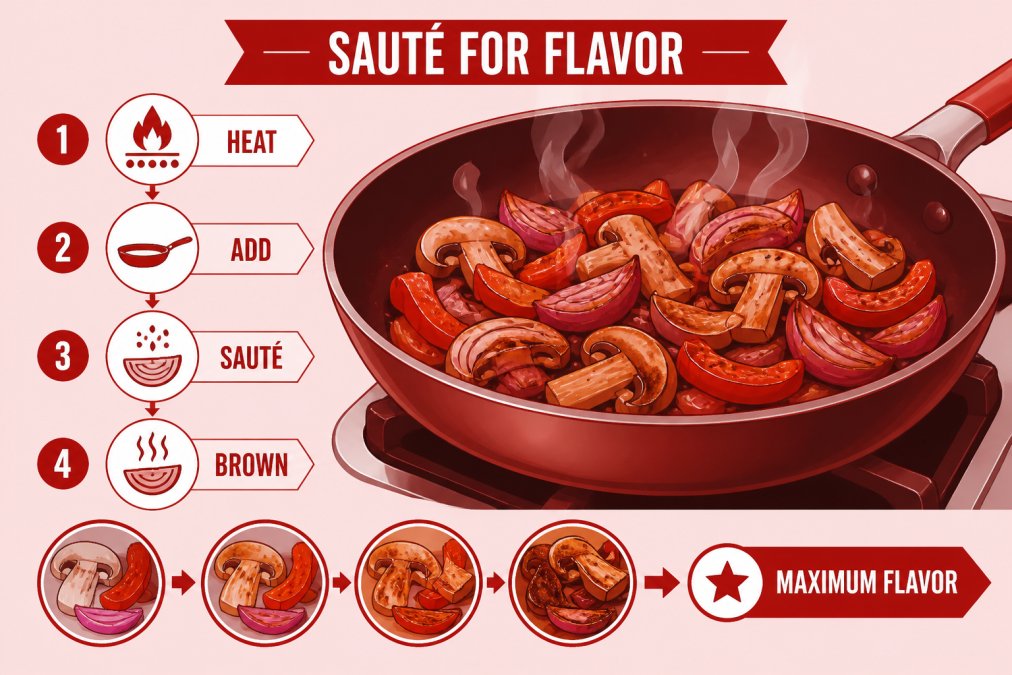
Sautéing is cooking food quickly in a small amount of fat over medium-high heat. The goal is to brown the surface while cooking the interior through. Browning creates flavor through the Maillard reaction, a chemical process that develops hundreds of new flavor compounds.
Heat your pan properly first. It should be hot enough that a drop of water sizzles and evaporates immediately. Don't overcrowd the pan, give ingredients space so they brown instead of steam. If you're cooking for a family, you might need to work in batches.
Season before the pan. Pat proteins dry so they brown better. Don't move them around constantly, let them sit for 2-3 minutes so a crust forms. Then flip once and finish cooking.
Roasting and Caramelization
Roasting is sautéing but in the oven, at higher heat, for longer. It works beautifully for vegetables, chicken, and root vegetables. The dry heat of the oven concentrates flavors and creates a caramelized exterior.
Temperature matters. Most roasting happens at 400-450°F (usda.gov). Higher heat means faster cooking and better browning. Toss vegetables with olive oil and salt, spread them on a sheet pan in a single layer, and roast until golden and tender. This takes 15-25 minutes depending on what you're roasting.
Caramelization is the browning process itself. It requires heat, time, and dry surfaces. Wet vegetables won't brown, they'll steam. Pat them dry, use enough oil, and don't crowd the pan.
Deglazing and Sauce Building
Deglazing is pouring liquid into a hot pan after cooking protein or vegetables. The liquid dissolves all the browned, flavorful bits stuck to the bottom of the pan. This creates the base of a sauce in seconds.
Use wine, vinegar, broth, or even water. Pour it in, let it bubble, scrape with a wooden spoon, and you've instantly created a sauce with deep flavor. Add butter or cream if you want richness. Add fresh herbs if you want brightness. This technique turns a simple sautéed chicken breast into something special.
Budget-Friendly Flavor Hacks
High-quality seasonings don't have to be expensive. The trick is buying whole spices in bulk and using them frequently so they stay fresh.
Dried chile peppers are cheaper than ground chili powder and more flavorful. Toast them in a dry pan for 30 seconds, then grind them in a spice grinder or blender. You've just made chili powder for a fraction of the cost.
Garlic powder is cheaper than buying fresh garlic constantly. It's not a replacement for fresh garlic in all applications, but it's perfect for dry rubs, seasoning blends, and quick weeknight cooking.
Vinegar and citrus juice are the cheapest way to add brightness and depth to any dish. A splash of vinegar at the end of cooking costs pennies and transforms the entire flavor profile. Lemon juice does the same thing. These are the most underutilized tools in home cooking.
Salt is salt, but kosher salt is easier to control than table salt because the crystals are larger. You can feel how much you're using. A good kosher salt costs the same as table salt and gives you better seasoning control.
Customizable Base Recipes You Can Master
Once you understand how to cook flavorful meals, you can apply the same principles to dozens of variations. These two recipes are your templates.
The Flavorful Grain Bowl
Start with a grain: rice, quinoa, farro, or couscous. Cook it in broth instead of water, this adds flavor automatically. While the grain cooks, prepare your other components.
Roast or sauté vegetables until they're golden. Season a protein, grilled chicken, seared tofu, roasted chickpeas. Make a simple sauce by whisking together oil, vinegar, and seasonings.
Assemble: grain as the base, vegetables on top, protein on top of that, sauce drizzled over everything, fresh herbs scattered across. This bowl works with any combination of ingredients. Mexican-inspired: cilantro-lime rice, roasted peppers and onions, seasoned black beans, lime vinaigrette. Italian-inspired: herb-infused farro, roasted vegetables, grilled chicken, olive oil and lemon dressing.
The Quick Protein and Veggie Sauté
This is the fastest dinner you can make. Heat a skillet, add aromatics, cook until fragrant. Add protein, cook until done. Add vegetables, cook until tender. Season, finish with acid and fresh herbs.
Total time: 15-20 minutes. The formula works with any protein and any vegetable. Chicken and broccoli with garlic and soy sauce. Shrimp and snap peas with ginger and lime. Beef and mushrooms with rosemary and balsamic vinegar.
The only variable that matters is seasoning. Season properly at each stage, taste as you go, and adjust at the end. That's the entire skill.
Cooking flavorful meals isn't about fancy techniques or expensive ingredients, it's about understanding how salt, acid, and umami work together, using quality seasonings that you actually enjoy, and mastering three core techniques: sautéing, roasting, and deglazing. The 30-minute timeline is realistic when you skip the filler and focus on what actually builds flavor.
At Twisted Pepper Co., we've built our entire approach around this philosophy. Our handcrafted seasonings like the Tuscan Roasted Garlic Seasoning are designed to deliver the flavor depth you'd spend 20 minutes building from scratch, but they're ready to use immediately. They're gluten-free, low-sodium, and contain no MSG, which means you're in complete control of your seasoning levels. Start with quality ingredients, apply these techniques, and your weeknight dinners will taste like you spent hours cooking when you actually spent 30 minutes. That's the entire promise of learning how to cook flavorful meals.

Frequently Asked Questions
Q: How can I make quick dinners taste like they took hours?
A: Focus on building flavor layers rather than cooking time. Use high-heat techniques like sautéing and roasting to develop caramelization, add aromatics like garlic and onions early, balance acid with lemon or vinegar, and layer seasonings throughout cooking instead of adding them all at once. Quality seasoning blends like those from Twisted Pepper Co. deliver flavor in minutes by combining complementary spices that would take longer to source individually.
Q: What are the best ways to add flavor to healthy meals without excess sodium?
A: Build flavor through techniques and ingredients rather than salt alone. Use umami-rich ingredients like mushrooms, tomatoes, and soy sauce in moderation. Layer fresh herbs, spices, and aromatics to create complexity. Twisted Pepper Co.'s low and light sodium seasonings like Tex-Mex Seasoning Mix deliver bold taste without the sodium overload, making it easy to season properly while managing your sodium intake.
Q: What are essential pantry staples for flavorful cooking?
A: Keep dried spices, garlic, onions, olive oil, acid (lemon juice or vinegar), and quality seasoning blends on hand. Fresh herbs add brightness, while canned tomatoes and broth provide umami depth. Specialty blends save prep time and ensure balanced flavor profiles. Twisted Pepper Co.'s seasoning mixes like Savory Italian Seasoning and Taco Seasoning Mix combine multiple complementary spices into one convenient product, eliminating the need to buy and measure individual ingredients.
Q: How do I balance salt and acid in my cooking?
A: Salt enhances flavor perception while acid brightens dishes and prevents them from tasting flat. Start by seasoning gradually with salt, then taste and adjust. If a dish tastes dull, add acid (lemon juice, vinegar, or lime) rather than more salt. This balance is critical in how to season food properly. Using pre-balanced seasoning mixes can help by combining salt, spices, and complementary flavors.
This article was written using GrandRanker