

How to Balance Acidity in Home Cooking: A Step-by-Step Guide
Quick Summary
To balance acidity in home cooking, taste the dish first and identify whether it is too sour. Then correct one thing at a time, using a pinch of sugar, fat, or salt, and add lemon juice or vinegar near the end of cooking. Taste again after each change.
- Taste a small spoonful first and note whether the sourness lingers or puckers.
- Add about 1/4 teaspoon of sugar per 2 cups of sauce, then taste again.
- Add 1 tablespoon of olive oil or 1/2 tablespoon of butter per cup of sauce.
- Add lemon juice and vinegar near the end of cooking so their brightness stays fresh.
- Change only one thing at a time, since adding salt, sugar, and fat together overshoots.
Table of Contents
- How to Balance Acidity in Home Cooking: A Step-by-Step Guide
- Why Acidity Makes Some Home-Cooked Dishes Taste Off
- Step 1: Taste and Identify Whether Your Dish Is Too Sour
- Step 2: Balance Acidity in Tomato Sauce and Other Acidic Bases
- Step 3: Use Fat, Salt, and Sweetness to Round Out Sharp Flavors
- Step 4: Use Lemon Juice and Vinegar at the Right Moment
- Step 5: Build Overall Flavor Balance Across the Whole Meal
- Pick Your Next Dinner and Season It With Confidence
- Frequently Asked Questions
How to Balance Acidity in Home Cooking: A Step-by-Step Guide
Last Updated: November 13, 2026
Why Acidity Makes Some Home-Cooked Dishes Taste Off
Too much acid can make a home-cooked dish taste sharp, flat, or just plain wrong. The fix is usually simple once you know what to look for. Balancing acidity in home cooking comes down to tasting, adjusting, and knowing which tools to reach for.
Acid is a natural part of good cooking. Tomatoes, citrus, vinegar, and wine all bring brightness that makes food taste alive. But when acid runs too strong, it overpowers everything else on the plate.
This guide from Twisted Pepper Co. walks you through five practical steps. You will learn how to taste, fix, and finish a dish so the flavors feel balanced.
Johns Hopkins Medicine guidance on foods and heartburn
Step 1: Taste and Identify Whether Your Dish Is Too Sour
Start by tasting your dish before you add anything. Take a small spoonful and pay attention to the first sharp note that hits your tongue.
Ask yourself a few quick questions:
- Does the sourness linger at the back of your mouth?
- Does the dish feel thin or puckering?
- Does it taste bright in a good way, or harsh?
Watch out: Do not add salt, sugar, and fat all at once. Change one thing at a time, then taste again.
Step 2: Balance Acidity in Tomato Sauce and Other Acidic Bases
Tomato sauce is the most common place home cooks meet runaway acidity, and it is also the easiest place to learn the fix because you can taste the change in seconds. The sourness usually comes from one of three sources, and each has a different correction.
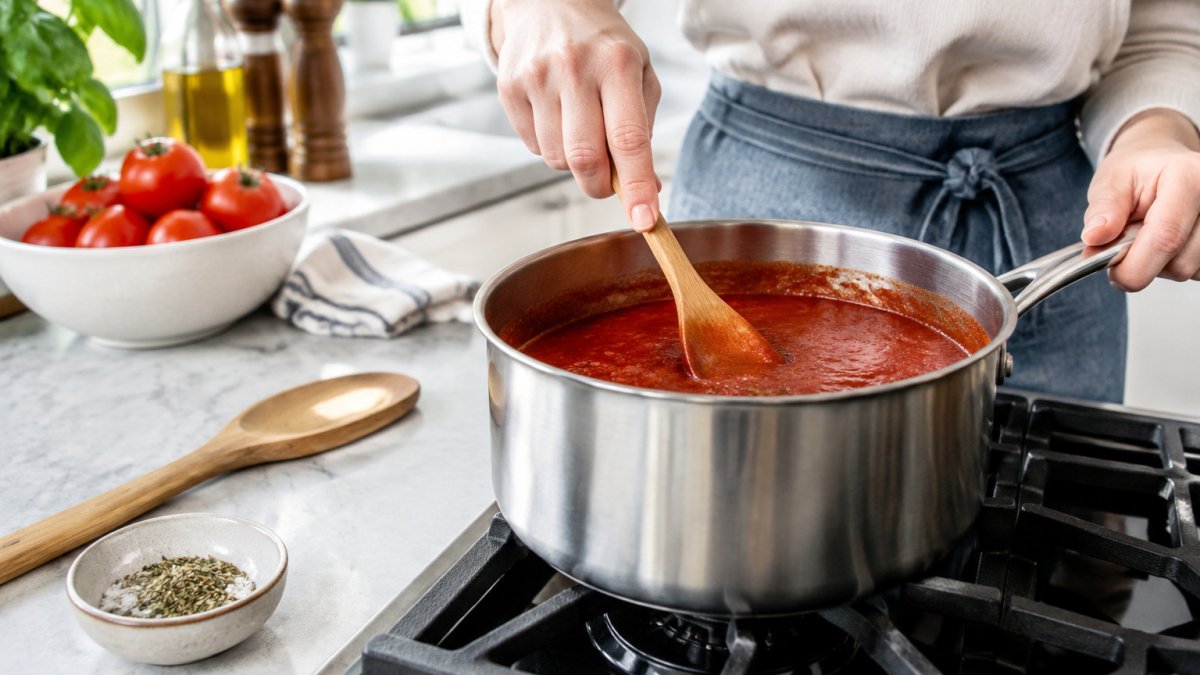
Diagnose first. Taste a spoonful and ask which of these three you are dealing with:
- Underripe or canned-with-citric-acid tomatoes. The sourness is sharp and forward, right at the front of the tongue.
- Over-reduction. The sauce tastes concentrated and puckering because water cooked off and the acid concentrated with it. The fix is volume, not sweetness.
- Raw onion or garlic bite. The sharpness is pungent rather than sour. That is allium, not acid, and sugar will not fix it, longer cooking will.
Corrections, in order of least to most intervention:
- A pinch of sugar, start with 1/4 teaspoon per 2 cups of sauce. Stir, simmer 30 seconds, taste. Sugar rounds sourness directly, but it cannot rescue a sauce that is also thin or bitter; if it does not help after two pinches, stop, you are masking, not balancing.
- Fat, 1 tablespoon of olive oil or 1/2 tablespoon of butter per cup of sauce. Fat coats the tongue and blunts the sharp edge without changing the flavor profile. Butter adds richness; olive oil keeps the sauce leaner. Add at the end so the fat does not break.
- A small amount of grated carrot or a pinch of baking soda. Carrot adds natural sweetness and body as it simmers. A pinch of baking soda (about 1/8 teaspoon per quart) neutralizes acid chemically, use it only when the sauce is genuinely too sour, because too much turns the sauce soapy and dull.
- Simmer longer only if the sauce is watery. If it is already thick, more simmering concentrates the acid further and makes the problem worse. This is the most common mistake home cooks make with tomato sauce.
Other acidic bases. The same logic applies to wine-based pan sauces, vinegar-heavy dressings, and citrus-forward marinades. For a wine reduction that turns sharp, whisk in a knob of cold butter off the heat, the emulsion softens the acid and gives the sauce body. For a dressing that is too sour, add oil first, then a small amount of honey or Dijon mustard, which emulsifies and rounds the vinegar at the same time.
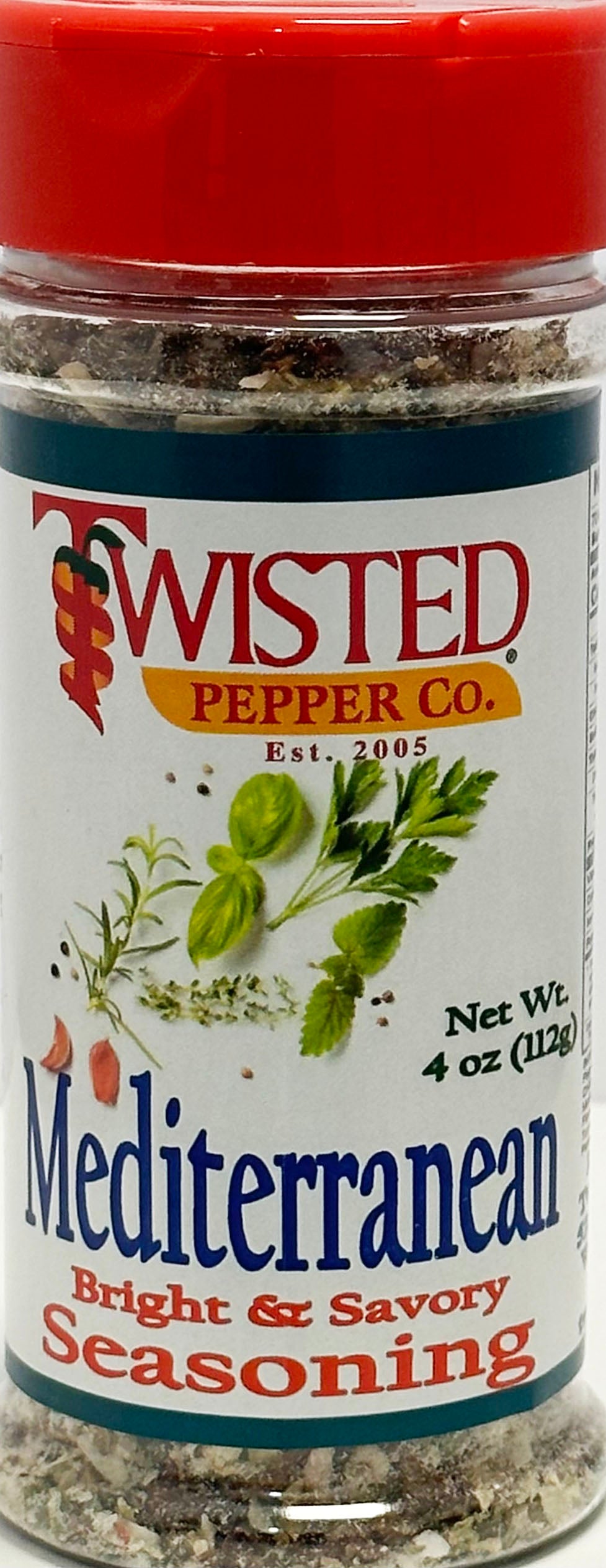
Our Mediterranean Seasoning adds herbal depth without more sharp acid, which helps a tomato base taste rounded. Mediterranean Seasoning 4.0 oz. ($12.99) works well for sprinkling into a simmering sauce.
Watch out: Do not add sugar, fat, and baking soda all at once, you will overshoot and end up with a sweet, flat sauce you cannot walk back.
Here is a quick reference for the main corrections to try on an overly acidic tomato sauce, in the order to attempt them.
| Correction | Amount | Note |
|---|---|---|
| Pinch of sugar | 1/4 tsp per 2 cups of sauce | Stop after two pinches if it does not help |
| Fat (olive oil or butter) | 1 tbsp oil or 1/2 tbsp butter per cup | Add at the end so the fat does not break |
| Grated carrot or baking soda | Carrot for body; 1/8 tsp baking soda per quart | Baking soda only if genuinely too sour |
| Simmer longer | Only if the sauce is watery | Thick sauce concentrates acid further |
Step 3: Use Fat, Salt, and Sweetness to Round Out Sharp Flavors
Fat, salt, and sweetness each soften acid through a different mechanism, and the order you apply them matters more than the amounts. Most home cooks reach for all three at once and end up with a dish that tastes muddy. The repeatable process below is the one professional cooks use, scaled to a home kitchen.
The mechanism, briefly. Fat coats the tongue and physically blocks sour receptors, so it blunts sharpness without changing flavor. Salt does not reduce acid, it suppresses bitterness and amplifies the other flavors around it, which makes acid read as brightness instead of harshness. Sweetness counters sourness directly at the taste-receptor level, which is why a pinch of sugar works fast but can tip a dish toward candy if you overshoot.
The order of operations:
- Salt first, in small increments. Add about 1/8 teaspoon at a time to a 2-cup batch, stir, and taste. If the dish tastes flat rather than sour, salt is usually the missing piece, acid reads as harsh when there is not enough salt to frame it.
- Fat second. Add 1 teaspoon of olive oil, butter, or cream per cup of sauce or per serving of vegetables, off the heat for dairy so it does not break. Taste. If the sharp edge softened but the dish now tastes heavy, you added too much, thin with a splash of stock or water.
- Sweetness last, and sparingly. Start with 1/4 teaspoon of honey or sugar per 2 cups. Caramelized onion is a slower, more layered option: cook diced onion in fat over medium-low heat for 20 to 25 minutes until deep brown, then stir it in, it adds sweetness and body at the same time.
Tasting checkpoints. Taste after each addition, not at the end. Use a clean spoon each time so you are not carrying the previous taste forward. If you cannot tell whether the dish needs salt or acid, taste a small amount on a neutral cracker, the cracker resets your palate and makes the imbalance obvious.
When the levers are not enough. If salt, fat, and a pinch of sugar have not fixed a sharp dish, the problem is usually an ingredient, not the balance, an over-reduced stock, a burnt allium, or a wine that was too acidic to begin with. In that case, dilute with unsalted stock or water rather than adding more of anything else.
A well-balanced blend can do much of this work for you. Our Taco Seasoning Mix shows how layered seasoning rounds out sharp flavors. If you want to cut back on sodium while still building flavor, natural alternatives to high-sodium sauces offer another route.

Watch out: Do not taste with the same spoon you used to stir, carryover from a previous taste makes you think the dish is saltier or sweeter than it is, and you will under-correct.
Step 4: Use Lemon Juice and Vinegar at the Right Moment
Timing matters when you add acid. Add lemon juice and vinegar near the end of cooking so their brightness stays fresh rather than cooking off.
Keep these tips in mind:
- Add a small amount, then taste before adding more.
- Use a light hand with vinegar, since it is stronger than lemon juice.
- Stir in lemon zest for aroma without extra sourness.
Acid added too early can turn bitter. Acid added at the end wakes up the whole dish.
Step 5: Build Overall Flavor Balance Across the Whole Meal
A dish can taste right on its own and still clash with the rest of the meal. Think about the full plate before you serve.
Balance a meal by pairing:
- A bright, acidic side with a rich main
- A creamy soup with a crisp salad
- A smoky grilled protein with a fresh herb finish
Our Creamy Tomato Bisque Dry Soup Mix makes a warm, creamy bowl that is easy to pair with other dishes. For a smoky finish, see our guide to the best wood chips for grilling chicken.

Pick Your Next Dinner and Season It With Confidence
Balancing acidity gets easier with practice. Taste often, change one thing at a time, and trust your palate.
Start with a dish you already cook well. Apply these five steps and notice how the flavors shift. Once you see the difference, you will know when a dish needs brightness, richness, or a little sweetness.
For fast, flavorful dinners, explore our quick, healthy 30-minute meal ideas and find your next favorite recipe.
Tired of bland dinners? Twisted Pepper Co. makes it easy to add big flavor in minutes. Our handcrafted, gluten-free seasonings and soup mixes help you cook with confidence.
Frequently Asked Questions
What is the 30/30/30 rule for restaurants?
The 30/30/30 rule is a restaurant planning idea often described as roughly 30 percent of a menu's cost going to food, with 30 percent for labor and 30 percent for overhead. For home cooks, it is less useful than the tasting habits that make restaurant food taste balanced. Focus on tasting after each addition, adjusting salt, acid, fat, and sweetness in small steps. Those checkpoints do more for flavor than any budgeting formula, and they apply to every dish you cook.
How do you balance too much acidity in a dish?
Start by adding a small pinch of salt and a little fat, such as butter, olive oil, or cream, because both soften the sharp edge of acidity. A pinch of sugar or a splash of stock can also round out sourness. Taste after each adjustment and stop once the dish tastes balanced. Adding too much of any one ingredient can create a new problem, so make small changes and retaste. If the dish is still too sharp, dilute part of it with unacidified ingredients.
When should you add lemon juice or vinegar while cooking?
Add lemon juice or vinegar near the end of cooking, then taste. Heat can dull fresh acidity, so a finishing splash often brightens a dish more than an early addition. For braises, sauces, and soups, add a little at a time and let it simmer briefly before deciding if more is needed. Fresh lemon juice tends to taste brighter than bottled juice, so use it when you can. Keep a small bowl of lemon wedges nearby for final adjustments.
Does adding sugar reduce acidity in food?
Sugar does not remove acid, but it can make acidity taste less sharp by balancing it on the palate. A small amount works well in tomato sauces, vinaigrettes, and fruit-based sauces. Add sugar gradually, tasting after each addition, because too much will make the dish taste sweet rather than balanced. Fat and salt often do a better job of softening sourness, so try those first and use sugar only when the dish still tastes sharp.
