

Easy BBQ Rubs for Chicken: 5 Recipes and How to Use Them
Table of Contents
- What You'll Need to Make Easy BBQ Rubs for Chicken
- Two Easy BBQ Rub Recipes for Chicken (Sweet and Spicy)
- How to Apply Dry Rub to Chicken Without Wasting It
- How Long to Marinate Chicken With Dry Rub
- Why a No MSG Chicken Rub Matters (and How to Check Labels)
- Best Chicken Cuts, Cooking Methods, and Sauce Pairings
- Storing Homemade Rubs and Common Mistakes to Avoid
- Frequently Asked Questions
Last Updated: September 13, 2026
What You'll Need to Make Easy BBQ Rubs for Chicken
Easy BBQ rubs for chicken are simple blends of pantry staples, brown sugar, paprika, garlic powder, onion powder, salt, and pepper, mixed in under five minutes. You likely have most of them already. This guide from Twisted Pepper Co. covers two reliable recipes, how to apply them, and how to avoid bland, crustless chicken.
A dry rub works differently than a marinade: it sits on the surface, drawing out moisture and forming a seasoned crust called bark as it cooks. That crust is where the flavor lives.
Pantry Staples That Pull Their Weight
You don't need a specialty store run. These ingredients do the heavy lifting:
- Brown sugar for sweetness and caramelization
- Smoked paprika for color and a smoky base
- Garlic powder and onion powder for savory depth
- Chili powder and cayenne for heat
- Dry mustard for a subtle tang
- Kosher salt and black pepper for seasoning
Freshness matters more than brand. Spices sitting for two years taste like dust, if your paprika is dull brown instead of deep red, replace it.
The One Rule for a Balanced Rub
Follow the 4-2-1 framework: four parts sweet, two parts savory, one part heat. A common mistake is overloading on sugar, which burns before the chicken cooks through. On direct heat, dial the sugar back and lean on paprika.
Two Easy BBQ Rub Recipes for Chicken (Sweet and Spicy)
Both recipes take about three minutes to mix and make enough for several meals. Store each in an airtight container.
Sweet Brown Sugar Rub
This is the crowd-pleaser that works on picky eaters and kids.
- 1/4 cup brown sugar
- 2 tablespoons smoked paprika
- 1 tablespoon garlic powder
- 1 tablespoon onion powder
- 1 teaspoon kosher salt
- 1 teaspoon black pepper
Whisk until no sugar clumps remain; the blend should look like wet sand with a deep red tint.
Smoky Spicy Rub
For heat without losing the savory base, this version swaps sugar for chili powder and cayenne.
- 2 tablespoons smoked paprika
- 1 tablespoon chili powder
- 1 tablespoon garlic powder
- 1 tablespoon onion powder
- 1 teaspoon dry mustard
- 1 teaspoon cayenne pepper
- 1 teaspoon kosher salt
Taste it before it hits the chicken. If the cayenne bites too hard, add another tablespoon of paprika to soften it.
How to Apply Dry Rub to Chicken Without Wasting It
Applying dry rub correctly means patting the chicken dry, coating it lightly with oil, then pressing the rub into the surface with your fingers rather than sprinkling it on. Rub that lands on the cutting board is rub you won't taste.
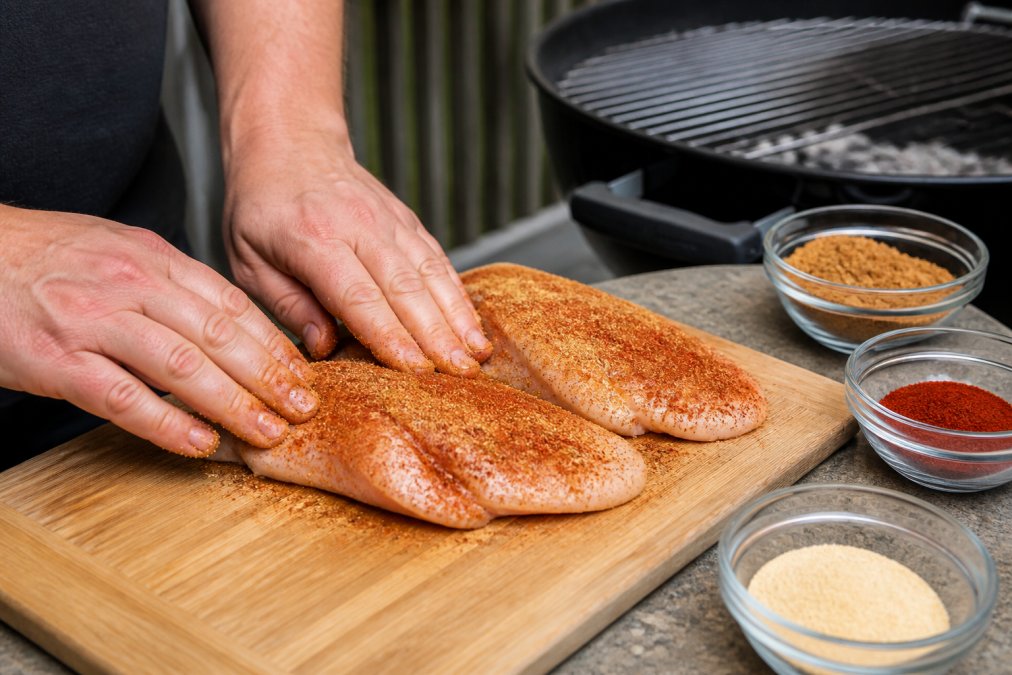
Here's the sequence that works:
- Pat the chicken dry with paper towels. Wet skin steams instead of sears.
- Rub a thin layer of oil over the surface so the blend has something to cling to.
- Sprinkle from about 10 inches above the meat for even coverage.
- Press the rub in with your fingertips. Don't just dust it on.
- Aim for roughly one tablespoon of rub per pound of chicken.
How Long to Marinate Chicken With Dry Rub
Dry rub needs at least 20 minutes on the chicken, but 2 to 4 hours in the refrigerator delivers noticeably deeper flavor. (fsis.usda.gov) Unlike a wet marinade, it doesn't need overnight soaking, and too long can dry the surface.
The timing depends on the cut:
| Cut | Minimum Time | Ideal Time | Notes |
|---|---|---|---|
| Boneless breasts | 20 minutes | 1-2 hours | Longer dries them out |
| Bone-in thighs | 30 minutes | 2-4 hours | Handles longer contact well |
| Whole chicken | 1 hour | 4-8 hours | Rub under the skin |
| Wings | 20 minutes | 1-2 hours | Pat very dry first |
Even 20 minutes makes a difference: the salt starts pulling moisture to the surface almost immediately, which lets the crust form later.
Why a No MSG Chicken Rub Matters (and How to Check Labels)
A no MSG chicken rub skips added monosodium glutamate, and for anyone managing gluten sensitivity, sodium intake, or a nightshade-free diet, the ingredient panel is the only reliable source of truth. The front of the jar is marketing; the panel is chemistry.

What the Label Claims Actually Mean
- "No MSG added", describes what went into the blend; glutamates can still occur naturally in tomato powder, hydrolyzed proteins, and yeast extract.
- "MSG-free", a stronger claim about what's absent, but silent on sodium, sugar, and anti-caking agents.
- "Gluten free", FDA-defined as under 20 parts per million of gluten, a real threshold (the FDA).
- "Low sodium", 140 mg or less per serving; "light sodium" means at least 50% less than the regular version (the FDA).
Ingredients That Hide in Commercial Blends
Scan the panel for these:
- Modified food starch and maltodextrin, gluten-adjacent carriers; usually corn- or potato-derived, but worth checking if you're strict.
- Silicon dioxide and calcium silicate, anti-caking agents that add nothing to flavor.
- Dextrose and maltodextrin, sugars used as carriers that can push a "savory" rub sweet.
- Yeast extract and hydrolyzed vegetable protein, umami boosters some people avoiding glutamates skip.
- Salt listed first, salt is the cheapest ingredient in most commercial rubs; if it's first, the blend is mostly salt.
Dietary Modifications You Can Make at Home
This is where a homemade blend beats a jar, you control the variables.
- Low-sodium: Cut the kosher salt by half and add a teaspoon of garlic powder or dried herbs to compensate; salt carries flavor, so removing it without a replacement leaves the blend flat.
- Keto-friendly / sugar-free: Swap brown sugar for a granulated erythritol-allulose blend at 1:1. It won't caramelize, so lean on paprika for color rather than bark.
- Nightshade-free: Paprika, cayenne, and chili powder are nightshades. Replace with equal volume of ground cumin, coriander, and a pinch of turmeric for color.
- Gluten-free: Most single-ingredient spices are naturally gluten-free, but cross-contamination at the packing facility is the real risk. Look for a certified gluten-free seal if you're celiac.
Twisted Pepper Co. builds its rubs around no MSG added and low and light sodium, which takes the label-reading guesswork out of the equation, but the panel-reading habits above are worth keeping regardless of which jar you reach for.
Best Chicken Cuts, Cooking Methods, and Sauce Pairings
Cut and cooking method decide how well a rub performs: sugar-heavy blends need lower, slower heat, while savory blends take direct flame. Choose your sauce based on the rub, not the other way around.
Cuts and Heat: What Works Best
- Bone-in thighs, forgiving and juicy, ideal for smoking or indirect heat; the fat under the skin bastes the rub so sugar caramelizes instead of scorching.
- Drumsticks, the rub clings well to the rounded surface. Cook over medium indirect heat 25-35 minutes, turning every 10.
- Wings, best for high heat and short cook times. Pat very dry and use less sugar so the skin crisps rather than burns.
- Boneless breasts, use a light rub and quick searing; a heavy sugar coating chars before the interior hits 165°F.
- Whole chicken, rub under the skin and on the surface. A 4-5 lb bird needs about 4 tablespoons total, split between cavity, under the skin, and exterior.
- Spatchcocked chicken, the fastest route to even cooking. Lay flat, rub both sides, roast at 425°F for 40-50 minutes for more bark per bite.
How Much Rub Per Pound, The Ratio Most Recipes Skip
This number prevents both waste and over-seasoning, and almost no recipe blog gives it to you.
- Boneless breasts and thighs: 1 tablespoon per pound
- Bone-in pieces: 1 to 1½ tablespoons per pound, since some rub stays on the bone
- Wings: 1½ tablespoons per pound, the skin-to-meat ratio is high
- Whole chicken: about 1 tablespoon per pound, plus extra for the cavity
A 3-pound pack of thighs wants 3 to 4½ tablespoons. The coated surface should look evenly dusted, not caked, visible dry patches will taste raw and gritty.
The Science of Bark: Why Sugar and Spice Behave Differently
Bark isn't just dried rub, it's a chemical reaction driven by two things:
- Maillard reaction, amino acids and reducing sugars react above roughly 300°F, creating the browned, savory crust. A dry surface matters: water boils at 212°F and holds the surface below Maillard temperatures until it evaporates.
- Sugar caramelization, brown sugar caramelizes around 320°F and burns past 350°F. On a direct-heat grill the surface can hit 400°F+ in seconds, which is why sugar-heavy rubs scorch on grills but shine in smokers at 225-275°F.
In an oven, a 375°F setting is a sweet spot for sugar-based rubs on bone-in pieces, hot enough for Maillard, cool enough that the sugar doesn't blacken before the meat cooks through.
Pairing Rubs With BBQ Sauce
Sauce should complement the rub, not bury it: match the sauce's dominant note to the rub's, then contrast on the secondary note.
- Sweet brown sugar rub → tangy vinegar-based sauce (Carolina-style); the acid cuts the sugar.
- Smoky spicy rub → thicker, sweeter sauce (Kansas City-style); molasses and tomato round off the cayenne.
- Mustard-forward rub → mustard-based sauce (South Carolina-style) doubles down, or a thin vinegar sauce for contrast.
- Herb-heavy rub → skip the sauce or use a light glaze; a heavy sauce flattens the herbs.
- Citrus or lime rub → a bright, thin sauce with vinegar and a touch of honey; avoid smoky sauces that fight the citrus.
Brush sauce on in the last 5-10 minutes, since most sauces contain sugar that burns quickly over direct heat. For sauce on the side, warm it separately so the crust stays intact.
Storing Homemade Rubs and Common Mistakes to Avoid
**** Heat, light, and air are the three enemies. Keep the blend away from the stove and out of direct sunlight.
Mistakes that show up again and again:
- Mixing with damp hands or wet spoons: introduces moisture and causes clumping
- Storing in a clear jar on the windowsill: light degrades paprika and chili powder fast
- Using old spices: if it doesn't smell strong when you open the jar, it won't taste strong on the chicken
- Skipping the salt: salt carries the other flavors; without it, everything tastes muted
For bulk batches, make double and keep a small jar in the kitchen while the rest stays sealed in the pantry. Label with the date.
If you'd rather skip the measuring altogether, Twisted Pepper Co. offers a Chicken Rub that's handcrafted, gluten free, and made with no MSG added. Dana from Wichita put it simply: the Jalapeno Lime Rub is "absolutely amazing." For a broader set, the Just Grill It Gift Bag bundles three jars, and it makes a solid gift for anyone who grills.

Building a rub from scratch is one of the easiest wins in home cooking, but it only pays off if the blend is balanced, applied properly, and given enough time to work. Twisted Pepper Co. takes the guesswork out with handcrafted, gluten-free rubs built around no MSG added and low and light sodium, shipped fast to your door. Whether you mix your own or reach for a jar, the goal is the same: chicken that tastes like you put in more effort than you did. Get started with Twisted Pepper Co. and find your go-to blend.
Frequently Asked Questions
What is the best rub for BBQ chicken?
The best rub balances sweet, salty, and smoky notes. A reliable base is 2 tablespoons brown sugar, 1 tablespoon smoked paprika, 2 teaspoons garlic powder, 2 teaspoons onion powder, 1 teaspoon chili powder, 1 teaspoon kosher salt, and 1/2 teaspoon black pepper. If you want to skip the measuring, a pre-mixed option like Twisted Pepper Co.'s Chicken Rub delivers that same savory-sweet profile in one jar and works on grilled, smoked, baked, or broiled chicken.
Should I put oil on chicken before applying a dry rub?
Yes. A thin coat of oil helps the rub stick and encourages browning during cooking. Pat the chicken dry first, brush on about a teaspoon of neutral oil or olive oil per piece, then press the rub in with your fingers. Skip the oil only if you are applying the rub hours ahead and refrigerating, since the salt and sugar will draw moisture to the surface and create their own tacky layer.
How long should a dry rub sit on chicken before grilling?
Twenty minutes is the practical minimum for flavor to start absorbing. For deeper seasoning, refrigerate for 2 to 4 hours. Beyond 4 hours, the salt can start to cure the meat and change the texture, so keep longer rests to 24 hours at most and use a lighter hand with the salt. Bone-in pieces handle longer rests better than thin cutlets.
Can I make a no MSG chicken rub at home?
You can. Most homemade blends never contain added MSG because the flavor comes from spices, herbs, salt, and sugar. Check every jar in your pantry for ingredients like monosodium glutamate, hydrolyzed soy protein, autolyzed yeast extract, and yeast extract, which all signal added glutamates. Buying a blend that is labeled no MSG added, like Twisted Pepper Co.'s rubs, takes the label-reading out of the equation.