

Best Spices for Pan-Seared Chicken Breasts
Table of Contents
- The Best Spices for Pan-Seared Chicken Breasts
- Best Seasoning for Chicken Breast: Core Spices Explained
- How to Season Chicken Breast Before Pan-Searing
- Pan-Seared Chicken Breast Recipe: Step-by-Step
- Flavor Variations for Different Cuisines
- Fresh vs. Dried Herbs and Whole vs. Ground Spices
- Common Mistakes to Avoid
- Conclusion
- Frequently Asked Questions
Last Updated: October 9, 2026
The Best Spices for Pan-Seared Chicken Breasts
Why the Right Spice Blend Matters
Getting pan-seared chicken breasts right comes down to the spices you choose. A thoughtful seasoning strategy applied before the pan heats up is the difference between bland and unforgettable, creating a crust that seals in moisture while delivering bold, layered taste in every bite.
At Twisted Pepper Co., we offer seasoning blends that transform simple chicken breasts into flavorful meals.
Individual Spices vs. Blended Seasonings
You have two paths forward: build your own blend from individual spices or use a pre-mixed seasoning designed for this exact purpose.
Individual spices give you complete control: adjust ratios, experiment with combinations, and dial in exactly how much salt or heat you want.
Pre-blended seasonings offer consistency and convenience. When spices are already mixed, you're not guessing at ratios or worrying about one flavor overpowering another.
| Approach | Best For | Pros | Cons |
|---|---|---|---|
| Individual spices | Experimentation and control | Full customization, cost-effective | Time-consuming, requires skill |
| Pre-blended seasonings | Convenience and consistency | Fast, foolproof ratios, reliable flavor | Less flexibility, slightly higher cost |
Best Seasoning for Chicken Breast: Core Spices Explained
Salt and Black Pepper: The Foundation
Salt and black pepper are where every good seasoning strategy starts. Salt enhances all the other flavors you're layering on top, while black pepper adds a subtle bite and complexity that makes the other spices sing.
The mistake most people make is applying salt and pepper too lightly. A generous pinch of each on both sides is your baseline; in a full spice rub, they should be present but not dominant, the foundation that lets other flavors come through.
Garlic Powder and Onion Powder: Savory Depth
Garlic powder and onion powder deliver savory depth that fresh garlic and onion can't match in a dry rub. When you sear the chicken, these powders caramelize slightly, creating a more complex, umami-forward flavor.
Use both together: garlic powder alone can taste one-dimensional, onion powder alone can feel sweet, but combined they create a savory backbone that supports whatever else you add. A typical ratio is one part garlic powder to one part onion powder.
Paprika and Chipotle: Color and Heat
Paprika brings color and a subtle sweetness, mild enough not to overpower but distinctive enough to be noticed. Chipotle powder, smoked jalapeño, adds real heat and a smoky character that works beautifully with chicken.
Use paprika in larger quantities (around 1 tablespoon per rub) and chipotle more sparingly (1/2 to 1 teaspoon, depending on desired heat). Paprika gives you a golden-brown crust; chipotle adds complexity and warmth, creating a flavor profile that feels intentional, not generic.
Dried Herbs: Oregano, Thyme, and Rosemary
Dried oregano and thyme are workhorses in chicken seasoning. Oregano brings an earthy, slightly peppery note; thyme adds woodsy complexity. Rosemary is more assertive, use it carefully unless you want its strong flavor to dominate.
A good ratio is 1 tablespoon of oregano, 1 teaspoon of thyme, and 1/2 teaspoon of rosemary per full rub. These dried herbs hold up to pan heat without burning like fresh herbs, and distribute evenly for consistent flavor.
Mustard Powder and Ground Coriander: Complexity
Mustard powder adds a subtle sharpness and tanginess that rounds out a spice blend. It's not obvious, you won't taste "mustard", but it adds a layer that makes people wonder what the secret ingredient is.
Use mustard powder sparingly: 1/4 to 1/2 teaspoon per rub is plenty. Ground coriander works at a similar level. These aren't the stars of the show, but they're the supporting players that make the whole thing work.
How to Season Chicken Breast Before Pan-Searing
Timing: When to Apply Your Rub
Apply your spice rub at least 20 minutes before cooking, longer is better. If you have time, refrigerate the seasoned chicken for 1 to 2 hours, giving the salt time to work into the protein and help retain moisture during cooking.
Don't apply the rub right before searing. If you do, the spices will sit on the surface without being absorbed, and they're more likely to burn in the hot pan. The waiting period is crucial.
Spice Quantities: Getting the Ratios Right
For two chicken breasts (about 8 ounces each), use approximately 1 to 1.5 tablespoons of spice rub total. Here's a practical starting point:
- Salt: 1/2 teaspoon
- Black pepper: 1/4 teaspoon
- Garlic powder: 1/2 teaspoon
- Onion powder: 1/2 teaspoon
- Paprika: 1 teaspoon
- Dried oregano: 1/2 teaspoon
- Dried thyme: 1/4 teaspoon
- Mustard powder: 1/4 teaspoon
Mix these together and press the blend firmly onto both sides of the chicken. The goal is even coverage, not a thick crust, so the spices adhere rather than sit loose on top.
Avoiding Burnt Spices During Cooking
This is where technique matters. Heat your pan and add oil, but don't let it smoke.
The spices will brown as the chicken sears, and that browning creates flavor. Avoid letting the pan get so hot that the spices char and turn bitter.
One pro tip: don't flip the chicken repeatedly. Flip once, halfway through cooking, or the spices won't develop that golden-brown crust and are more likely to scrape off into the pan.
Pan-Seared Chicken Breast Recipe: Step-by-Step
What You'll Need
- Two chicken breasts (6 to 8 ounces each)
- 1 to 1.5 tablespoons of your chosen spice blend
- 1 to 2 tablespoons of olive oil
- A stainless steel or cast-iron skillet
- A meat thermometer (optional but recommended)
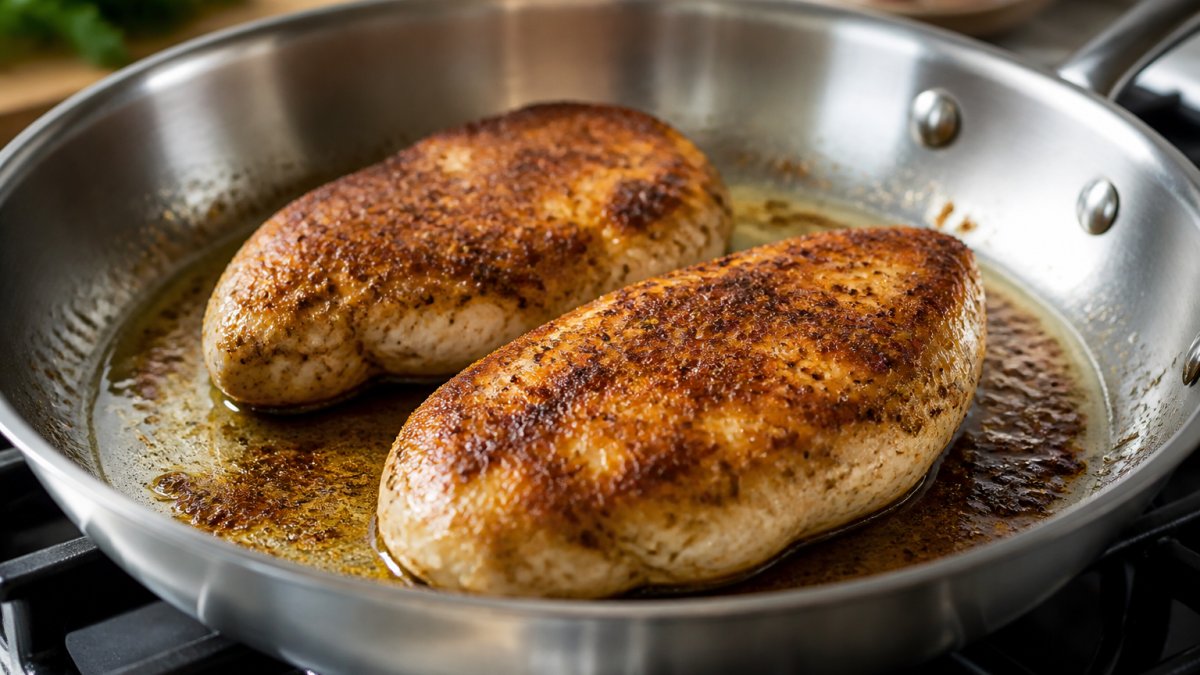
Pat the chicken breasts dry with paper towels before seasoning; surface moisture prevents proper browning and can cause the spices to slide off.
The Cooking Process
Step 1: Season and rest (20 minutes to 2 hours) Apply your spice rub to both sides of the chicken, pressing gently so it adheres.
Step 2: Preheat the pan (2 minutes) Heat your skillet over medium-high heat for 2 minutes.
Step 3: Sear the first side (4 to 5 minutes) Place the chicken in the pan without moving it.
Step 5: Rest (5 minutes) Remove the chicken from the pan and let it rest on a plate for 5 minutes.
Achieving Juicy, Tender Results
The secret to juicy chicken is not overcooking it. Pull the pan off heat when the internal temperature reaches 160°F; carryover cooking brings it to 165°F while it rests. Wait until 165°F in the pan and it'll be overdone.
Don't skip the resting period; those 5 minutes make the difference between dry and juicy. The salt in your rub also helps retain moisture by breaking down proteins slightly.
Flavor Variations for Different Cuisines
Italian-Inspired Pan-Seared Chicken
For Italian flavors, lean heavily on oregano, thyme, and garlic. Add a pinch of red pepper flakes for subtle heat. Our Savory Italian Seasoning 4.0 oz at $12.99 is a combination of Italian Spices that delivers a dinnertime sensation!

If you're building your own blend, use 1 tablespoon oregano, 1/2 teaspoon thyme, 1/2 teaspoon garlic powder, 1/4 teaspoon red pepper flakes, and salt and pepper to taste. Serve with a squeeze of lemon and fresh parsley.
Tex-Mex and Southwest Flavors
Tex-Mex chicken needs cumin, chili powder, and a touch of lime. Our Tex-Mex Seasoning Mix 5 oz at $9.50 includes chile powders, cumin, onion, garlic, paprika, coriander, black pepper, smoked kosher salt, sugar, & select spices.
For a DIY approach, combine 1 teaspoon cumin, 1 teaspoon chili powder, 1/2 teaspoon garlic powder, 1/2 teaspoon onion powder, 1/4 teaspoon paprika, and salt and pepper. After searing, finish with a squeeze of fresh lime juice.
Mediterranean and Greek Seasonings
Mediterranean chicken calls for oregano, garlic, and a hint of lemon. Our Mediterranean Seasoning 4.0 oz at $12.99 can be used for fish, chicken, seafood, veggies, salads, and pasta salads.

If mixing your own, use 1 tablespoon oregano, 1/2 teaspoon garlic powder, 1/4 teaspoon dried basil, and a pinch of black pepper. The simplicity here is intentional, Mediterranean cooking lets the quality of ingredients shine through rather than masking them with heavy spicing.
Fresh vs. Dried Herbs and Whole vs. Ground Spices
Fresh herbs are vibrant but delicate: they burn easily in a hot pan and lose potency under high heat. For pan-searing, dried herbs are the better choice, concentrated, heat-tolerant, and evenly distributed throughout a dry rub.
Whole spices (like peppercorns or cumin seeds) have more flavor than pre-ground versions, but need grinding just before use; grind them hours ahead and they'll lose potency. Pre-ground spices are practical for convenience and consistency.
Common Mistakes to Avoid
Using too much salt. A heavy hand can make the dish inedible.
Letting the pan get too hot. If your oil is smoking, your pan is too hot.
Cooking from a cold start. Don't put cold chicken from the fridge directly into the pan.
Skipping the rest period. Those 5 minutes after cooking are when the juices redistribute.
Conclusion
The best spices for pan-seared chicken breasts balance foundational flavors (salt, pepper, garlic, onion) with depth (paprika, dried herbs, mustard powder) and heat (chipotle, cayenne, or black pepper). Timing matters as much as technique: apply your rub at least 20 minutes before cooking, sear at medium-high heat without moving the chicken, and rest 5 minutes after cooking.
If you're tired of measuring individual spices, Twisted Pepper Co. offers handcrafted blends designed specifically for this. [Our Chicken Rub 5.5 oz at $10.49 delivers savory, sassy flavor](/products/chicken-rub-5-5-oz) with no MSG, no anti-caking agents, and low sodium, all the seasoning you need for perfectly seared chicken breasts. For Italian, Mediterranean, or Tex-Mex variations, we have specialty blends ready to go. Shop Now and elevate your pan-seared chicken in minutes.

Frequently Asked Questions
What spices go best with pan-seared chicken breasts?
The best spices for pan-seared chicken breasts include garlic powder, onion powder, paprika, dried oregano, and thyme. Start with salt and black pepper as your base, then layer in these complementary flavors. For heat, add chipotle or cayenne. Many home cooks find that a simple blend of garlic powder, paprika, and dried oregano delivers bold flavor without overwhelming the chicken's natural taste. Adjust quantities based on your heat preference and dietary needs.
How much seasoning should you use on chicken breasts?
Use approximately 1 to 2 teaspoons of seasoning blend per chicken breast, depending on thickness and personal preference. For individual spices, aim for 1/4 teaspoon of garlic powder, 1/4 teaspoon of onion powder, and 1/2 teaspoon of paprika per breast. Press the seasoning firmly onto both sides of the chicken so it adheres well. If using a marinade, let the chicken sit for 20 to 30 minutes to allow the flavors to penetrate. More seasoning isn't always better, balance prevents overpowering the meat.
Should you season chicken before pan-searing it?
Yes, season chicken before pan-searing for best results. Apply your spice blend 20 to 30 minutes before cooking so the flavors have time to absorb into the meat. This resting period also helps the exterior dry slightly, which promotes better browning and a crispier crust. However, avoid adding spices with garlic or herbs directly to the hot pan, as they can burn. Instead, season the raw chicken, then add oil to the pan separately to prevent burning and ensure even flavor development.
When should you add garlic powder to pan-seared chicken?
Add garlic powder directly to the raw chicken as part of your dry rub, 20 to 30 minutes before cooking. This allows the garlic flavor to infuse the meat. Do not sprinkle garlic powder into the hot oil or pan, as it will burn and turn bitter. If you prefer a more intense garlic flavor, mix garlic powder with olive oil to create a paste and apply it to the chicken before resting. This method prevents burning while delivering deeper garlic notes to your pan-seared chicken breast.
How do you keep pan-seared chicken breast flavorful and juicy?
Season the chicken well 20 to 30 minutes ahead of cooking, use medium-high heat to develop a flavorful crust without overcooking, and avoid piercing the meat while it cooks. Cook to an internal temperature of 165°F, checking with a meat thermometer at the thickest part. Let the cooked chicken rest for 5 minutes before slicing to retain juices. Finishing with a pan sauce made from chicken broth, white wine, or pan drippings adds moisture and extra flavor. Avoid pressing down on the chicken while it sears, which squeezes out juices.