

Best Dry Rub Recipes for Rotisserie Chicken
Table of Contents
- Why a Dry Rub Beats a Wet Marinade for Rotisserie Chicken
- The 5 Best Dry Rub Recipes for Rotisserie Chicken
- How to Apply Dry Rub to Chicken for Maximum Flavor
- How Long to Marinate Chicken with Dry Rub
- Low Sodium Chicken Rub Recipes for Health-Conscious Cooks
- Tips for Crispy Skin and Regional Flavor Profiles
- Frequently Asked Questions
Last Updated: September 17, 2026
Why a Dry Rub Beats a Wet Marinade for Rotisserie Chicken
A dry rub outperforms a wet marinade on rotisserie chicken because it seasons the surface, draws out moisture, and helps the skin crisp instead of steam. Wet marinades add liquid that keeps skin soft and can drip onto the rotisserie burner, causing flare-ups. This guide from Twisted Pepper Co. covers the best dry rub recipes for rotisserie chicken, plus the ratios and techniques that separate a good bird from a great one.
The 5 Best Dry Rub Recipes for Rotisserie Chicken
Each of these blends makes enough for one 4 to 5 pound bird. Mix in a bowl, then store leftovers in an airtight container in the pantry.
1. Classic Smoked Paprika and Thyme Rub
Combine 2 tablespoons kosher salt, 2 tablespoons smoked paprika, 1 tablespoon garlic powder, 1 tablespoon onion powder, 1 tablespoon dried thyme, and 1 teaspoon black pepper. The smoked paprika gives color and a slow warmth. Thyme keeps it savory rather than sweet. This is the blend most people picture when they think of rotisserie chicken.
2. Brown Sugar and Chili Powder Rub
Mix 2 tablespoons brown sugar, 2 tablespoons chili powder, 1 tablespoon kosher salt, 1 tablespoon garlic powder, 1 teaspoon onion powder, and 1/2 teaspoon white pepper. The sugar caramelizes on the skin for a deeper char. Watch the heat: sugar burns fast, so keep the rotisserie at a steady medium.
3. Garlic and Herb Rotisserie Blend
Stir together 2 tablespoons garlic powder, 1 tablespoon dried parsley, 1 tablespoon italian seasoning, 1 tablespoon kosher salt, 1 tablespoon onion powder, and 1 teaspoon black pepper. This one leans on pantry staples you likely already own. It's the most versatile of the five and works on roast chicken, turkey, and pork.
4. Coffee and Chile Rub
Blend 2 tablespoons finely ground coffee, 1 tablespoon chili powder, 1 tablespoon brown sugar, 1 tablespoon kosher salt, 1 teaspoon garlic powder, and 1/2 teaspoon black pepper. The coffee adds a roasted, almost smoky depth without tasting like coffee once cooked. It's the sleeper hit of the bunch.
5. Jalapeno Lime Rub
Whisk 2 tablespoons kosher salt, 1 tablespoon jalapeno powder or finely crushed dried jalapeno, 1 tablespoon lime zest, 1 tablespoon garlic powder, 1 tablespoon onion powder, and 1 teaspoon chili powder. Bright, sharp, and a little hot. This is the blend to reach for when you want something that cuts through rich sides.
| Rub | Flavor Profile | Best For | Watch Out For |
|---|---|---|---|
| Smoked Paprika and Thyme | Smoky, savory | Classic rotisserie | Nothing major |
| Brown Sugar and Chili | Sweet, warm heat | Char and caramelization | Sugar burns fast |
| Garlic and Herb | Mild, versatile | Everyday roasting | Can taste flat if under-salted |
| Coffee and Chile | Roasted, deep | Beef and pork too | Use fine grounds only |
| Jalapeno Lime | Bright, spicy | Fish and chicken | Easy to over-salt |
If you'd rather skip the measuring, Twisted Pepper Co. makes a Chicken Rub built for exactly this job, plus a Coffee Chile Rub and a Jalapeno Lime Seasoning that map directly onto two of the blends above. Every jar is handcrafted, gluten-free, and made with no MSG added.

How to Apply Dry Rub to Chicken for Maximum Flavor
To apply dry rub to chicken, pat the bird completely dry, loosen the skin over the breast, and press the rub onto the meat under the skin as well as on top. Work it in with your fingers. Then refrigerate uncovered for at least 20 minutes so the salt can start drawing moisture.
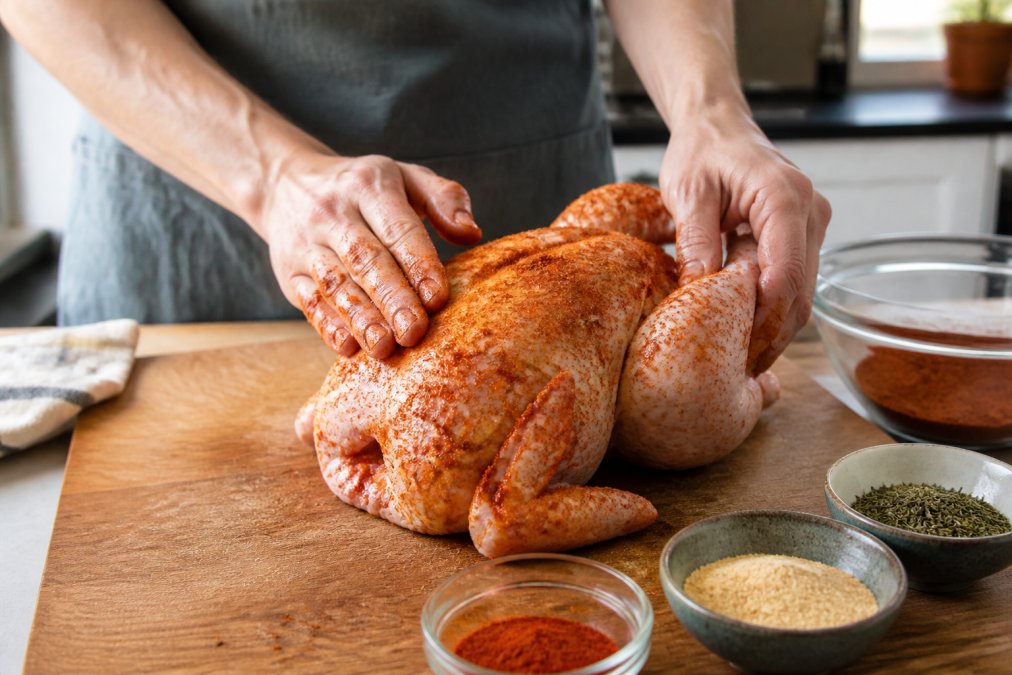
Most people only season the outside. That's a mistake.
How Long to Marinate Chicken with Dry Rub
Dry-rubbed chicken needs at least 20 minutes in the refrigerator, and the flavor improves with 2 to 4 hours. Past 12 hours, the salt starts to change the texture of the meat, making it firmer and slightly cured.
- Under 20 minutes: The salt has barely begun pulling moisture. You get surface seasoning only.
- 20 to 45 minutes: Moisture reaches the surface and starts dissolving the rub. The skin looks slightly damp and tacky to the touch.
- 1 to 2 hours: The sweet spot for weeknight cooking. The surface looks glossy, the rub has darkened slightly, and the meat under the skin takes on visible seasoning.
- 2 to 4 hours: Deeper penetration, especially through the breast. This is the window most rotisserie-style recipes are built around.
- 4 to 12 hours: Noticeably firmer texture as the salt denatures surface proteins. Some cooks prefer this for the "snappy" bite it produces; others find it rubbery.
- Over 12 hours: The surface begins to cure. The meat tightens, the color turns opaque pink near the skin, and the texture reads more like deli meat than roast chicken.
Low Sodium Chicken Rub Recipes for Health-Conscious Cooks
A low sodium chicken rub swaps most of the salt for flavor-building spices, keeping sodium per serving far lower without losing taste. The trick is replacing salt with ingredients that carry their own punch: chile, citrus zest, garlic, and smoked paprika.
Start with this base and adjust:
- 1 teaspoon kosher salt instead of 2 tablespoons
- 2 tablespoons smoked paprika
- 1 tablespoon garlic powder
- 1 tablespoon onion powder
- 1 tablespoon dried parsley
- 1 teaspoon chili powder
- 1 teaspoon black pepper
Tips for Crispy Skin and Regional Flavor Profiles
Crispy skin on rotisserie chicken comes down to three things: dry surface, moderate heat, and airflow. Pat the bird dry, apply the rub early, and let the rotisserie do the rest.
A few techniques that actually move the needle:
- Dry brine first. Salt the bird and refrigerate uncovered for a few hours before adding the rest of the rub. This dries the skin and seasons the meat.
- Loosen the skin. Air pockets let heat circulate and render fat more evenly.
- Don't baste with oil. Oil adds surface moisture and slows browning. The rub and the bird's own fat are enough.
- Finish hot. A final blast of high heat at the end crisps the skin without overcooking the meat.
Regional Flavor Profiles You Can Build From
Most rotisserie rub recipes stop at "smoky" or "spicy." The more useful framework is regional: each barbecue tradition has a recognizable ratio of sweet, salt, heat, and acid, and you can borrow that ratio to build a rub with a clear point of view.
- Classic rotisserie (supermarket style): Heavy on salt, garlic powder, onion powder, and paprika, with a small amount of sugar for color. Mild, rounded, and built to please a crowd. This is the profile most store-bought birds use.
- Kansas City-style: Sweet and tomato-forward. Brown sugar and paprika dominate, with garlic, onion, and a touch of cayenne. Best when you want a sticky, caramelized crust. Watch the sugar under high heat.
- Texas-style: Coarse black pepper and salt do most of the work, with garlic powder and a little cayenne behind them. No sugar, so it's forgiving on the rotisserie and produces a bark-like crust.
- Carolina-style: Mustard powder and a touch of vinegar powder or citric acid bring tang. Often lighter on sugar than Kansas City. Works well on chicken because the acidity cuts richness.
- Memphis-style: Balanced paprika, garlic, onion, and a modest amount of sugar, with cayenne for backend heat. The middle ground between Kansas City sweet and Texas peppery.
- Herb-forward (Sunday roast style): Rosemary, thyme, sage, and parsley with garlic and salt. Little to no sugar. This is the profile to reach for when you want the chicken to taste like chicken rather than like barbecue.
Frequently Asked Questions
What is the best dry rub for rotisserie chicken?
The best rotisserie chicken rub balances salt, sugar, and spices. A classic blend uses kosher salt, smoked paprika, garlic powder, onion powder, dried thyme, and black pepper. For a sweeter profile, add brown sugar. For heat, try chili powder or jalapeno. The key is a mix that sticks to the skin and caramelizes without burning. Start with 1 tablespoon of rub per pound of chicken.
How long should dry rub sit on chicken before cooking?
Let the dry rub sit on the chicken for at least 20 minutes at room temperature. For deeper flavor, refrigerate for 2 to 24 hours. The longer it sits, the more the seasoning penetrates the meat. If you are short on time, 20 minutes still adds noticeable flavor. Pat the chicken dry first so the rub adheres better.
Can you use gluten-free dry rubs on rotisserie chicken?
Yes. Many commercial rubs contain anti-caking agents or fillers that include gluten. Check labels for gluten-free certification. You can also make your own blend using pure spices like paprika, garlic powder, and thyme, which are naturally gluten-free. Twisted Pepper Co. offers handcrafted, gluten-free rubs such as the Chicken Rub 5.5 oz. Jar for a safe option.
How do you get crispy skin on rotisserie chicken using dry rubs?
Dry the chicken skin thoroughly with paper towels before applying the rub. Avoid using oil or wet marinades, which steam the skin. Apply the rub under the skin as well as on top. Cook at a higher heat (400°F) for the first 15 minutes, then lower to 350°F. The sugar in the rub will caramelize, and the dry environment helps the skin crisp.
Building a great rotisserie chicken rub isn't about owning a dozen spices. It's about ratios, timing, and getting the seasoning where it counts. That's the whole idea behind Twisted Pepper Co.: handcrafted, gluten-free, no-MSG-added rubs and seasonings that make 30-minute meals taste like you spent all afternoon. Shop the Chicken Rub, the Coffee Chile Rub, or the Just Grill It Gift Bag and see how simple delicious can be.