

Best Spices for Grilled Chicken Breast
Table of Contents
- Essential Spice Rub Ingredients for Grilled Chicken
- Dry Rub Recipes for Chicken That Deliver Real Flavor
- How to Grill Chicken Breast Without Drying It Out
- Low Sodium Chicken Seasoning That Doesn't Sacrifice Taste
- Marinating vs. Dry Rubbing: Which Method Works Best
- Spice Variations by Flavor Profile
- Conclusion
- Frequently Asked Questions
Last Updated: September 2, 2026
Essential Spice Rub Ingredients for Grilled Chicken
A dry rub is a carefully considered blend where each ingredient serves a purpose. Garlic powder provides savory backbone, smoked paprika adds subtle char flavor, cumin brings earthiness, coriander rounds out the profile with citrus notes, and kosher salt draws out moisture while seasoning the meat. Black pepper delivers bite. These core ingredients form the base that professional cooks and home grillmasters rely on.
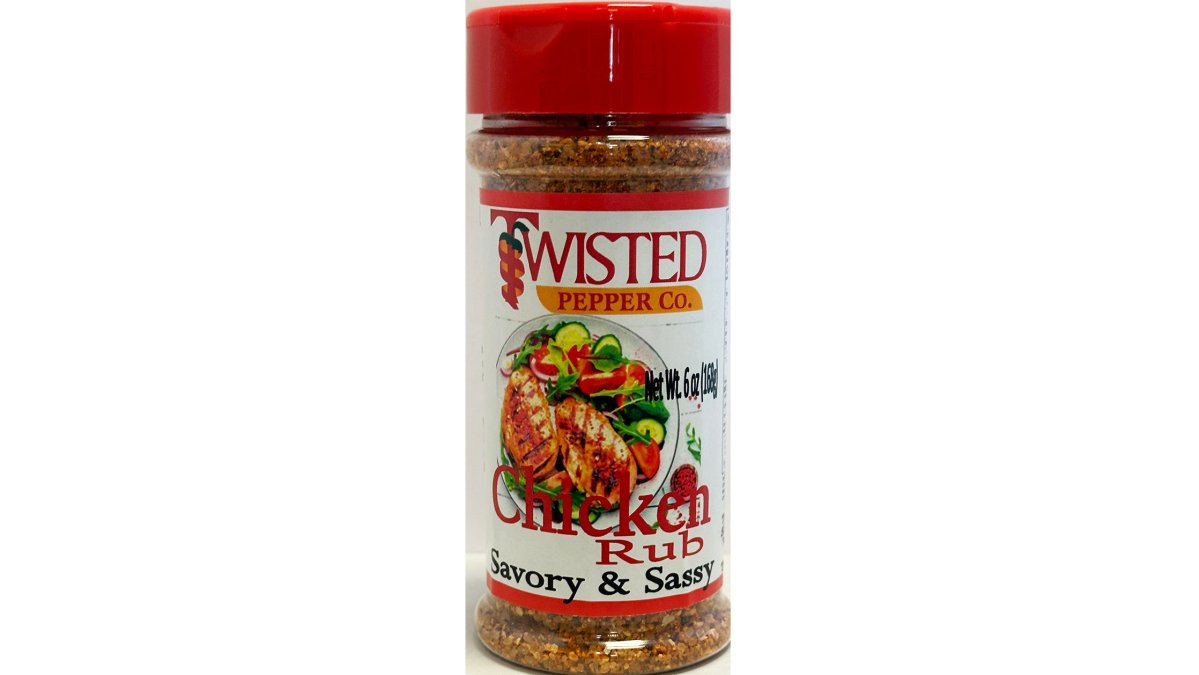
At Twisted Pepper Co., we've crafted our Chicken Rub to balance these foundational spices in proportions that work specifically for poultry, creating a flavorful crust during grilling while keeping the meat juicy inside.

Brown sugar plays a critical supporting role. It caramelizes during grilling, creating subtle sweetness and deeper color on the surface through the Maillard reaction, where proteins and sugars interact under high heat (peer-reviewed research). Onion powder adds another layer of savory depth, while a touch of chili powder brings gentle heat without overwhelming the poultry flavor.
The ratio matters enormously. Most quality spice rubs follow a 3:1:1:1 pattern, three parts salt to one part each of your secondary flavors. This ensures salt doesn't overpower while supporting spices create the actual flavor profile. Start conservative; you can always add more spice to the next batch, but you can't remove it once mixed.
Dry Rub Recipes for Chicken That Deliver Real Flavor
A dry rub is applied directly to the meat's surface, where it forms a flavorful crust during cooking. Unlike marinades that rely on liquid to penetrate, dry rubs create texture and concentrated flavor through direct contact with heat.
The Classic Savory Rub is your starting point. Mix two tablespoons kosher salt, one tablespoon black pepper, one tablespoon garlic powder, one tablespoon smoked paprika, one-half tablespoon cumin, and one-half tablespoon coriander. Press it onto both sides of your chicken breast, refrigerate for at least 20 minutes (ideally two hours), then grill over medium-high heat.
The Citrus-Forward Rub adds brightness. Combine the savory base with one tablespoon dried oregano, one teaspoon lemon zest, and one-half teaspoon ground coriander. The citrus cuts through richness and works especially well with fresh vegetables or light sauces.
The Smoky Rub emphasizes depth. Use two tablespoons kosher salt, one tablespoon black pepper, one-and-a-half tablespoons smoked paprika, one tablespoon garlic powder, one-half tablespoon cumin, one-half tablespoon onion powder, and one-quarter teaspoon cayenne pepper. The extra paprika creates a darker crust and deeper flavor profile.
Our Chicken Rub at Twisted Pepper Co. is formulated to deliver these flavor profiles without requiring you to measure and mix. It's handcrafted in small batches, gluten-free, and contains no MSG. A single 5.5 oz. jar ($10.49) provides enough rub for multiple chicken dinners.
Press the rub firmly onto the meat so it adheres and forms a proper crust. A generous application, roughly one-half teaspoon per side of a chicken breast, is the right amount.
How to Grill Chicken Breast Without Drying It Out
Dry chicken breast is almost always a temperature problem, not a seasoning problem. Chicken breast has less fat than thighs, so it dries out quickly if cooked past 165°F internal temperature (usda.gov). The solution is precision: use an instant-read thermometer and remove the chicken the moment it hits that target.
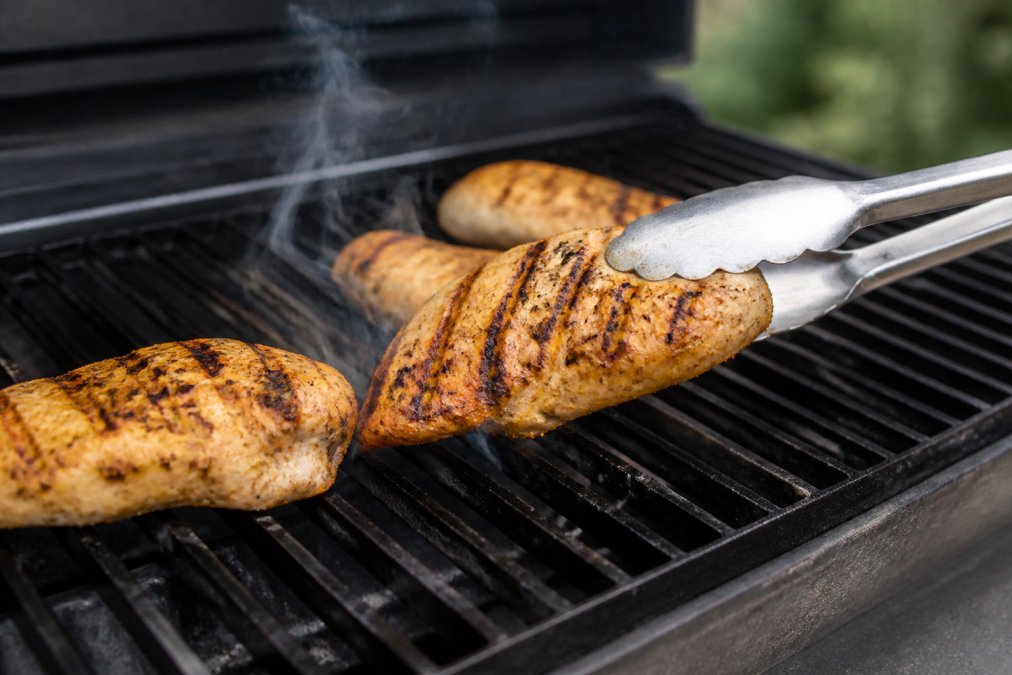
Pat your chicken dry before applying the rub. Moisture on the surface prevents the spices from adhering and creates steam during cooking. Apply your dry rub 20 minutes to two hours before grilling, allowing salt to penetrate slightly without over-curing the exterior.
Preheat your grill to medium-high heat (around 375-400°F). Place chicken breasts on the grill over direct heat for 6-7 minutes per side, depending on thickness. Most chicken breasts are about three-quarters of an inch thick, cooking through in roughly 12-14 minutes total. Let it sit undisturbed for the first 5 minutes so it develops proper grill marks and a flavorful crust through caramelization.
Use an instant-read thermometer inserted into the thickest part of the breast. The moment it reads 165°F, remove the chicken. Carry-over cooking will raise the internal temperature another 2-3 degrees as it rests, so pulling at exactly 165°F gives you the juiciest result.
Let the chicken rest on a clean plate for 5 minutes after grilling. This allows juices to redistribute throughout the meat rather than running out when you cut into it.
Consider indirect heat for thicker breasts. Sear over direct heat for 2-3 minutes per side to build crust, then move to the cooler side of the grill and cover. This method cooks the inside gently while the exterior stays flavorful.
Low Sodium Chicken Seasoning That Doesn't Sacrifice Taste
Many people assume low-sodium seasoning means bland seasoning. The truth is simpler: sodium masks flavor, so reducing salt actually lets you taste the spices more clearly. A well-designed low-sodium rub relies on aromatic spices, garlic, cumin, paprika, coriander, to deliver complexity without salt doing the heavy lifting. choosing BBQ fuel.
Low sodium doesn't mean no sodium. A properly seasoned dish includes enough salt to make food taste right. The difference between standard and low-sodium is about 40-50% reduction in sodium content per serving, not elimination.
Twisted Pepper Co.'s signature low and light sodium products are engineered to taste full and savory despite using less salt. The Chicken Rub contains kosher salt in measured amounts that season without overwhelming.
To build your own low-sodium rub, use kosher salt rather than table salt. Kosher salt has larger crystals, so a tablespoon contains roughly 30% less sodium by volume than table salt (usda.gov). Build flavor depth through spices rather than salt. Garlic powder, onion powder, smoked paprika, cumin, and coriander create savory richness that makes low-sodium seasoning taste satisfying. A touch of brown sugar adds perceived saltiness through caramelization.
Herbs like thyme and oregano add complexity without sodium. Dried citrus zest brightens the profile. Black pepper enhances your perception of salt, making it a valuable tool in low-sodium cooking.
Marinating vs. Dry Rubbing: Which Method Works Best
Marinating and dry rubbing are fundamentally different processes that achieve different results. A marinade is liquid-based and works through osmosis and enzymatic action to penetrate and tenderize the meat. A dry rub creates a flavorful crust through direct contact with heat.
Dry rubbing is faster and creates better texture. You apply the rub, wait 20 minutes to two hours, and grill. The result is a seasoned crust with tender meat inside. This is ideal if you're cooking on a weeknight and want dinner in 30 minutes or less.
Marinating takes longer but adds tenderness and deeper flavor penetration. A basic marinade combines acid (lemon juice, vinegar, or wine), oil, and spices. The acid begins breaking down muscle proteins, making the meat more tender. Most marinades require at least two hours, ideally four to eight hours. For chicken breast, marinating offers real benefits, though don't exceed 12 hours or the exterior can become mushy.
You can combine both methods for maximum flavor. Apply a dry rub, refrigerate for 20 minutes to let it adhere, then brush on a marinade and refrigerate for another 2-4 hours. This gives you the textural benefits of both approaches.
Twisted Pepper Co.'s Chicken Rub works in both applications. As a dry rub, press it directly onto the meat. As part of a marinade, mix two tablespoons of the rub with two tablespoons honey, two tablespoons olive oil, and one-quarter cup orange juice.
The practical difference: if you're grilling tonight, use a dry rub. If you have time to plan ahead, marinate.
Spice Variations by Flavor Profile
Different spice combinations create entirely different eating experiences. Understanding flavor profiles lets you choose the right blend for your meal and what you're serving alongside the chicken.
Smoky Profile emphasizes depth and works for grilling. Smoked paprika is the foundation, supported by cumin, garlic powder, and black pepper. This pairs beautifully with barbecue sauce, charred vegetables, and cornbread.
Herb-Infused Profile uses dried oregano, thyme, and rosemary as primary flavors. Add garlic powder, lemon zest, and black pepper. This works for Mediterranean-style meals and is brighter than smoky profiles.
Spicy Profile builds heat through cayenne, chili powder, and black pepper while maintaining savory depth with cumin and garlic. A touch of brown sugar balances the heat. Start with one-quarter teaspoon cayenne and adjust upward in future batches.
Sweet-Savory Profile combines brown sugar or honey with traditional savory spices. This works beautifully for glazed chicken or serving with caramelized onions or fruit-based sauces.
Citrus-Forward Profile emphasizes brightness through lemon zest, lime zest, or dried orange peel. Combine with cumin, coriander, and garlic powder. This works for lighter meals, grain bowls, and salads.
Twisted Pepper Co. offers several specialized blends that exemplify these profiles. The Chicken Rub is classic smoky-savory. The Tuscan Roasted Garlic Seasoning ($6.99 for 2 oz. or $12.99 for 4 oz.) delivers herb-infused profile. The Tex-Mex Seasoning Mix ($9.50) combines smoky and spicy elements.

Once you recognize what makes something smoky versus herbaceous versus spicy, you can adjust pre-made blends by adding complementary spices.
Conclusion
The best spices for grilled chicken breast come down to understanding a few core principles: balance between salt and aromatic spices, the importance of caramelization through dry rubs, and precision cooking to keep meat juicy. Whether you're building your own blend or using a pre-made seasoning, the foundation remains the same, quality spices applied generously, proper resting time before cooking, and an instant-read thermometer to prevent overcooking.
Grilled chicken doesn't have to be boring. A thoughtfully seasoned breast, cooked properly and rested before serving, becomes a canvas for endless meal combinations. The difference between forgettable and memorable chicken is rarely the meat itself, it's the spices and technique.
Frequently Asked Questions
Q: What is a good seasoning rub for grilled chicken breast?
A: A solid seasoning rub combines kosher salt, black pepper, garlic powder, smoked paprika, and cumin as your base. Add brown sugar for caramelization on the grill, onion powder for depth, and fresh herbs like thyme or oregano for complexity. Press the rub generously onto both sides of the chicken and refrigerate for at least 20 minutes before grilling to let flavors penetrate the meat. Our Chicken Rub delivers this balance in one handcrafted blend.
Q: How do you keep grilled chicken breast from drying out?
A: The key is controlling heat and timing. Maintain an internal temperature of 165°F, checking with a meat thermometer at the thickest point. Don't skip the resting period: remove chicken from heat and let it rest for 5 minutes before cutting. Brining or marinating with olive oil-based seasonings also helps retain moisture by allowing the meat to absorb liquid before cooking.
Q: Should I use a dry rub or a marinade for grilled chicken?
A: Both work, but they serve different purposes. Dry rubs create a flavorful crust and caramelization on the grill surface, while marinades tenderize and add moisture throughout the meat. If time is short, a dry rub pressed onto chicken 20 minutes before grilling delivers solid flavor quickly. Many cooks combine both: marinate for an hour, then apply a dry rub before grilling for maximum flavor and texture.
Q: Why choose low sodium chicken seasoning over regular blends?
A: Low sodium seasonings let you control salt intake without sacrificing taste by relying on spices like smoked paprika, cumin, coriander, and garlic powder for flavor depth. With low sodium options, you taste the individual spices working together. This matters especially for those managing blood pressure or sodium sensitivity. Twisted Pepper Co.'s low and light sodium products are engineered to taste full and savory despite using less salt.
Elevate your grilled chicken with Twisted Pepper Co.'s handcrafted, gluten-free seasonings designed specifically for poultry. Our Chicken Rub ($10.49) combines savory and sassy flavors without MSG or artificial additives, delivering restaurant-quality results in your backyard. For gift-givers, the Just Grill It Gift Bag ($29.00) includes three signature rubs that turn any grilling occasion into something special. Shop now and discover how simple delicious can be.
This article was written using GrandRanker