

How to Reduce Food Waste in the Kitchen
Last Updated: November 3, 2026
Quick Summary
To reduce food waste in the kitchen, plan 3 to 5 dinners a week, take inventory before shopping, and store each ingredient properly so it lasts. Cook realistic portions, use stems and peels, and turn leftovers into a planned use-it-up night. A weekly waste log shows what spoils so you can adjust your plan.
- Set aside 15 minutes once a week to check what you have and plan 3 to 5 dinners.
- Store leafy greens wrapped in a dry paper towel in the crisper drawer for 5 to 7 days.
- Keep potatoes and onions cool, dark, and dry but separate so onions don't speed sprouting.
- Refrigerate perishable food within two hours of cooking and reheat only the portion you'll eat.
- Plan one use-it-up dinner a week built entirely from what's left in the fridge.
Table of Contents
- Why Reducing Food Waste Starts Before You Cook
- Meal Planning to Reduce Food Waste: The Weekly Workflow
- How to Shop Mindfully and Buy Only What You Need
- Food Storage Tips to Prevent Waste by Ingredient
- How to Reduce Food Waste When Cooking
- How to Use Leftovers Safely and Creatively
- Track Your Waste and Adjust Your Plan
- Build a Waste-Less Kitchen With Twisted Pepper Co.
- Frequently Asked Questions
Why Reducing Food Waste Starts Before You Cook
Nearly 60 million tons of food are thrown away every year in the U.S., according to RTS food waste statistics.
Cooking with what you already have is the core skill here.
Here's the surprising part. A ReFED and YouGov 2026 survey found that households who plan meals consistently are 53% more likely to report less food waste.
Below, we'll walk through a simple kitchen workflow that cuts waste at every step.
Meal Planning to Reduce Food Waste: The Weekly Workflow
Meal planning to reduce food waste works best as a short weekly routine, not a rigid schedule. Set aside 15 minutes once a week. Check what you have, pick a few meals, and build a list around them.
- Pick a planning day. Sunday works for most people.
- Scan your week. Note nights you'll be busy or eating out.
- Choose 3 to 5 dinners. Fewer meals means less spoilage.
Meal planning turns guesswork into a plan you can actually follow.
Take Inventory Before You Shop
Before you write a single item down, take stock of what's already in your kitchen. This step prevents duplicate buys and rescues food on the edge of spoiling.
Check these spots:
- Fridge and freezer: what needs using this week?
- Pantry shelves: grains, canned goods, spices.
- Produce drawer: anything soft or wilting?
A quick guide to organizing your kitchen for faster cooking makes this scan easier, since you'll know exactly where everything lives.
Build a Shopping List From Your Plan
Your shopping list should come straight from your meal plan and your inventory check. Every item should have a purpose.
- List ingredients for each planned meal.
- Cross off anything you already have.
- Group items by store section.
That last rule matters more than it sounds.
How to Shop Mindfully and Buy Only What You Need
Mindful shopping means buying with a plan and resisting impulse purchases.
Try these habits:
- Shop after a meal. Hunger drives impulse buys.
- Buy smaller amounts of fresh produce. You can always buy more.
- Use bulk bins for spices and grains. Buy only the amount you need.
Buy only what you need, and buy it with a meal in mind. A full cart feels productive, but a half-empty fridge that gets used up saves more money.
Food Storage Tips to Prevent Waste by Ingredient
Proper storage is where most food waste gets saved. Different foods need different conditions, and getting this right extends freshness by days or even weeks. The gap in most advice is specificity: telling you to "store greens properly" doesn't help.
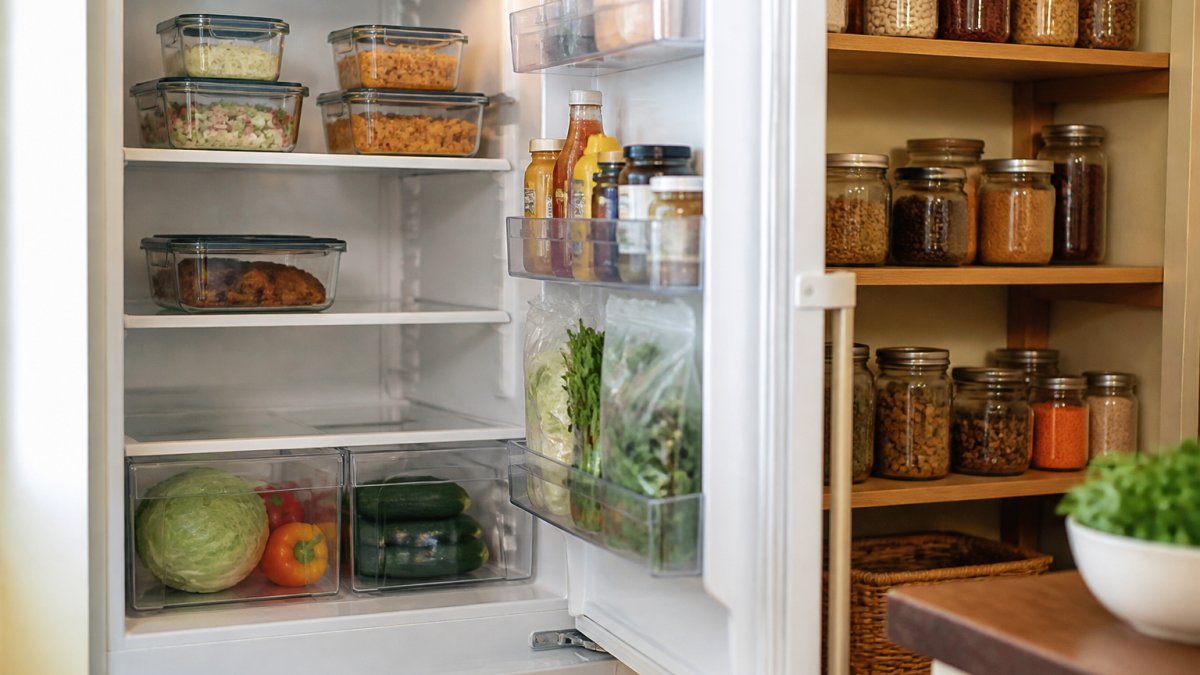
How to Read the Storage Windows
The windows below assume a refrigerator held at 40°F or below and a freezer at 0°F. They are quality windows, not safety deadlines, most foods remain safe past them but lose texture and flavor. Treat them as "cook or freeze by" prompts, not throw-out dates. A common pattern is that people discard food at the first sign of quality decline when the food is still perfectly usable in a cooked dish.
Produce: Placement, Container, and Window
- Leafy greens (lettuce, spinach, kale): Wash and dry thoroughly, wrap in a dry paper towel, and store in a perforated bag or a container lined with a towel in the crisper drawer. Window: 5 to 7 days. Watch out: moisture is the enemy, a wet leaf turns slimy in two days.
- Berries: Keep dry, refrigerate unwashed in a single layer or a vented container, and wash only before eating. Window: 3 to 7 days depending on variety. Freeze any that soften for smoothies.
- Herbs (soft: basil, cilantro, parsley): Treat like cut flowers, stems in a glass of water, loosely covered, in the fridge (basil prefers room temperature). Window: 1 to 2 weeks. Alternatively, chop and freeze in oil or water in ice cube trays.
Pantry and Freezer Basics
- Bread: Freeze half the loaf on day one, sliced, so you can pull individual pieces. Window: 3 to 6 months frozen.
- Nuts and whole grains: Airtight containers away from heat and light; nuts go rancid faster than people expect. Window: 3 to 6 months in the pantry, longer frozen.
- Flour: Airtight container; freeze for 48 hours before pantry storage if you've had pantry moths. Window: 6 to 12 months.
The Freezer as a Rescue Tool
The freezer is your best friend here, but only if you freeze at the right moment. A simple freezer log makes those labels easier to act on, and tracking freezer inventory helps you use older portions before they disappear behind newer ones.
Watch out: freezing does not sterilize food. Freeze items that are still safe, and follow the same refrigerator and freezer temperature targets you'd use for fresh food.
Here are the storage windows the article gives for common ingredients, assuming a fridge at 40°F or below and a freezer at 0°F.
| Ingredient | Where to store | Window |
|---|---|---|
| Leafy greens | Crisper drawer, wrapped in dry paper towel | 5 to 7 days |
| Berries | Refrigerate unwashed, single layer or vented container | 3 to 7 days |
| Soft herbs | Stems in water, loosely covered, in fridge | 1 to 2 weeks |
| Hardy herbs | Damp towel in fridge, or hang to dry | 2 to 3 weeks fresh |
| Potatoes | Cool, dark, dry, separate from onions | 2 to 4 weeks |
| Onions | Cool, dark, dry, separate from potatoes | 1 to 2 months |
| Citrus | Crisper drawer refrigerated | 2 to 4 weeks |
| Bread | Freeze half the loaf sliced on day one | 3 to 6 months frozen |
How to Reduce Food Waste When Cooking
Reducing food waste when cooking comes down to using the whole ingredient and cooking realistic portions.
- Use stems and peels. Carrot tops, broccoli stems, and potato peels all work.
- Save scraps for stock. Keep a freezer bag of vegetable scraps for soup.
- Cook the right portion size. Measure pasta and rice instead of eyeballing.
Research from the Thünen Institute found that simple actions like smaller portions and turning overproduction into soup cut waste significantly. No special equipment needed.
For prepped proteins, our guide to seasoning chicken for meal prep covers storage rules so nothing gets tossed.
How to Use Leftovers Safely and Creatively
How to use leftovers well is part technique, part timing. The safety rules are non-negotiable; the creativity is where you win back the money. Most people err on one side or the other, either they toss food that's still fine, or they keep it too long because it "smells okay." A short, evidence-based routine fixes both.
The Safety Timeline That Actually Matters
Perishable food should not sit at room temperature for more than two hours total. That includes the time it spends on the counter cooling. Split large batches into shallow containers so they cool faster, and refrigerate within two hours of cooking.
- Refrigerator: Keep it at 40°F or below. A fridge thermometer is a few dollars and removes the guesswork.
- Refrigerated leftovers: Soups, stews, and cooked grains follow the same window.
- Frozen leftovers: Freeze within the 3-to-4-day window if you won't finish them, and use within 2 to 6 months for best quality.
Date Labels: Quality vs. Safety
Date labels can be confusing. The key distinction:
- "Best if used by" is a quality date. The food is still safe after it, just past peak flavor or texture.
- "Use by" is the date to watch on perishable items; it's the manufacturer's estimate of peak quality, and it's the closer signal to safety for items like fresh meat and dairy.
- "Sell by" is for the retailer, not you. It tells the store how long to display the product.
Your own senses and your fridge thermometer tell you more than a printed date. Watch out: "when in doubt, throw it out" is good advice for anything with an off smell, sliminess, or mold beyond the surface of a hard cheese, but it's not a license to discard food that's merely past a quality date.
Creative Reuse That Doesn't Feel Like a Repeat
- Reframe the format. Leftover roast chicken becomes tacos, soup, or a grain bowl. Leftover rice becomes fried rice. Leftover roasted vegetables become a frittata or a pasta sauce.
- Change the cuisine. A plain protein can go into a curry, a stir-fry, or a sandwich with a different sauce.
- Use leftovers as an ingredient, not a meal. Stale bread becomes croutons or breadcrumbs; extra herbs become a sauce or pesto; cooked vegetables go into a soup base.
Stretch leftovers into quick healthy 30-minute meals so they feel fresh, not tired. The goal is to make leftovers the easy option, not the punishment option.
Track Your Waste and Adjust Your Plan
You can't fix what you don't measure. A simple waste log shows you where food is slipping away.
Try this:
- Keep a note on the fridge. Jot down what you toss and why.
- Review it weekly. Spot the patterns.
- Adjust your plan. Buy less of what spoils, cook more of what gets eaten.
You don't need software, just a notebook and honesty.
Build a Waste-Less Kitchen With Twisted Pepper Co.
A waste-less kitchen runs on good habits and a pantry you actually use. Our handcrafted, gluten-free mixes make it easy to cook from what you have.
- No-MSG soup mixes make a meal in 30 minutes or less.
- Low and light sodium seasonings are available for those managing sodium intake.
- Rubs and dip mixes are part of the Twisted Pepper Co. range.
As one customer put it: "I am absolutely addicted to your soups and dips/cheese ball mixes." Explore Twisted Pepper Co. soup mixes.

Frequently Asked Questions
How can meal planning help prevent food waste?
Meal planning works because it turns shopping into a deliberate list instead of guesswork. Consistent meal planning is widely recommended as a way to reduce food waste. When you map out meals for the week, check your pantry and refrigerator first, and build a shopping list from that plan, you buy only what you need and give every ingredient a purpose before it goes bad.
What are five ways to reduce food waste in the kitchen?
Five habits cover most of the problem: plan meals and shop from a list, take inventory before you buy, store produce and pantry items correctly, cook with what you already have (including peels and stems where safe), and eat leftovers within a safe window. Using leftovers more often is a practical way to reduce waste. Add tracking your waste for a week and you will see which habit needs the most work.
How should you store food to make it last longer?
Match storage to the ingredient. Keep most produce in the refrigerator, but store potatoes, onions, and winter squash in a cool, dark, dry spot. Keep herbs in a jar of water or a damp towel. Freeze meat and bread you will not use within a few days, and label everything with a date. Use airtight containers for pantry staples, and keep the oldest items in front so you use them first. Proper storage slows spoilage and makes the whole workflow easier.
How can you tell whether food is still safe to eat?
Use your senses and the clock, not just the date label. Date labels are mostly about quality, so smell, texture, and appearance matter. Refrigerate leftovers promptly after cooking and reheat them until steaming hot. When in doubt about meat, dairy, or anything that sat out too long, throw it out. Safe habits protect you while you work on reducing waste elsewhere in the kitchen.
Cutting food waste isn't about perfection. It's about small habits that add up week after week. Twisted Pepper Co. makes the cooking part easy with fast-shipping, handcrafted mixes built for real kitchens. Get started with Twisted Pepper Co. and turn your pantry into meals, not waste.
