

How to Meal Prep on a Budget Without Losing Flavor?
Quick Summary
How to meal prep on a budget starts with planning: choose a few cheap staples like rice, beans, chicken and pasta, build a shopping list around them, and cook in batches. Stretching these basics with bold seasoning keeps meals tasty across the week.
- Plan three to four dinners and lunches that reuse the same ingredients.
- Shop your pantry first, then build the list around cheap, long-lasting staples.
- Refrigerate cooked chicken, rice, beans and pasta dishes up to 4 days.
- Reheat leftovers to 165 degrees F throughout before eating.
- Label each container with contents and the date you cooked it.
Table of Contents
- How to Meal Prep on a Budget Without Losing Flavor?
- Why Meal Prep on a Budget Works and What It Actually Saves
- Step 1: Plan a Cheap Weekly Meal Plan for 1
- Step 2: Build a Shopping List Around Low-Cost Pantry Staples
- Step 3: Simple Meal Prep Recipes for the Week
- Step 4: Batch Cooking and Storing Food Safely
- How to Meal Prep on a Budget for a Week, Step by Step
- Cheap High-Protein Meal Prep Ideas to Add to Your Plan
- Start Your First Budget Prep Week This Sunday
- Frequently Asked Questions
How to Meal Prep on a Budget Without Losing Flavor?
Last Updated: November 16, 2026
Meal prep on a budget works when you plan before you shop and cook in batches. Harvard's Nutrition Source suggests starting with a monthly calendar or spreadsheet for meal ideas, recipe sources and shopping lists, then starting small (Harvard T.H. Chan School of Public Health's meal prep guide). At Twisted Pepper Co., we build our recipes around that same idea: a few well-seasoned staples that stretch across several meals without tasting flat.
Most people assume cheap meal prep means bland food. It doesn't have to. The trick is seasoning that does the heavy lifting, so inexpensive rice, beans and chicken still taste like a real dinner on day four.
This guide walks through each step, from planning to storage, with a few recipes you can make this week.
Why Meal Prep on a Budget Works and What It Actually Saves
Meal prep saves money mostly by cutting down on takeout and food waste. A meal-prep guide estimates that prepping ahead saves about 2 to 3 hours of cooking per week, though that figure is an estimate, not a measured result (The Complete Meal Prep Guide 2026).
For a sense of grocery costs, the USDA publishes monthly food-plan figures. Its September 2026 report lists $114.20 per month for a 1-year-old and $172.50 for a child aged 2 to 3 (USDA Food Plans: Monthly Cost of Food Reports). Use these as a budget reference, not a full household estimate.
- Less takeout and delivery fees
- Fewer forgotten groceries going bad
- Cooking time spread across one session
Step 1: Plan a Cheap Weekly Meal Plan for 1
Start with a simple plan. Pick three to four dinners, plus lunches that reuse the same ingredients.
- Choose one protein you can buy in bulk, like chicken thighs or dried beans
- Pick one starch, like rice or pasta
- Add two vegetables that cost little and store well
Write the plan on paper or a spreadsheet. A plan you can see is the easiest way to avoid buying things you won't use.
Step 2: Build a Shopping List Around Low-Cost Pantry Staples
Shop your pantry first. Then build the list around staples that are cheap and last a long time: rice, dried beans, pasta, potatoes, oats, eggs and frozen vegetables.
Double Up Food Bucks points to rice, beans, pasta and potatoes as affordable staples that stretch produce across many meals (Double Up Food Bucks budget meal prep guide). Feed Hope Now also recommends checking what you already have before shopping, which helps cut both cost and food waste (Feed Hope Now healthy meals on a budget guide).
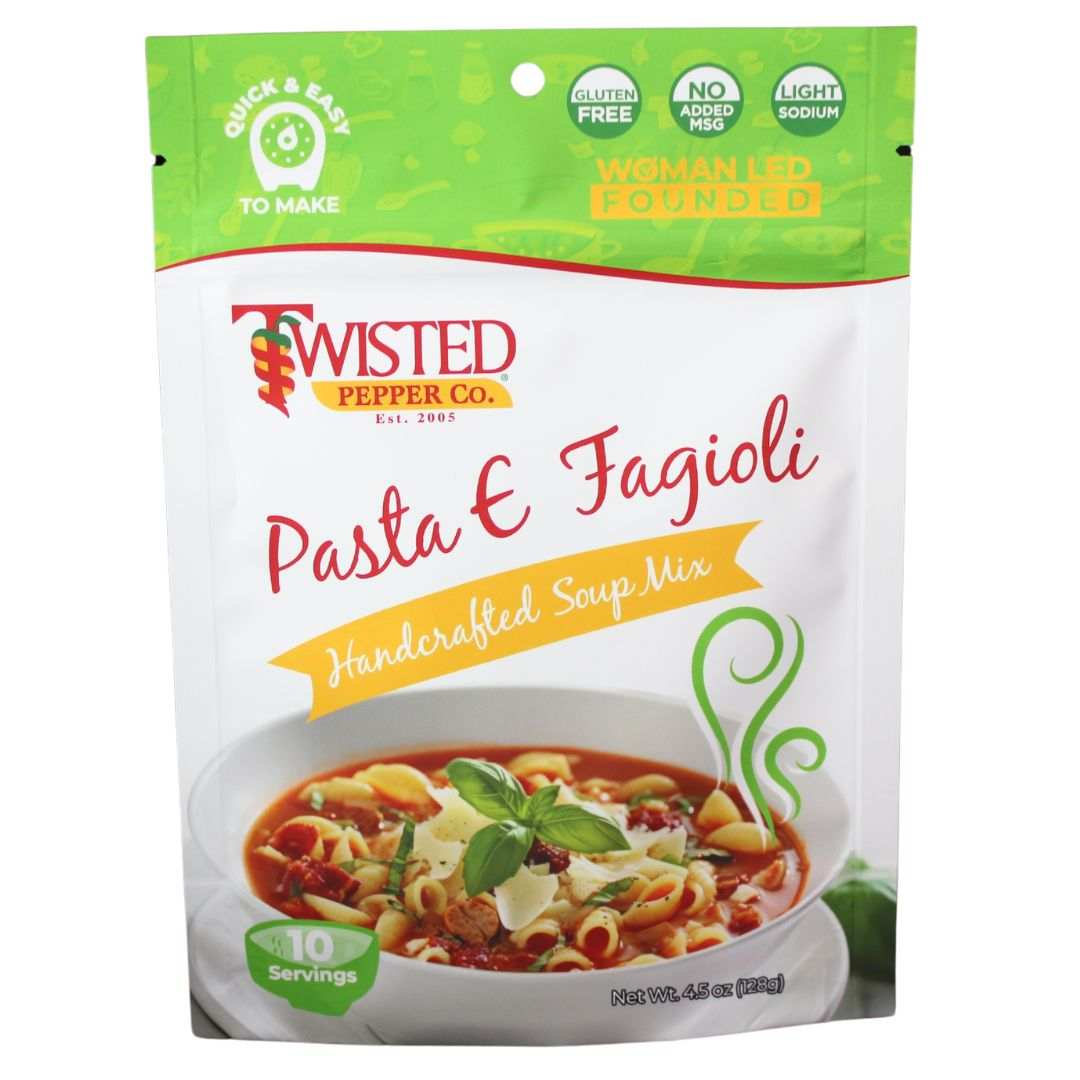
Pasta e Fagioli Dry Soup Mix is one example of a pantry item that turns a few cheap ingredients into a full meal. It costs $9.99.
Step 3: Simple Meal Prep Recipes for the Week
Cook once, eat several times. These three batches use one seasoning each.
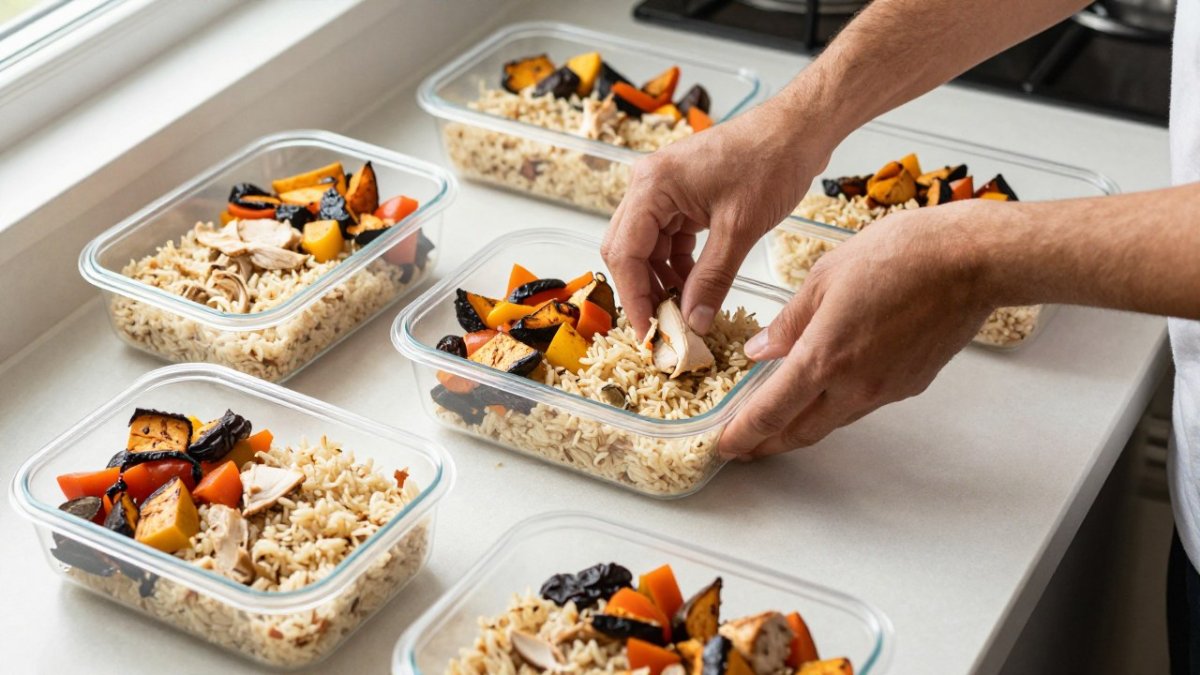
- Taco chicken bowls: Cook diced chicken with Taco Seasoning Mix, then pack with rice and beans. The 2 oz. Taco Seasoning Mix is $6.00 at Taco Seasoning Mix 2 oz..
- Potato and chicken chowder: Simmer Creamy Chicken & Rice Dry Soup Mix with water, milk and chicken, then portion it into containers.
- Weeknight pasta: Cook pasta, toss with vegetables, and season with Baked Potato Dry Soup Mix for a creamy finish.
Step 4: Batch Cooking and Storing Food Safely
This is the step most budget meal-prep guides skip, and it is the one that protects both your food and your money. A spoiled batch is wasted money, so treat storage as part of the budget, not an afterthought.

Cool before you pack. Cooked food should not go straight from the stove into a sealed container. Split large batches into shallow containers so they cool faster, and get them into the refrigerator within two hours of cooking.
- Cooked chicken, rice, beans, and pasta dishes: refrigerate up to 4 days
- Cooked soups and stews: refrigerate up to 4 days, freeze up to 3 months
- Cooked eggs and egg dishes: refrigerate up to 4 days
- Raw poultry: refrigerate 1 to 2 days, freeze up to 9 months
- Raw ground meat: refrigerate 1 to 2 days, freeze up to 4 months
- Frozen cooked portions: best quality within 2 to 3 months
Label every container with the contents and the date you cooked it, not the date you froze it.
Freeze with texture in mind. Sauces, stews, chilis, soups, and shredded or diced cooked chicken freeze well. Cooked rice freezes better than many people expect if you portion it while still slightly warm, press it flat, and reheat it thoroughly.
Reheat to safe temperatures. Reheat leftovers to 165 degrees F throughout, and stir midway so the center gets as hot as the edges.
Use the first-in, first-out rule. Put the oldest containers at the front of the shelf and the newest at the back.
Cooling and packing equipment that pays for itself. You do not need a vacuum sealer to start. A set of reusable glass or BPA-free plastic containers in two or three sizes, a roll of freezer tape, and a marker cover most needs.
The storage times and reheating guidance from this step are easy to scan at a glance:
| Food | Refrigerator | Freezer |
|---|---|---|
| Cooked chicken, rice, beans, pasta dishes | Up to 4 days | Not stated |
| Cooked soups and stews | Up to 4 days | Up to 3 months |
| Cooked eggs and egg dishes | Up to 4 days | Not stated |
| Raw poultry | 1 to 2 days | Up to 9 months |
| Raw ground meat | 1 to 2 days | Up to 4 months |
| Frozen cooked portions | Not stated | Best within 2 to 3 months |
| Reheating temperature | 165 degrees F throughout | Not applicable |
How to Meal Prep on a Budget for a Week, Step by Step
Most budget meal-prep guides hand you a recipe list and stop there. That same sequence can keep flavor and cost in balance when you build meals around affordable plant proteins, a principle also reflected in LeosSuperfood.
Set a weekly number before you plan. Decide what you can spend on food for the week and write it down.
Take inventory first (10 minutes). Open the refrigerator, freezer, and pantry and list what you already have. This step alone is where most of the savings hide, because it stops you from buying a second jar of something you already own. Note anything that needs to be used soon and build a meal around it.
Pick your protein, starch, and vegetables around what is on sale. Choose one or two proteins you can buy in bulk, chicken thighs, ground turkey, eggs, dried or canned beans, or tofu. Pick one or two starches, rice, pasta, potatoes, or oats. Add two or three vegetables that store well, such as cabbage, carrots, onions, and frozen mixed vegetables.
Write the plan as a grid, not a list. Sketch five dinners and three to four lunches across the week, and note which meals share ingredients. If Monday's dinner uses half a head of cabbage, plan Wednesday's lunch to use the rest. This is how you stretch ingredients across meals instead of buying one-off items that spoil.
Build the shopping list from the plan, then shop the perimeter and the staples aisle. List quantities, not just items, so you buy what the plan needs.
Cook in two sessions, not one marathon. A common pattern is a 60- to 90-minute session on Sunday for proteins and grains, then a 30-minute session midweek for fresh vegetables and anything that does not hold up well. Cooking everything on one day sounds efficient but leads to fatigue and, often, to takeout by Thursday.
Portion with the week in mind. Pack the first three days into refrigerator containers and freeze the rest. Label each container with contents and date. Leave sauces and fresh herbs on the side so you can add them after reheating.
Clean as you go and reset the kitchen. Wipe counters, wash containers, and put the plan for next week somewhere visible. A five-minute reset makes the next session faster and keeps the workflow sustainable.
A sample weekly template you can adapt. This is a structure, not a fixed menu, swap in whatever protein and vegetables are cheapest at your store that week.
- Sunday: cook a batch of rice and a batch of beans or lentils; roast or pan-cook chicken thighs; chop vegetables for the first three days
- Monday: dinner bowl with rice, protein, and vegetables; pack the same combination for Tuesday lunch
- Tuesday: use leftover vegetables in a quick pasta or stir-fry; pack Wednesday lunch
- Wednesday: midweek session, cook fresh vegetables and a second protein; move frozen portions to the refrigerator to thaw
- Thursday: soup or stew built from remaining vegetables and beans; pack Friday lunch
- Friday: use up remaining produce in a frittata, fried rice, or grain bowl
- Saturday: flexible meal using whatever is left; restock the pantry list for next week
Adjust the plan, not the goal. If a protein is too expensive one week, swap it for eggs or beans. If you are cooking for one, halve the batches and freeze the rest. The workflow stays the same; only the inputs change.
Cheap High-Protein Meal Prep Ideas to Add to Your Plan
Beans, lentils, eggs and chicken thighs deliver protein for little money. A bowl of seasoned black beans with rice and eggs covers protein for under a few dollars per serving. Our Best Seasonings For Budget Friendly Chicken Recipes guide has more ideas for stretching chicken across the week.
Our Best Seasonings For Budget Friendly Chicken Recipes guide has more ideas for stretching chicken across the week.
Start Your First Budget Prep Week This Sunday
Start with one protein, one starch and one seasoning, then build from there. Once you see how much a single session saves, you'll want to keep going. Shop the Twisted Pepper Co. seasoning collection to find blends that keep meals flavorful on a budget.
Frequently Asked Questions
What is the cheapest way to meal prep?
The cheapest approach is to build every meal around inexpensive staples such as rice, dried beans, lentils, oats, eggs, potatoes and frozen vegetables, then cook one or two large batches instead of several small ones. Plan the week before shopping, check what is already in your pantry, and buy store brands for staples. Keeping a running shopping list on your phone prevents impulse buys that quietly raise the weekly total.
How do you make a cheap weekly meal plan for one?
Start with three base components you can cook once and reuse, such as a pot of rice, a sheet pan of roasted vegetables and one protein. Assign each component to two or three meals across the week, then add a cheap breakfast like oatmeal or eggs. Keep portions realistic for one person so nothing is wasted. Review the plan each Sunday, adjust for what is on sale, and use leftovers for lunch the next day to cut the number of separate cooking sessions.
How long can meal-prepped food be stored safely?
Cooked meals kept in airtight containers in the refrigerator are generally safe for three to four days, so plan to eat the earliest-cooked portions first. Freeze anything you will not eat within that window, and label containers with the date. Cool cooked food within about two hours before refrigerating, and reheat leftovers until steaming hot throughout. When in doubt about a portion's age or appearance, throw it out rather than risk foodborne illness.
Can you meal prep high-protein meals on a budget?
Yes. Eggs, dried lentils, dried or canned beans, and chicken thighs bought in bulk are among the most cost-effective protein sources per serving. Pairing a protein with rice or potatoes keeps each portion filling without adding much cost. Batch-cook a pot of lentil or bean stew, or sheet-pan chicken thighs with vegetables, and portion them into containers for the week. Seasoning matters too: a single well-chosen spice blend can make plain beans or chicken taste like a different meal each day.
