

How to Make Chicken Flavorful Without Marinating
Table of Contents
- Why You Don't Need a Marinade to Get Flavorful Chicken
- How to Season Chicken for Maximum Flavor
- Using a Chicken Dry Rub for Bold, Instant Flavor
- Getting a Juicy Chicken Breast Without Marinating
- Grilled Chicken Without Marinating: Fast and Flavorful
- Quick Seasoning Methods for Different Cuts
- Common Mistakes That Lead to Bland or Dry Chicken
- Frequently Asked Questions
Last Updated: October 10, 2026
Why You Don't Need a Marinade to Get Flavorful Chicken
Making chicken flavorful without marinating is faster and easier than waiting hours for a marinade. The secret lies in three simple techniques: proper seasoning, the right oil, and smart cooking methods. With the right approach, you can have restaurant-quality chicken on your table in 30 minutes or less.
Salt, spices, oil, and heat do the heavy lifting. When you understand how these elements work together, you gain complete control over flavor without the wait.
How to Season Chicken for Maximum Flavor
Seasoning chicken properly is about building layers of flavor to create depth and complexity.
Start with Salt and Black Pepper as Your Foundation
Salt and black pepper are the foundation. Salt enhances natural chicken flavor and helps other spices stick; black pepper adds bite and complexity.
Use kosher salt, not table salt, it's coarser and easier to control. Season both sides generously: about 1/4 teaspoon per side for chicken breast, slightly more for thighs or legs.
Black pepper should be freshly ground if possible. Pre-ground pepper loses its punch over time. Add it right after salt so it sticks to the moisture the salt creates.
Layer Garlic, Onion, and Paprika for Depth
Add garlic powder and onion powder for savory depth. Use powders, not fresh, fresh garlic burns on high heat and turns bitter.
For a chicken breast, add 1/4 teaspoon each of garlic powder and onion powder, mixed with salt and pepper before applying.
Paprika adds color, mild sweetness, and smokiness. Use 1/4 teaspoon per chicken breast; too much overpowers other flavors.
This combination of salt, pepper, garlic, onion, and paprika is a proven formula that works on any cut of chicken.
| Spice | Amount per Chicken Breast | Purpose |
|---|---|---|
| Kosher salt | 1/4 teaspoon each side | Enhances natural flavor |
| Black pepper | 1/4 teaspoon each side | Adds bite and complexity |
| Garlic powder | 1/4 teaspoon | Savory depth |
| Onion powder | 1/4 teaspoon | Additional savory notes |
| Paprika | 1/4 teaspoon | Color and mild sweetness |
Using a Chicken Dry Rub for Bold, Instant Flavor
A dry rub is a spice blend pressed directly onto chicken, creating bold flavor fast with no waiting. It sticks to the oiled surface and creates a flavorful crust as the chicken cooks.
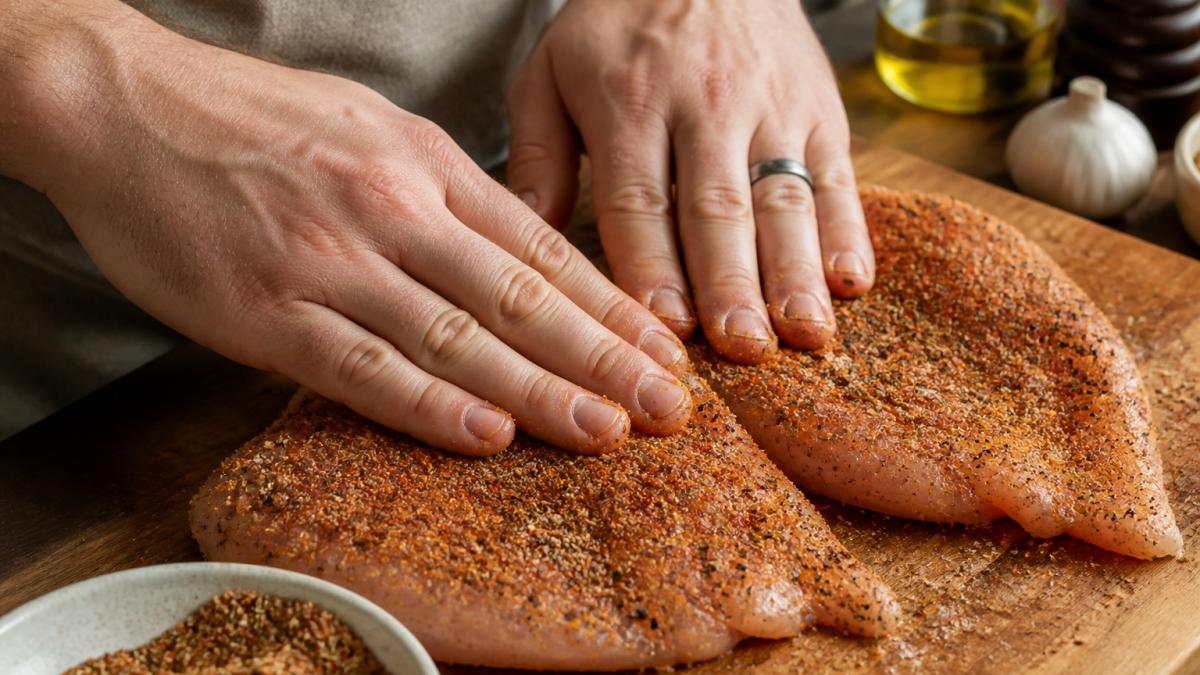
How to Apply a Dry Rub Correctly
Start with dry chicken, pat it with paper towels to remove surface moisture, which prevents spices from sticking.
Lightly coat the chicken with oil on both sides (about 1/2 teaspoon per breast) to act as glue for the spices.
Apply your dry rub by pressing it onto the chicken with your fingers, covering both sides evenly. The rub should stick to the oiled surface and create a visible coating.
Let it sit for 10-20 minutes if you have time. If you're in a rush, cook immediately, the rub will still work.
Best Spice Combinations for Chicken
The best dry rub for chicken depends on your cooking method and what flavors you enjoy. Here are proven combinations that work every time:
Basic BBQ Rub: Mix 2 tablespoons brown sugar, 1 tablespoon paprika, 1 tablespoon garlic powder, 1 tablespoon onion powder, 1 teaspoon black pepper, 1 teaspoon salt, and 1/2 teaspoon cayenne pepper. The sugar caramelizes as the chicken cooks, creating a flavorful crust. Twisted Pepper Co.'s Chicken Rub follows this formula with no MSG, gluten-free, and low sodium.

Tuscan Herb Rub: Combine 1 tablespoon dried oregano, 1 tablespoon dried basil, 1 tablespoon garlic powder, 1 teaspoon black pepper, 1 teaspoon salt, and 1/2 teaspoon red pepper flakes. Perfect for baked or sautéed chicken. Twisted Pepper Co.'s Tuscan Roasted Garlic Seasoning delivers this combination with low sodium.

Spicy Garlic Rub: Mix 1 tablespoon garlic powder, 1 tablespoon paprika, 1 teaspoon black pepper, 1 teaspoon salt, 1 teaspoon onion powder, and 1/2 teaspoon cayenne pepper. Twisted Pepper Co.'s Garlic Jalapeno Seasoning brings this spicy-garlic profile with no added MSG.

The key to any rub is balance. You want salt, something savory (garlic or onion), something with color and mild sweetness (paprika), and optional heat (cayenne or red pepper flakes). This formula works for any dry rub you create.
Getting a Juicy Chicken Breast Without Marinating
Chicken breast is lean and can dry out quickly. The good news: you can keep it juicy without a marinade using oil and proper cooking technique.
The Role of Oil in Keeping Chicken Moist
Oil carries heat more efficiently than air, cooking the chicken faster and more evenly, and creates a barrier that prevents moisture from escaping.
Coat your seasoned chicken with about 1/2 to 1 teaspoon of oil per breast. This thin layer seals in moisture and helps seasonings stick.
During cooking, the oil also prevents the outside from drying out before the inside is cooked through. This is especially important for thick chicken breasts.
Timing and Temperature Control
Cook chicken over medium to medium-high heat, not high heat. High heat cooks the outside too fast while the inside stays cold.
For a 3/4-inch chicken breast: sauté 6-8 minutes per side over medium heat, grill 5-7 minutes per side over medium-high heat, or bake 15-18 minutes at 400°F. Use a meat thermometer to confirm 165°F internal temperature.
Overcooking is the number one reason chicken turns out dry. A few degrees over 165°F and you've lost all the moisture you worked to preserve.
Grilled Chicken Without Marinating: Fast and Flavorful
Grilling naturally creates flavor through browning. You don't need a marinade to get delicious grilled chicken.
Seasoning Before You Grill
Season your chicken 15-20 minutes before grilling. Pat dry, coat lightly with oil, then apply your seasoning blend. Heat your grill to medium-high (about 400°F) and oil the grates. Place chicken skin-side down and let it sit for 5-7 minutes to develop a crust. Flip once and cook another 5-7 minutes until it reaches 165°F internally.
The direct heat of the grill creates browning that adds flavor, this is called the Maillard reaction. It's the same chemical process that makes grilled food taste better than boiled food. You get this flavor for free just by grilling, so you don't need a marinade to compensate.
Adding Brightness with Fresh Citrus and Herbs
After grilling, add fresh brightness with citrus or fresh herbs. Squeeze fresh lemon juice or lime juice over the hot chicken. The heat helps the juice penetrate slightly, and the acidity cuts through the richness of the oil and spices.
Add fresh herbs right before serving. Torn basil, chopped parsley, or fresh oregano all work well. The heat from the chicken wilts the herbs slightly and releases their oils, creating an aroma that makes the chicken taste even better.
This is how you make grilled chicken without marinating taste like it came from a restaurant. Season it properly, grill it with care, then finish it with fresh brightness.
Quick Seasoning Methods for Different Cuts
Different cuts of chicken have different cooking times and flavor profiles. Your seasoning strategy should match the cut.
Chicken Thighs vs. Chicken Breast: What Changes
Chicken thighs have more fat and more flavor than chicken breast. They're more forgiving, you can't dry them out as easily. They also benefit from bolder seasonings because the fat carries flavor better.
For chicken thighs, use the same basic seasoning as chicken breast, but apply it more generously.
Chicken thighs cook slower than breast, about 8-10 minutes per side when sautéed, or 25-30 minutes when baked at 400°F. The longer cooking time means more browning and more flavor development.
Chicken breast is leaner and cooks faster. It needs less aggressive seasoning and more careful temperature control. A light coating of seasoning is enough because there's no fat to carry heavy spice flavors.
Chicken Legs and Wings: Handling Tougher Cuts
Chicken legs (drumsticks and thighs together) and wings are tougher than breast meat. They have more connective tissue, which means they benefit from longer cooking times. This actually works in your favor for flavor.
Season legs and wings the same way you season thighs, generously. The extra cooking time means the seasoning has more time to develop flavor. Bake at 400°F for 30-35 minutes, or grill over medium heat for 12-15 minutes per side.
Wings are great for grilling or baking with a dry rub. They have enough surface area to really showcase your seasoning. Toss them in your seasoning blend, coat with a little oil, and cook until the skin is crispy and the meat is tender.
Common Mistakes That Lead to Bland or Dry Chicken
Most bland or dry chicken comes from one of a few preventable mistakes. Knowing what to avoid is half the battle.
Not seasoning enough. Many home cooks under-season because they're afraid of making it too salty.
Cooking over too-high heat. High heat cooks the outside fast and leaves the inside cold.
Not letting chicken rest. Cutting into chicken immediately after cooking releases all the juices onto your plate. Wait 3-5 minutes. The meat will stay juicier.
Using old spices. Spices lose potency over time.
Skipping the oil. Oil isn't just for cooking, it's for flavor and moisture. It helps seasonings stick and prevents the chicken from drying out.
Overcooking. This is the biggest one. Chicken at 165°F is safe and juicy. Chicken at 175°F is dry.
Making chicken flavorful without marinating comes down to three things: proper seasoning, the right cooking technique, and understanding your cut of meat. Our Chicken Rub and Tuscan Roasted Garlic Seasoning take the guesswork out of seasoning, no MSG, gluten-free, and ready to make your chicken taste restaurant-quality in minutes.
Frequently Asked Questions
Can you make chicken flavorful without marinating it?
Yes. Dry rubs, oil, salt, and spices deliver bold flavor in minutes without marinating. Press a generous amount of seasoning onto both sides of chicken, let it sit for 20 minutes to absorb, then cook. Oil helps seasonings stick and keeps meat moist. Fresh citrus, garlic, and paprika add depth instantly. Twisted Pepper Co.'s Chicken Rub and Garlic Jalapeno Seasoning are designed for this exact approach, no overnight wait required.
How do you keep chicken juicy when you don't marinate it?
Coat chicken with olive oil before seasoning, this locks in moisture during cooking. Don't overcook: remove chicken at 165°F internal temperature. Thighs stay juicier than breast meat because they have more fat. Let cooked chicken rest for 5 minutes before cutting. Using a low-sodium seasoning blend means you control salt levels, avoiding the drying effect of excess sodium that can pull moisture from meat.
What's the best way to season chicken right before cooking?
Apply salt and black pepper first, then layer garlic powder, onion powder, and paprika. Rub oil onto the chicken, then press the dry spice blend firmly onto both sides. For maximum absorption, refrigerate for 20 minutes before grilling, baking, or sautéing. This short wait lets seasonings penetrate without requiring a full marinade. A handcrafted blend like Twisted Pepper Co.'s Tuscan Roasted Garlic Seasoning combines multiple flavors in one step.
Can a dry rub add enough flavor to chicken without marinating?
Absolutely. A quality dry rub, made with salt, spices, garlic, and herbs, creates a flavorful crust when pressed onto chicken and cooked. The key is using enough rub (don't be shy) and letting it sit for 20 minutes to absorb. Finish with fresh lemon or lime juice after cooking for brightness. Twisted Pepper Co.'s BBQ rubs are formulated to deliver bold, savory flavor without marinating, and they're gluten-free and low-sodium.