

Can Umami Replace Salt in Everyday Cooking?
Last Updated: October 29, 2026
Quick Summary
The best umami ingredients for salt-free cooking are dried shiitake mushrooms, no-salt-added tomato paste, nutritional yeast, kombu, and garlic and onion powders, which are salt-free and can be used freely. Treat miso, soy sauce, anchovy paste, and hard cheese as reduced-sodium accents measured by the teaspoon. Layer a glutamate source with an inosinate source, browning, acid, and aromatics.
- Dried mushrooms deliver the most concentrated savory hit per gram of any salt-free option.
- Use 1 tablespoon mushroom powder or 1/2 cup dried mushrooms per quart of soup or stew.
- A homemade blend of mushroom powder, tomato powder, onion, garlic, thyme, and smoked paprika seasons meat and soup.
- The salt-free umami broth takes about 40 minutes using dried mushrooms, tomato paste, onion, and garlic.
- Build your pantry in two tiers: salt-free staples unlimited, reduced-sodium items measured by the teaspoon.
Table of Contents
- What Makes Umami Ingredients Work Without Salt
- How to Add Savory Flavor Without Salt
- Mushrooms for Umami Flavor: Fresh, Dried, and Powdered
- Salt-Free Umami Seasoning Blends You Can Make or Buy
- Salt-Free Umami Broth Recipe for Soups and Sauces
- Tomatoes, Miso, and Other Umami Ingredients to Stock
- Building Your Salt-Free Pantry with Twisted Pepper Co.
- Frequently Asked Questions
What Makes Umami Ingredients Work Without Salt
Umami ingredients are foods rich in naturally occurring glutamates, inosinates, and guanylates, the compounds that create the deep, savory taste we call umami.
Here's the core idea: salt does two jobs in food. It adds saltiness, and it amplifies flavor. A secondary analysis of umami substances in PubMed Central examined how glutamate, inosinate, and guanylate could reduce salt intake, and the mechanism is straightforward.
Watch out: not every "umami" ingredient is salt-free. Soy sauce and fish sauce are the classic examples, and both are high in sodium.
If you want a head start on stocking your spice rack, our guide to 9 flavorful low sodium alternatives for common spices pairs well with everything here.
How to Add Savory Flavor Without Salt
To add savory flavor without salt, combine umami-rich ingredients with the cooking methods that concentrate and create savory compounds. The practical rule is layering: glutamate-rich foods, inosinate-rich foods, browning, acid, and aromatics each cover a different part of what salt normally does.
The synergy that makes layering work
Glutamates are abundant in tomatoes, mushrooms, kombu, and nutritional yeast. Inosinates are concentrated in meat, poultry, and fish, and guanylates in dried mushrooms. When a glutamate-rich ingredient meets an inosinate- or guanylate-rich one, the perceived savory intensity rises more than either delivers alone. That is why a mushroom-and-tomato broth tastes deeper than either simmered by itself, and why a pinch of dried mushroom powder lifts a meat dish.
Practical pairings to start with:
- Mushroom plus tomato: Dried shiitake soaking liquid stirred into no-salt-added tomato paste for soups and braises.
- Kombu plus dried mushrooms: Simmer both for a salt-free stock with marine and earthy depth.
- Nutritional yeast plus garlic: A cheesy-savory finish for popcorn, pasta, and roasted vegetables.
- Anchovy or fish sauce plus tomato: A teaspoon of either in a pot of tomato sauce adds depth that reads as seasoned without added salt.
Cooking methods that build umami
- Brown your food. Searing meat, roasting vegetables, and caramelizing onions drive browning reactions that create new savory compounds and concentrate existing ones. A roasted tomato tastes deeper than a boiled one for this reason.
- Concentrate by reducing. Simmering off moisture concentrates glutamates. A reduced mushroom broth or tomato sauce tastes saltier than the same ingredients in a watery soup.
- Layer aromatics early. Garlic, onion, and herbs added at the start of cooking infuse the whole dish; a portion added at the end keeps a fresh top note.
- Finish with acid. A squeeze of citrus or splash of vinegar sharpens flavor the way salt does, so the palate reads the dish as more complete.
- Add delicate umami late. Mushroom powder, nutritional yeast, and savory blends stirred in near the end keep their punch; long high heat can flatten them.
Cooking method matters more than most guides admit. Sautéing and stir-frying concentrate flavor through moisture loss, so a dish tastes more seasoned than the same ingredients simmered. That is a free win for low-sodium cooking.
Starting amounts for common dishes
- Soups and stews: 1 tablespoon mushroom powder or 1/2 cup dried mushrooms per quart of liquid.
- Tomato sauces: 1 to 2 tablespoons no-salt-added tomato paste per 2 cups sauce, plus a teaspoon of anchovy paste if you eat fish.
- Roasted vegetables: 1 teaspoon garlic powder plus 1 teaspoon nutritional yeast per pound before roasting.
- Grains and rice: A 2-inch piece of kombu added to the cooking water.
- Pan sauces: A splash of mushroom soaking liquid reduced with a little vinegar.
For ready-to-use seasoning ideas, our collection of healthy low sodium chicken seasoning recipes shows these techniques in action with salt-free rubs and herb blends.
Mushrooms for Umami Flavor: Fresh, Dried, and Powdered
Mushrooms for umami flavor are one of the most versatile salt-free options, and dried mushrooms deliver the most concentrated savory hit per gram. Rehydrating these fungi in a spicy broth creates a depth of flavor that complements other healthy cooking options.
Fresh mushrooms bring texture and mild savoriness. Dried mushrooms, especially shiitake and porcini, concentrate glutamates as they dry, so a small handful rehydrated in hot water creates a savory broth.
A practical ratio: one tablespoon of mushroom powder can season a whole pot of soup. The soaking liquid from dried mushrooms is liquid gold, so strain it and use it as stock.
Salt-Free Umami Seasoning Blends You Can Make or Buy
Salt-free umami seasoning blends combine dried mushrooms, tomato powder, onion, garlic, and herbs into one jar you can reach for daily. A good blend saves you from measuring four spices every time you cook.
Here is a simple homemade version to mix in a small bowl:
- 2 tablespoons mushroom powder
- 1 tablespoon tomato powder
- 1 tablespoon onion powder
- 1 tablespoon garlic powder
- 1 teaspoon dried thyme
- 1 teaspoon smoked paprika
Store it in an airtight jar. Use one to two teaspoons per pound of meat or per quart of soup.
If you would rather buy than blend, our Tuscan Roasted Garlic Seasoning is low sodium, gluten free, and made with no MSG added, and it works as a marinade, a dip base, or a bread dipping spice.
Toasted Onion & Garlic Dip or Cheeseball Mix →
Salt-Free Umami Broth Recipe for Soups and Sauces
A salt-free umami broth recipe starts with dried mushrooms, tomato paste, and aromatics simmered low, then strained into a savory base you can use all week. It takes about 40 minutes and costs a fraction of store-bought stock.
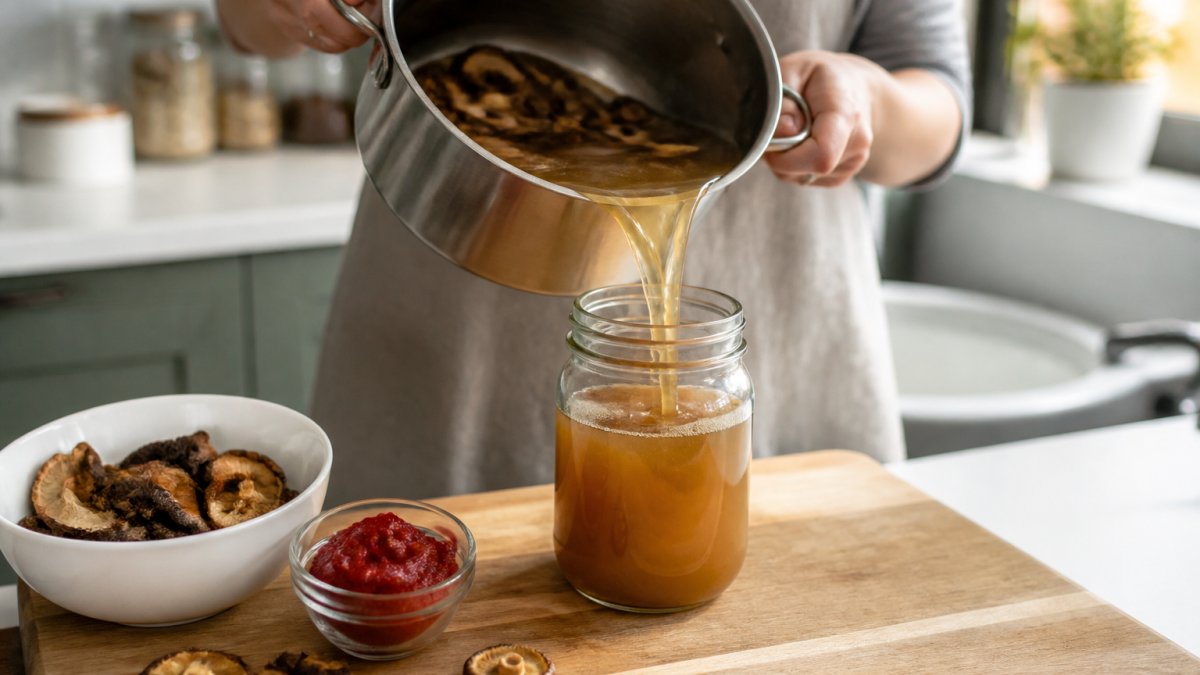
Here is how we make it:
- Soak 1/2 cup dried mushrooms in 6 cups hot water for 20 minutes.
- Sauté one chopped onion and three garlic cloves in olive oil until soft.
- Stir in 2 tablespoons tomato paste and cook one minute.
- Add the mushrooms and soaking liquid, plus a bay leaf and a sprig of thyme.
- Simmer 30 minutes, strain, and cool.
Use it as a base for soups, risotto, or pan sauces. For a fast shortcut,
Tomatoes, Miso, and Other Umami Ingredients to Stock
Tomatoes, miso, and other umami ingredients to stock give you savory depth across every cuisine, but their sodium levels vary widely.
Here is the distinction that most guides blur: salt-free means no sodium added and naturally occurring sodium only; reduced-sodium means the product still contains meaningful sodium per serving. A food can be rich in umami and still be a poor choice for salt-free cooking.
| Ingredient | Sodium per typical serving | Salt-free or reduced-sodium? | Best use | Flavor profile |
|---|---|---|---|---|
| Dried shiitake mushrooms | Very low, naturally occurring only | Salt-free | Broths, seasoning powder | Earthy, woodsy |
| Tomato paste (no salt added) | Low, naturally occurring only | Salt-free | Sauces, braises, soups | Bright, concentrated tomato |
| Nutritional yeast | Low, naturally occurring only | Salt-free | Popcorn, pasta, eggs | Cheesy, nutty |
| Dried kombu seaweed | Moderate, naturally occurring | Salt-free if unseasoned | Soups, rice, bean cooking | Marine, clean |
| Garlic and onion powder (no salt added) | Very low | Salt-free | Rubs, blends, everything | Allium, sweet-savory |
| Miso | High | Reduced-sodium only | Marinades, dressings | Fermented, complex |
| Soy sauce | High | Reduced-sodium only | Stir-fries, marinades | Salty, fermented |
| Anchovy paste | High | Reduced-sodium only | Sauces, dressings | Deep, fishy-savory |
| Hard cheese such as Parmesan | Moderate to high | Reduced-sodium only | Finishing, grating | Nutty, sharp |
Read the label rather than the reputation. Miso, soy sauce, fish sauce, anchovy paste, and hard cheese are genuinely umami-dense, but these ingredients can carry a meaningful share of a day's sodium.
Substitutions for common dietary restrictions
- Soy-free: Swap soy sauce for coconut aminos, which are lower in sodium and soy-free, though sweeter and less salty. Replace miso with a small amount of tomato paste plus a splash of vinegar for fermented depth.
- Gluten-free: Choose tamari or coconut aminos instead of standard soy sauce, and confirm your miso is made with rice or another gluten-free grain rather than barley.
- Vegan: Nutritional yeast, dried mushrooms, tomato paste, kombu, and fermented vegetable brines replace cheese and anchovy umami. A spoonful of sauerkraut juice or kimchi brine adds fermented punch without animal products.
- Yeast-free: Skip nutritional yeast and rely on mushrooms, tomato, seaweed, and alliums. Toasted onion and garlic powders carry much of the savory load.
A note on fermented foods: kimchi and Marmite bring real umami, but both carry sodium. Our guide to soy sauce vs coconut aminos breaks down the sodium and taste trade-offs if you cook gluten-free.
Building Your Salt-Free Pantry with Twisted Pepper Co.
Building a salt-free pantry starts with a handful of core seasonings you actually use, not a shelf full of single-purpose jars. That is where our handcrafted blends earn their spot: gluten free, no MSG added, and built for low and light sodium cooking.
Our customers tell us the difference is real. "I am absolutely addicted to your soups and dips/cheese ball mixes," says Doris & Mark.
Start with these:
- Toasted Onion & Garlic Seasoning ($12.99) for roasting, sautéing, and bread dipping oil
- Tuscan Roasted Garlic Dip Mix ($5.95) for dips, cheeseballs, and salad dressings
- Blazin' Onion Dip/Cheeseball Mix ($5.95) for stuffed mushrooms and party appetizers
Browse our full range of single-flavor seasonings to stock your pantry with low-sodium, no-MSG options you will reach for every week.
Frequently Asked Questions
What ingredients add umami without adding salt?
Dried mushrooms, tomato paste, nutritional yeast, and kombu seaweed deliver savory depth with little to no sodium. For example, dried shiitake mushrooms are naturally rich in glutamate, and tomato paste adds concentrated umami. Twisted Pepper Co.'s Toasted Onion & Garlic Seasoning adds savory flavor to vegetables, marinades, and dips.
Can you get umami flavor without MSG?
Yes. Many whole foods contain naturally occurring glutamates, including mushrooms, tomatoes, aged cheese, and seaweed. Using a mix of these ingredients, like sautéed mushrooms with tomato paste, builds complex savory notes without added MSG.
How do I make a salt-free umami broth?
Simmer dried shiitake mushrooms, kombu seaweed, and a spoonful of tomato paste in water for 20-30 minutes, then strain. This broth recipe delivers deep savory flavor with no added salt. For a quick shortcut, use a seasoning blend that fits your recipe, and check the label for sodium content per serving.
Are miso and soy sauce suitable for salt-free cooking?
Traditional miso and soy sauce are high in sodium, so they are not suitable for strict salt-free cooking. Soy sauce is high in sodium. For salt-free umami, choose low-sodium miso sparingly or replace them with mushroom powder, nutritional yeast, or a salt-free umami seasoning blend. Always read labels to compare sodium content per serving.
Which mushrooms are best for adding umami to dishes?
Dried shiitake and porcini mushrooms are top choices because drying concentrates their glutamates. Portobello and cremini also work well when sautéed to develop flavor. For a pantry staple, grind dried mushrooms into a powder and use it as a rub or stir into sauces. A little goes far: one tablespoon of mushroom powder can season a whole pot of soup without added salt.
Cutting salt does not mean cutting flavor. It means swapping sodium for savory depth, and the right pantry makes that swap effortless. Twisted Pepper Co. handcrafts gluten-free, no-MSG seasonings and dip mixes with low and light sodium, ships fast to your door, and gets dinner on the table in 30 minutes or less. Get started with Twisted Pepper Co. and taste how simple delicious can be.
