

Best Herbs to Pair With Baked Chicken
Table of Contents
- Best Herbs to Pair With Baked Chicken: A Quick Flavor Map
- Rosemary and Thyme Chicken: The Classic Pairing That Works Every Time
- Sage, Oregano, and Basil: Three More Herbs Worth Knowing
- Fresh vs. Dried Herbs for Chicken: How Much to Use and When
- Herb Baked Chicken Breast: Matching Herbs to the Cut
- The Best Seasoning for Baked Chicken (When You Want a Shortcut)
- How to Apply Herbs to Baked Chicken: Rub, Coat, or Marinate
- Frequently Asked Questions
Last Updated: October 6, 2026
Best Herbs to Pair With Baked Chicken: A Quick Flavor Map
The best herbs to pair with baked chicken are rosemary, thyme, sage, oregano, basil, tarragon, and parsley, chosen based on the cut you're baking and the flavor direction you want. This guide from Twisted Pepper Co. breaks down each herb, how much to use, and how to apply it so dinner lands right the first time.
Baked chicken is one of the most forgiving proteins in the kitchen, and it's also one of the easiest to get bored with. The same salt-and-pepper routine gets old fast. Herbs fix that, and they do it without adding prep time or a trip to a specialty store.
What most guides miss is that herb choice isn't random. Fatty cuts like thighs want earthy, resinous herbs. Lean breast meat wants brighter, more delicate ones. Get that pairing right and a simple sheet-pan dinner tastes deliberate.
Below, we'll walk through the herbs that work, how they pair with different cuts, and how to swap fresh for dried without wrecking the ratios.
| Herb | Flavor Profile | Best Chicken Cut | Fresh-to-Dried Ratio |
|---|---|---|---|
| Rosemary | Earthy, piney, resinous | Thighs, whole bird | 1 tbsp fresh = 1 tsp dried |
| Thyme | Earthy, slightly floral | Any cut | 1 tbsp fresh = 1 tsp dried |
| Sage | Savory, peppery, slightly bitter | Thighs, dark meat | 1 tbsp fresh = 1 tsp dried |
| Oregano | Bold, peppery, slightly sweet | Breast, thighs | 1 tbsp fresh = 1 tsp dried |
| Basil | Sweet, aromatic, slightly peppery | Breast | 2 tbsp fresh = 1 tsp dried |
| Tarragon | Anise-like, distinctive | Breast, thighs | 1 tbsp fresh = 1 tsp dried |
| Parsley | Clean, grassy, mild | Any cut, finishing | 2 tbsp fresh = 1 tsp dried |
Rosemary and Thyme Chicken: The Classic Pairing That Works Every Time
Rosemary and thyme chicken works because the two herbs hit different notes that reinforce each other. Rosemary brings a piney, resinous punch that stands up to the oven's heat, while thyme adds an earthy, slightly floral layer underneath it.
This is the pairing we reach for most often on chicken thighs and whole birds. Dark meat has more fat, and fat carries flavor. Rosemary's oils dissolve into that fat during roasting, which is why thighs baked with rosemary taste richer than breast meat treated the same way.
A common mistake is overdoing the rosemary. It's potent, and a little goes a long way. For four chicken thighs, one tablespoon of chopped fresh rosemary is plenty. Double that and the chicken tastes like a Christmas tree.
Thyme is more forgiving. You can be generous with it, and it plays well with garlic, lemon, and olive oil, the classic trio that shows up in most baked chicken recipes.
Sage, Oregano, and Basil: Three More Herbs Worth Knowing
Sage, oregano, and basil each bring a distinct direction to baked chicken. Sage leans rich and savory, oregano goes bold and peppery, and basil stays sweet and aromatic. Knowing which one to grab depends on what you're building.
Sage is the herb for rich or fatty chicken. It's the reason sausage and poultry stuffing taste the way they do. Pair it with thighs, butter, and a little garlic, and you get something that tastes like a Sunday dinner. Use it sparingly, because sage turns bitter when it's overused or scorched.
Oregano is the workhorse of savory flavor. It's bolder than thyme and holds up in the oven without fading. If you're baking chicken with tomatoes, peppers, or a Mediterranean slant, oregano is the herb that ties it together. Dried oregano is actually a smart choice here, since drying concentrates its oils.
Basil is the outlier of the group. It's delicate, and high heat mutes it. That makes it a better finishing herb than a roasting herb. Sprinkle fresh basil over baked chicken in the last minute or two, or stir it into a pan sauce after the chicken comes out.
Tarragon deserves a mention too. Its anise-like flavor is distinctive, and it pairs beautifully with chicken breast and a cream or mustard sauce. It's not for everyone, but if you like it, you really like it.
Fresh vs. Dried Herbs for Chicken: How Much to Use and When
Dried herbs are roughly three times more concentrated than fresh, so the general rule is one teaspoon of dried for every tablespoon of fresh. This matters more than most home cooks realize, because dumping a tablespoon of dried rosemary into a recipe meant for fresh will overwhelm the dish.
Fresh herbs bring brightness and texture. They're best added at the end of cooking or used as a garnish, since their delicate oils burn off in the oven. Dried herbs are the opposite: their flavors need heat and time to open up, so they belong in the rub or marinade before baking.
| Situation | Use Fresh | Use Dried |
|---|---|---|
| Long bake (30+ minutes) | No, flavor fades | Yes, add before baking |
| Quick finish or garnish | Yes | No |
| Rub or dry seasoning | Sometimes | Yes, best choice |
| Marinade | Yes | Yes, both work |
Woody herbs like rosemary, thyme, and oregano hold up better to heat than soft ones like basil, parsley, and dill. That's a useful rule when you're deciding what goes in the oven and what goes on at the end.
If you're working with a pantry that's short on fresh options, a quality dried blend solves the problem fast. Our Savory Italian Seasoning combines Italian spices in a low-sodium, gluten-free, no-MSG blend that works on baked chicken, vegetables, and marinades alike.

Herb Baked Chicken Breast: Matching Herbs to the Cut
Herb baked chicken breast needs herbs that won't overpower lean meat. Breast has less fat than thighs, so it absorbs flavor differently and benefits from brighter, more delicate herbs like basil, tarragon, parsley, and oregano.
Tuscan Roasted Garlic Seasoning 2.0 oz. →
Thighs and legs can handle the heavy hitters: rosemary, sage, and thyme. The extra fat in dark meat carries those strong oils and turns them into something richer rather than harsher.
For a whole bird, you get the best of both. Rub rosemary and thyme under the skin of the breasts and thighs, and the fat renders through the herbs as it roasts, basting the meat from the inside.
Baking temperature and timing matter here too. Most baked chicken recipes call for 375°F to 425°F, and the target internal temperature for safe poultry is 165°F. Pull the chicken when a thermometer reads 165°F in the thickest part, then let it rest for five to ten minutes before cutting. Resting lets the juices redistribute, which is the difference between dry breast meat and juicy breast meat.
A USDA food safety guidance on poultry doneness confirms that 165°F is the minimum safe internal temperature for all poultry, including chicken.
The Best Seasoning for Baked Chicken (When You Want a Shortcut)
The best seasoning for baked chicken is a balanced blend that combines salt, garlic, herbs, and a touch of heat, applied evenly so every bite tastes the same. Building that from scratch means measuring five or six spices, and on a weeknight that's often more effort than it's worth.
That's where a good rub earns its place in the pantry. Our Chicken Rub is a savory, sassy blend made with no MSG, no anti-caking agents, and low sodium. Press it onto both sides of the chicken, refrigerate for 20 minutes, then bake, broil, or grill. The longer the meat sits with the rub, the deeper the flavor goes.

For a marinade version, mix two tablespoons of the rub with two tablespoons of honey, two tablespoons of olive oil, and a quarter cup of orange juice. Pour it over the chicken and let it sit before baking. That's a five-ingredient marinade that tastes like a lot more work than it is.
If garlic is the flavor you're after, our Tuscan Roasted Garlic Seasoning delivers a strong garlic punch with Italian spices. It's low sodium, gluten-free, and made without MSG, and it works as a dry rub, a marinade base, or a finishing sprinkle.

How to Apply Herbs to Baked Chicken: Rub, Coat, or Marinate
Herb application comes down to three methods: dry rub, oil coat, or marinade. Each one changes how the herbs interact with the meat, and picking the right one depends on how much time you have.
Dry rub: Mix dried herbs with salt, garlic powder, and black pepper. Pat the chicken dry, then press the rub into both sides. Rest it in the fridge for at least 20 minutes. This method gives you the crispiest skin because there's no extra liquid to steam the surface.
Oil coat: Toss the chicken with olive oil or melted butter, then sprinkle fresh or dried herbs over the top. The fat helps the herbs stick and carries their flavors into the meat. This is the fastest method and the one most weeknight cooks use.
Marinade: Combine herbs with oil, an acid like lemon juice or vinegar, and a little sweetener. Let the chicken sit for 30 minutes to a few hours. Marinades penetrate deeper than rubs, but they also soften the surface, so the skin won't crisp as well.
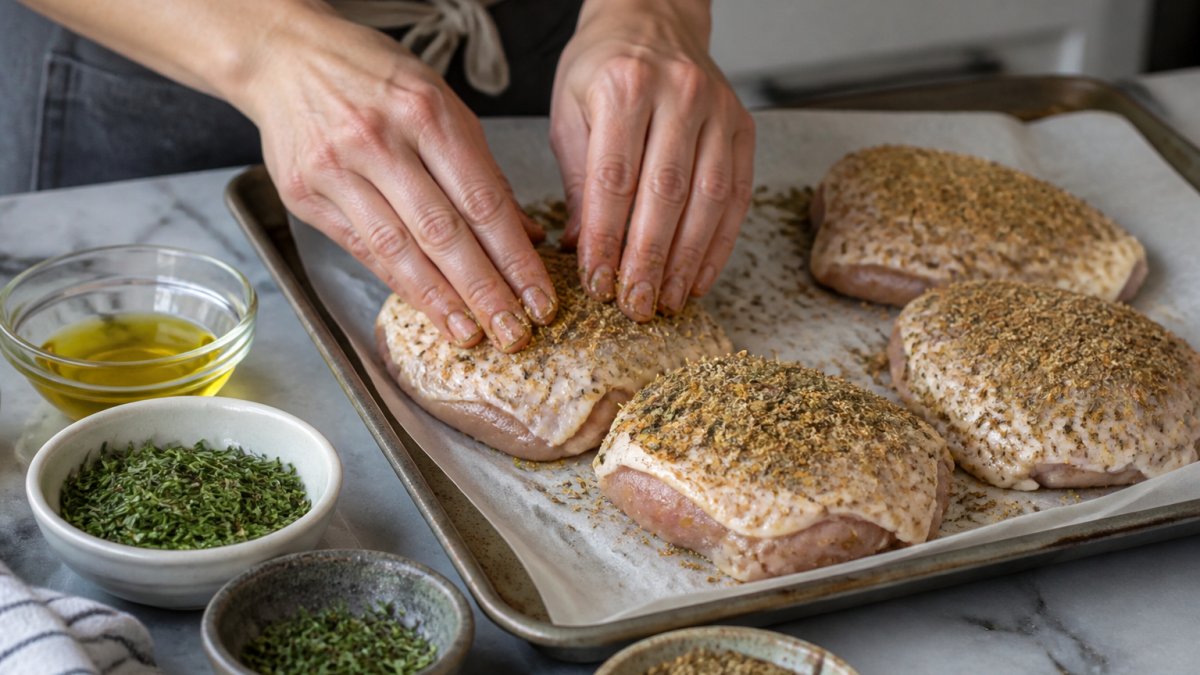
Whichever route you take, the same rule applies: season the whole surface, not just the top. Chicken bakes on all sides, and unseasoned spots taste flat next to seasoned ones.
Frequently Asked Questions
What are some good herbs to pair with chicken?
Rosemary, thyme, sage, oregano, basil, tarragon, and parsley all work well with baked chicken. Rosemary and thyme suit roasted chicken parts and hold up to long oven times. Sage fits richer, fattier cuts. Oregano and basil lean Mediterranean and pair well with olive oil, garlic, and lemon. Tarragon brings a distinct anise note that works with chicken breast, while parsley finishes the plate fresh after baking.
Is rosemary or thyme better for chicken?
Both work, but they bring different things. Rosemary is piney and assertive, so it stands up to roasted chicken thighs, drumsticks, and whole birds without fading. Thyme is softer and earthy, which makes it the safer pick for delicate chicken breast. If you want one herb for everything, use thyme. If you want a bold roasted chicken flavor, use rosemary. Many cooks use both, which is why rosemary and thyme chicken is such a common pairing.
Can you use fresh or dried herbs on baked chicken?
Yes, both work. Dried herbs are more concentrated, so use about one-third the amount of fresh. One teaspoon of dried thyme replaces roughly one tablespoon of fresh. Add dried herbs before baking so they have time to rehydrate in the oven's heat and the chicken's juices. Save delicate fresh herbs like parsley, basil, and dill for after baking, since heat dulls their flavor. Heartier fresh herbs like rosemary and thyme can go in before baking.
When should you add herbs to baked chicken?
Timing depends on the herb and the method. Dried herbs and hearty fresh herbs like rosemary, thyme, and sage go on before baking, either rubbed under the skin or over the surface. Softer fresh herbs like parsley, basil, and dill go on after baking so they keep their brightness. If you marinate, give the chicken at least 20 minutes in the refrigerator, longer if you have time, so the herbs and oil carry flavor into the meat.
What seasoning goes well with baked chicken and herbs?
Garlic, lemon, olive oil, butter, salt, and black pepper are the core supporting players. Garlic powder and toasted onion add depth without extra chopping. Lemon zest or juice brightens earthy herbs like rosemary and thyme. A pre-mixed blend built around Italian spices can cover the garlic and herb base in one step, which helps when you want baked chicken on the table in about 30 minutes.