

7 Time-Saving Kitchen Tools for Healthy Cooking
Quick Summary
The best time-saving kitchen tools for healthy cooking are a food processor for chopping vegetables, an electric multi-cooker for hands-off batches, and a blender or immersion blender for soups and sauces. Low-tech essentials like a sharp knife, kitchen shears, and a salad spinner save prep minutes too.
- A food processor chops onions, carrots, and peppers quickly; pulse in short bursts to keep pieces even.
- An electric multi-cooker lets you batch cook beans, grains, or lean protein and walk away.
- An immersion blender saves the transfer step and one pot when making soup.
- Buy tools for your actual batch size and how often you cook, not the one you imagine.
- Compare each tool's saved minutes against its cleanup minutes before buying.
Table of Contents
- Why Prep Time Is the Real Obstacle to Healthy Eating
- 1. Food Processor: Chopping Vegetables in Seconds
- 2. Electric Multi-Cooker: Batch Cooking on Autopilot
- 3. Blender and Immersion Blender: Soups and Sauces Without Fuss
- 4. Sharp Knife, Kitchen Shears and Salad Spinner: The Low-Tech Essentials
- How to Choose Tools for Your Household Size and Cooking Habits
- A Sample 30-Minute Healthy Dinner Workflow
- Stocking Your Kitchen With Flavor Shortcuts for Faster Dinners
- Frequently Asked Questions
7 Time-Saving Kitchen Tools for Healthy Cooking
Why Prep Time Is the Real Obstacle to Healthy Eating
Most people know what healthy cooking looks like. The harder part is finding the time to do it on a weeknight. Batch cooking is one of the most widely recommended ways to close that gap. A review article on home meal preparation describes healthy batch cooking as a way to save time, reduce stress, and provide more healthy options Home Meal Preparation: A Powerful Medical Intervention.
The right kitchen tools make batch cooking practical. Twisted Pepper Co. builds handcrafted, gluten-free seasonings and soup mixes around one goal: a flavorful 30-minute meal without long prep. The tools below cut the chopping, blending, and cleanup that usually eat into that time. Each one earns its place by saving a specific block of minutes.
Quick Picks:
- Best for chopping: a food processor
- Best for hands-off batches: an electric multi-cooker
- Best for soups and sauces: a blender or immersion blender
- Best low-tech essentials: a sharp knife, kitchen shears, and a salad spinner
1. Food Processor: Chopping Vegetables in Seconds
A food processor is the fastest way to turn a pile of vegetables into prep-ready pieces. The Heart and Stroke Foundation names it as a tool for quickly chopping vegetables and making dips, sauces, and dressings Heart and Stroke Foundation kitchen tool guidance.
Use it for onions, carrots, peppers, and cabbage before a stir-fry or sheet-pan dinner. Pulse in short bursts so the pieces stay even. Overprocessing turns vegetables into mush, so check after each pulse.
Pair it with the seasoning you plan to use. Our Tuscan Roasted Garlic Seasoning, priced at $6.99, works well on chopped vegetables before roasting.
2. Electric Multi-Cooker: Batch Cooking on Autopilot
An electric multi-cooker handles several jobs in one pot, which cuts down on pans to wash. UNL Food's list of 30 time-saving kitchen tools includes the electric multi-cooker as a practical choice for busy cooks UNL Food 30 time-saving kitchen tools.
Load it with a base of beans, grains, or lean protein, set the timer, and walk away. Once cooked, portion the meal into containers for the week.
Our Taco Seasoning Mix, priced at $6.00, adds a fast flavor base to shredded chicken or ground turkey cooked this way.
3. Blender and Immersion Blender: Soups and Sauces Without Fuss
A blender turns cooked vegetables into smooth soup in minutes. An immersion blender does the same job right in the pot, which means fewer dishes. Both fit the healthy-cooking goal of making vegetables the center of the meal.
Blend soups in small batches and let them cool a few minutes before filling a full blender. Hot liquid expands and can push the lid off.
Our Broccoli Cheddar Dry Soup Mix, priced at $9.99, serves six and simmers for about 10 minutes once the broccoli is added. Our New Mexico Taco Soup Dry Mix, also $9.99, serves twelve and pairs well with a batch of ground beef and canned beans.
4. Sharp Knife, Kitchen Shears and Salad Spinner: The Low-Tech Essentials
Not every time saver needs a power cord. The manual tools below are the ones most cooks reach for first, and they cost the least to own.
Chef's knife. A sharp 8-inch chef's knife cuts faster and more safely than a dull one because it takes less force and less effort per cut.
Kitchen shears. Shears trim herbs, snip scallions, cut pizza, spatchcock a chicken, and open packaging in seconds. Keep a pair that separates for washing so raw-poultry use doesn't cross-contaminate the next job.
Salad spinner. A spinner dries greens in about a minute, so salads come together without a towel pile afterward. Dry greens also hold dressing better, which means less dressing per serving.
Small tools for herbs, garlic, citrus, and zest. These are tools many home cooks use daily:
- Garlic press: crushes a clove in one squeeze instead of mincing by hand. Clean it promptly; dried garlic is hard to remove.
- Microplane or fine zester: zests citrus and grates hard cheese, garlic, ginger, and nutmeg. One tool, many jobs.
- Citrus reamer or squeezer: gets more juice per fruit than hand squeezing and keeps seeds out.
- Herb stripper: pulls leaves off thyme and rosemary stems in one pass. A pair of shears does the same job if you don't want another drawer item.
- Avocado slicer or mango splitter: niche, but fast for the specific fruit you eat most.
How to choose among them. Ask three questions before buying. How many minutes does this tool save per meal? How much storage space does it need? How much cleanup does it add?
These tools cost little and last years. They are often the first upgrade a busy cook should make, and they work in any kitchen, including small rentals where a food processor won't fit.
Tuscan Roasted Garlic Seasoning 2.0 oz. →
The manual tools below cover the prep jobs that eat the most minutes on a weeknight, and each one costs little to own.
| Tool | Time it saves | Key note |
|---|---|---|
| Sharp chef's knife | Faster, safer cuts than a dull knife | Buy one knife you will maintain |
| Kitchen shears | Herbs, scallions, pizza, packaging in seconds | Replaces a knife and board for small tasks |
| Salad spinner | Dries greens in about a minute | Doubles as a serving bowl |
| Garlic press | Crushes a clove in one squeeze | Clean promptly; dried garlic is hard to remove |
| Microplane or fine zester | Zests citrus, grates cheese, garlic, ginger | One tool, many jobs |
| Citrus reamer or squeezer | More juice per fruit than hand squeezing | Keeps seeds out |
How to Choose Tools for Your Household Size and Cooking Habits
Most tool lists tell you what to buy. Fewer help you decide which tools fit your kitchen, your meal frequency, and the number of people you feed.
Match the tool to household size. A household of one or two rarely needs a large multi-cooker; a 3-quart model covers most batches and takes less counter space. A family of four or more that batch cooks on weekends will use a 6-quart or 8-quart multi-cooker constantly. A blender that handles 6 cups is enough for soups for two; a family blending smoothies daily may want a larger jar or a second cup.
Match the tool to cooking frequency. A tool used weekly pays for itself faster than one used monthly. Before buying, estimate uses per month and divide the price by that number to get a rough cost per use.
Quantify the time saved by task. This is the number most lists skip. Reasonable estimates from common home-cooking patterns:
- Chopping vegetables by hand vs. food processor: a food processor typically cuts a pile of onions, carrots, and peppers from 10-15 minutes to 2-3 minutes, plus 2-3 minutes of cleanup.
- Stovetop simmer vs. electric multi-cooker for beans or grains: the multi-cooker removes 30-60 minutes of hands-on monitoring, though total cook time is similar.
- Whisking or hand-mashing vs. immersion blender for soup: an immersion blender saves the transfer-and-pour step and one pot to wash, often 5-10 minutes per batch.
- Drying greens in a towel vs. salad spinner: a spinner saves several minutes and a towel load per salad.
- Mincing garlic by knife vs. garlic press: seconds per clove, but several minutes across a week of cooking.
Add the cleanup time back in. A tool that saves ten minutes of prep but adds fifteen minutes of washing and reassembly is a net loss. Dishwasher-safe parts and few components matter more than headline speed.
Weigh cleaning effort and storage footprint. A multi-cooker with a nonstick insert cleans in a few minutes; a blender jar with a narrow base takes longer.
Consider air fryers and toaster ovens. These are the two appliances most top tool lists include and most home cooks ask about. An air fryer crisps vegetables and proteins with little oil and preheats faster than a full oven, which shortens weeknight cook time. A toaster oven does the same for smaller batches and doubles as a second oven during holidays.
Budget, durability, and cost per use. Price ranges vary widely, so compare within a category rather than across it.
Accessible and low-tech alternatives. Not every kitchen has space, budget, or ability for large appliances.
Evidence-based note. No gadget makes food healthy on its own. Tools help by making it easier to cook vegetables, beans, and lean proteins at home more often, which is the outcome that matters. Use them to reduce the friction of cooking at home, not as a substitute for choosing whole ingredients.
A Sample 30-Minute Healthy Dinner Workflow
Here is a realistic weeknight plan using these tools:
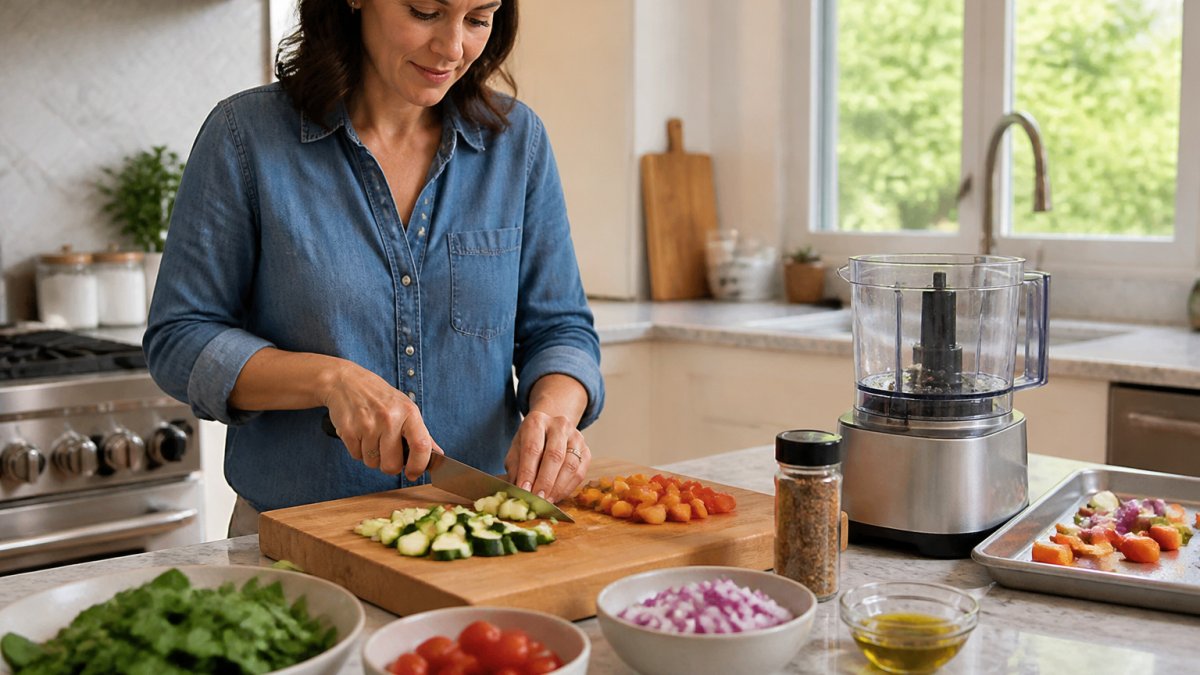
- Minutes 0-5: Pull vegetables and protein from the fridge. Set the multi-cooker or oven going.
- Minutes 5-10: Pulse vegetables in the food processor. Use shears for fresh herbs.
- Minutes 10-20: Toss vegetables and protein with oil and seasoning. Spread on a sheet pan or into the pot.
- Minutes 20-30: Plate the meal. Store leftovers in portioned containers.
For more quick cooking ideas, see quick gluten-free stir-fries that fit this timed plan.
Season with our Mediterranean Seasoning, priced at $12.99, for a fish or chicken dish that pairs well with roasted vegetables.

Stocking Your Kitchen With Flavor Shortcuts for Faster Dinners
Flavor shortcuts cut the time spent measuring spices. A good pantry blend replaces five or six jars with one. Look for low-sodium options if you watch salt intake. Our Savory Italian Seasoning, $12.99, is low sodium and gluten free, and works on veggies, dips, and bread.
Our Toasted Onion and Garlic Seasoning, $12.99, is made for bread dipping oil and roasted vegetables. Our Tex-Mex Seasoning Mix, $9.50, is low salt and gluten free, and works as a marinade or dry rub. For soups, the Broccoli Cheddar and New Mexico Taco mixes listed above are ready to combine with water and your main ingredients.
Frequently Asked Questions
What kitchen tools save the most time when cooking healthy meals?
A food processor, a multi-cooker and a sharp chef's knife save the most time for most home cooks. The food processor handles bulk chopping and shredding in seconds, the multi-cooker runs batch cooking with little supervision, and a sharp knife makes manual prep faster and safer. Start with whichever task eats the most of your weeknight time, then add tools as you see where minutes disappear.
What are the must-have tools for healthy cooking?
The core set is a sharp chef's knife, a cutting board, a food processor, a blender or immersion blender, a salad spinner and a set of sturdy baking dishes. These cover chopping, blending, washing and roasting vegetables, which are the steps that most often stand between a home cook and a homemade meal. Specialty gadgets can wait until the basics are doing most of the work.
Are meal-prep tools worth buying?
They are worth it if you cook at home several times a week and use the tool at least once a week. A tool that gets used weekly for a year costs far less per use than takeout. Judge each purchase by cost per use, storage footprint and cleaning effort, and skip single-purpose gadgets you would use only a few times a year.
How can I save time preparing healthy meals?
Batch cook two or three staple recipes on the weekend, prep vegetables in bulk with a food processor, and keep pre-measured seasonings ready to use. Twisted Pepper Co.'s Taco Seasoning Mix and Savory Italian Seasoning, for example, replace measuring out several spices each time you cook, which trims minutes from every weeknight meal.
