

Flavorful Stir-Fry With Onion Dip Mix: A 30-Minute Guide
Table of Contents
- Why Onion Dip Mix Works for Stir-Fry
- What You'll Need: Ingredients and Equipment
- Preparing Chicken and Vegetable Stir-Fry Ingredients
- Selecting the Best Vegetables for Stir-Fry
- How to Season Stir-Fry With Onion Dip Mix
- Stir-Fry Sauce Ideas Using Onion Dip Mix
- Step-by-Step Cooking Instructions
- Common Mistakes to Avoid
- Frequently Asked Questions
Last Updated: October 21, 2026
Why Onion Dip Mix Works for Stir-Fry
Adding onion dip mix to your stir-fry transforms a basic weeknight meal into something with real depth. The mix combines toasted onion, garlic, and savory spices that blend into hot oil and vegetables, replacing multiple jars of seasonings with one balanced blend.

It saves time and guesswork. A stir-fry onion dip mix delivers umami and savory notes that make chicken, vegetables, and rice taste like you spent hours on the recipe, and one packet often replaces five or six ingredients.
The key is using the right mix and knowing how to keep it from burning or tasting too salty. Done well, a stir-fry onion dip mix creates a dish that tastes homemade, not generic.
What You'll Need: Ingredients and Equipment
You don't need fancy gear, just a large skillet or wok, a wooden spoon, and basic cutting tools.
Equipment:
- Large skillet or wok (12-inch minimum)
- Wooden spoon or silicone spatula
- Sharp knife and cutting board
Core Ingredients:
- Onion dip mix (or seasoning blend)
- Chicken breast, steak, or tofu
- Fresh vegetables (bell peppers, broccoli, snap peas, carrots)
Choosing Your Onion Dip Mix
The stir-fry onion dip mix you choose sets the tone.
At Twisted Pepper Co., our Toasted Onion & Garlic Dip Mix ($5.95) works beautifully in stir-fry because we use roasted garlic and toasted onion.
If you prefer something with more heat, the Blazin' Onion Dip Mix ($5.95) brings extra kick. Both are low-sodium.

Preparing Chicken and Vegetable Stir-Fry Ingredients
Success in stir-fry starts before the heat turns on. Prep everything first. Once cooking begins, you won't have time to chop.
Protein Prep:
- Cut chicken breasts into bite-sized pieces (1-inch cubes work best)
- Pat dry with paper towels to remove excess moisture
- This helps the chicken brown instead of steam
Vegetable Prep:
- Wash and dry all vegetables thoroughly
- Cut into uniform sizes so everything cooks at the same rate
- Aim for pieces about the size of a quarter to a half-dollar
Cutting Vegetables for Even Cooking
Uneven cuts leave some vegetables mushy and others raw, so consistency matters more than perfection.
Recommended cuts:
- Bell peppers: 1-inch chunks
- Broccoli: small florets with 1-inch stems
- Snap peas: left whole or halved lengthwise
Thinner cuts cook faster, so cut dense vegetables like carrots thinner than soft ones like peppers, and add slower-cooking vegetables first.
Selecting the Best Vegetables for Stir-Fry
The vegetables you choose determine texture and flavor balance, so mix colors, textures, and cooking times.
Fast-cooking vegetables (add last):
- Bell peppers
- Snap peas
- Mushrooms
Medium-cooking vegetables (add second):
- Broccoli
- Cauliflower
- Green beans
Slow-cooking vegetables (add first):
- Carrots
- Celery
- Onions
Aim for at least three vegetables; four to five is the sweet spot, since too many dilutes flavor and too few feels incomplete.
Fresh vegetables work best; frozen ones release more water and can make stir-fry soggy unless thawed and drained first.
How to Season Stir-Fry With Onion Dip Mix
Onion dip mix is a concentrated seasoning, not a finishing sprinkle. Treat it like a bouillon cube: it needs liquid to dissolve, heat to bloom, and a measured hand so the salt level stays predictable.
The Measured Sauce Formula
Use this ratio as your baseline for a 12-inch pan holding about 4 cups of protein and vegetables:
- 1 part onion dip mix (start with 2 tablespoons)
- 1.5 parts soy sauce or tamari (3 tablespoons)
- 0.5 parts acid (1 tablespoon rice vinegar or lime juice)
That yields roughly 1/2 cup of sauce, which coats 4 cups of stir-fry without pooling. Double the vegetables, double the sauce; for a single chicken breast with two cups of vegetables, cut the mix to 1 tablespoon and the liquid to 2 tablespoons so the dish doesn't turn salty.
Why the Mix Burns (and How to Stop It)
Onion dip mix contains dehydrated onion and garlic. Dry powder dropped into hot oil browns in seconds and turns bitter.
The fix is timing, not lower heat:
- Cook the protein and vegetables first in oil, without the dry mix.
- Push the food to the side of the pan and pour the pre-mixed sauce into the bare center.
- Let the sauce bubble for 20-30 seconds, then toss everything together. The liquid keeps the mix below its scorch point while the heat blooms the onion flavor.
- Pull the pan off the heat the moment the sauce thickens and coats the back of a spoon.
Many home cooks add the dry mix at the start "to toast it." That works with whole spices, not dip mix, keep the powder out of dry heat entirely.
Fixing a Too-Salty Stir-Fry
Onion dip mix carries salt, and soy sauce adds more. If the finished dish tastes sharp or salty:
- Add unsalted bulk. Toss in an extra cup of cooked rice, noodles, or plain steamed vegetables. This dilutes salt without changing the flavor profile.
- Add acid, not water. A squeeze of lime or a teaspoon of rice vinegar shifts perception away from salt. Plain water just makes the sauce thin.
- Add a fat. A teaspoon of sesame oil or a pat of unsalted butter rounds out harsh saltiness.
Scaling the Mix to Your Pan
Dip mix quantity should track your pan's surface area, not the number of servings, an overcrowded pan steams instead of sears and the sauce never reduces properly.
- 12-inch skillet or wok: 2 tablespoons mix, 4 cups total food
- 10-inch skillet: 1 tablespoon mix, 2 to 2.5 cups total food
- 14-inch wok: 3 tablespoons mix, 6 cups total food
If you cook in batches, season each batch with its own share of sauce rather than doubling it for the whole pan at the end; batch-seasoned stir-fry tastes more even and never sits in excess liquid.
Toasted Onion & Garlic Dip or Cheeseball Mix →
Stir-Fry Sauce Ideas Using Onion Dip Mix
The three sauces below share one skeleton: dip mix for savory base, liquid for body, acid for brightness, and a thickener only when needed. Learn it and you can swap ingredients without a new recipe each time.
The Base Skeleton
Every sauce in this section follows the same proportions for a 12-inch pan:
- 2 tablespoons onion dip mix (the flavor base)
- 3 tablespoons liquid (soy sauce, tamari, coconut aminos, or unsalted broth)
- 1 tablespoon acid (rice vinegar, lime juice, or mirin)
- 1/4 cup water (to dissolve the mix and prevent scorching)
Change one variable at a time and you get a different dish without starting over.
Sauce 1: Savory Soy-Ginger
- 2 tablespoons onion dip mix
- 3 tablespoons soy sauce or tamari
- 1 tablespoon rice vinegar
- 1/2 teaspoon ground ginger (or 1 teaspoon fresh grated)
Best with: chicken, beef, broccoli, snap peas. The soy and ginger reinforce the onion base without competing with it.
Sauce 2: Creamy Onion
- 2 tablespoons onion dip mix
- 1/4 cup sour cream or plain Greek yogurt
- 2 tablespoons water
- 1 tablespoon lemon juice
Best with: mushrooms, spinach, zucchini, and shrimp. Add this sauce off the heat in the final 30 seconds. Dairy proteins curdle if boiled, and the sauce will look grainy if it simmers.
Sauce 3: Spicy Chile-Onion
- 2 tablespoons onion dip mix (or the Blazin' Onion blend for more heat)
- 3 tablespoons soy sauce
- 1 tablespoon sriracha or chile-garlic sauce
- 1 tablespoon rice vinegar
Best with: pork, tofu, bell peppers, green beans. The chile sauce adds body as well as heat, so you may not need the cornstarch slurry.
Homemade vs. Packaged Dip Mix
If you make your own onion dip mix, most homemade versions use dehydrated onion, garlic powder, dried parsley, and salt, so start with 2 tablespoons and taste before adding more salt.
When substituting homemade for packaged:
- Reduce or skip added salt in the rest of the recipe. Homemade mixes vary widely in salt content.
- Add a pinch of sugar (no more than 1/4 teaspoon) if your homemade blend lacks the buttermilk or whey powder that packaged mixes often include for roundness.
- Expect a coarser texture. Homemade dehydrated onion takes longer to rehydrate, so let the sauce sit 5 minutes before cooking.
Thickening and Adjusting
If the sauce looks watery after tossing, make a slurry of 1 teaspoon cornstarch and 1 tablespoon cold water, push the food aside, and stir it into the bubbling liquid; it thickens in about 30 seconds.
If the sauce tastes flat, the fix is usually acid, not more dip mix, a teaspoon of rice vinegar or a squeeze of lime brightens the dish.
Step-by-Step Cooking Instructions
Total time: 25-30 minutes (including prep)
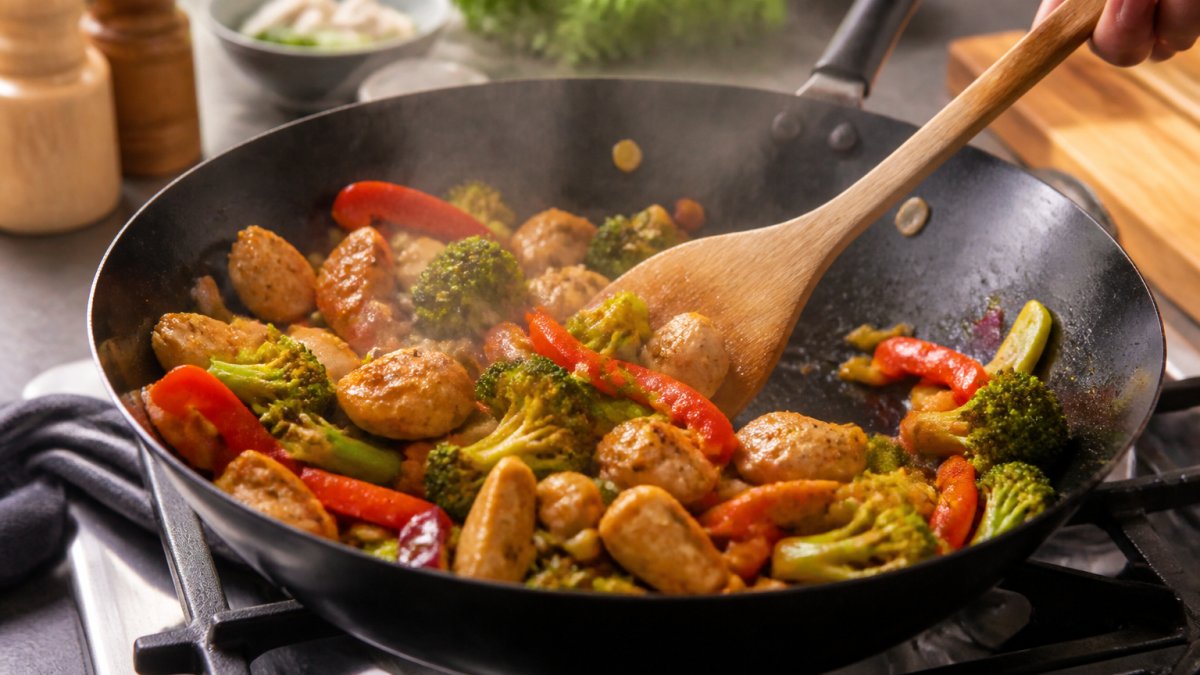
Step 3: Cook slow vegetables (4 minutes) Add carrots, celery, and any other dense vegetables.
Step 4: Add medium-speed vegetables (3 minutes) Add broccoli, green beans, or cabbage. Keep stirring.
Step 5: Add fast-cooking vegetables (2 minutes) Add peppers, snap peas, and softer vegetables.
Step 7: Serve (1 minute) Spoon over cooked rice or noodles. Serve immediately while hot.
Vegetarian and Alternative-Protein Variations
You don't need meat to make a satisfying stir-fry. The vegetables and onion dip mix carry the flavor.
Vegetarian options:
- Extra-firm tofu (press to remove water, cut into cubes, cook the same way as chicken)
- Chickpeas or black beans (add in step 6, no cooking needed)
- Cashews or peanuts (add at the very end for crunch)
- Eggs (scramble separately, stir in at the end)
Alternative proteins:
- Shrimp (cooks in 2-3 minutes, add in step 2)
- Beef or pork (cut thin, cook same as chicken)
- Turkey ground meat (crumble as it cooks, takes 5-6 minutes)
Tofu works especially well because it absorbs the onion dip mix flavor. Press it first to remove excess water, which prevents a watery pan.
Common Mistakes to Avoid
Adding the mix too early: Dry seasoning mix burns over direct high heat.
Cutting vegetables unevenly: Thick pieces stay raw while thin ones turn to mush.
Not drying protein: Wet chicken releases steam and prevents browning.
Cooking on low heat: Stir-fry needs high heat to develop color and flavor.
Using old vegetables: Limp peppers and soft carrots make mushy stir-fry.
A flavorful stir-fry comes together fast when you have the right seasoning blend and a clear plan. Whether you choose our Toasted Onion & Garlic mix for subtle depth or the Blazin' Onion blend for extra kick, you'll have dinner ready in 30 minutes or less.
Frequently Asked Questions
Can you use onion dip mix in stir-fry, and when should you add it?
Yes, onion dip mix works excellently in stir-fry. Add it during the last 2-3 minutes of cooking to preserve flavor and prevent burning. Start with 1-2 tablespoons and taste as you go. The seasoning blends quickly into hot oil and coats vegetables and protein evenly. Twisted Pepper Co.'s onion dip mixes are gluten-free and contain no MSG.
What vegetables are best for stir-fry, and how do you keep them crisp?
Bell peppers, broccoli, snap peas, carrots, celery, and onions are stir-fry staples. Cut them into uniform, bite-sized pieces so they cook evenly. Add vegetables in stages based on cooking time: carrots and celery first (4-5 minutes), then peppers and broccoli (2-3 minutes), and finally snap peas and softer vegetables last (1-2 minutes). High heat and constant movement keep vegetables tender-crisp rather than mushy.
How do you prevent onion dip mix from making stir-fry taste too salty?
Onion dip mixes are pre-blended seasonings, so control saltiness by adjusting quantity. Start with 1 tablespoon per serving and taste before adding more. Combine the mix with a measured sauce (soy sauce, broth, or oil) rather than sprinkling it dry. This distributes flavor evenly and prevents hot spots of concentrated seasoning. Twisted Pepper Co.'s low-sodium options give you flexibility to manage sodium intake.
What proteins work best with onion dip mix stir-fry?
Chicken breast, diced into uniform 1-inch cubes, is the quickest option and cooks in 5-7 minutes. Beef sirloin, pork tenderloin, and shrimp also pair well with onion-based seasoning. For vegetarian versions, use tofu, chickpeas, or beans. Cook protein separately until nearly done, then combine with vegetables in the final minutes. The onion flavor complements all these options and adds savory depth without overpowering delicate proteins.