

How to Store Spice Blends for Maximum Freshness
Table of Contents
- Start With the Right Container: Best Containers for Storing Spices
- Pick a Cool, Dark, Dry Spot: Where to Store Spice Blends
- How to Keep Spices Fresh: 6 Daily Habits That Protect Flavor
- How Long Do Spice Blends Last? Timelines by Ingredient and Blend Type
- How to Tell if Spices Are Still Good: 3 Quick Checks
- Bulk Storage, Freezing, and Safe Handling for Homemade Blends
- Conclusion
- Frequently Asked Questions
Last Updated: October 13, 2026
Start With the Right Container: Best Containers for Storing Spices
Learning how to store spice blends for maximum freshness starts with the container. Air, light, and moisture are the enemies of every blend, and a bad jar lets all three in.
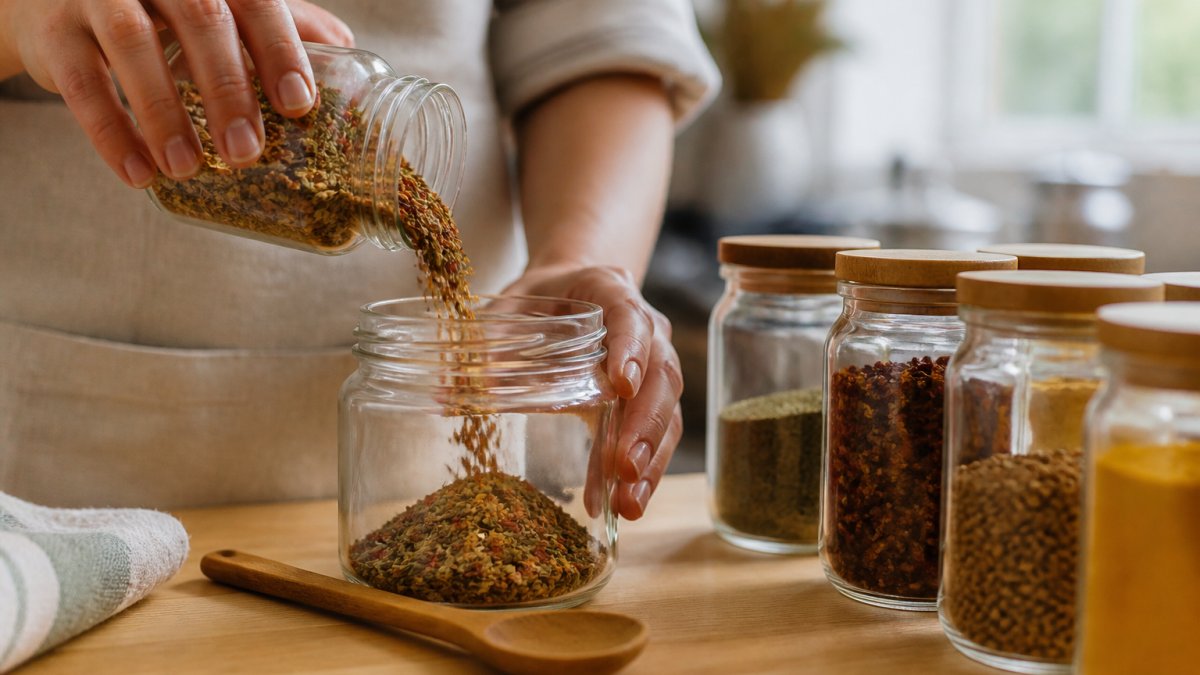
Glass with an airtight seal wins; ceramic with a rubber gasket is a close second. Plastic works in a pinch but holds onto smells. At Twisted Pepper Co., we ship our handcrafted seasonings in packaging built to keep flavor locked in.
Glass, Ceramic, or Plastic: What Actually Works
Glass containers are best for most kitchens: they don't absorb odors or stain, and you can see how much blend is left without opening the lid.
Ceramic containers block light completely, which glass doesn't. Look for one with a silicone gasket and a clamp lid. The trade-off: you can't see the fill level.
Plastic containers are fine short-term, but plastic picks up the smell of strong blends like Tex-Mex or garlic and passes it along.
The Seal Is the Whole Game
A common mistake is buying a pretty jar with a loose-fitting lid. If the lid wiggles, air is getting in. Test any jar before you commit:
- Screw-band lids with a rubber or silicone gasket give the most reliable seal, the gasket compresses against the rim, so small chips don't break it.
- Clamp lids with a gasket seal well but the gasket degrades, replace it every year or two.
- Flip-top or press-fit lids without a gasket are decorative. Skip them for blends kept more than a month.
- Cork stoppers breathe. Fine for a jar you'll empty in two weeks, not long-term storage.
A quick field test: fill the jar with water, seal it, and turn it upside down over the sink for ten seconds. Any drip means air will get in too.
Size and Headspace: The Part Most Guides Skip
Headspace is the empty air between the blend's surface and the lid. Every time you open the jar, that air exchanges with kitchen air, and more headspace means more oxygen oxidizing aromatic oils.
The fix is simple: match the jar to the amount of blend you actually have.
- Fill jars to about 80-90% full. That leaves room for a spoon without packing the blend against the lid.
- Downsize as you use. When a jar drops below half full, move the remainder into a smaller jar.
- Avoid oversized jars for small batches. A 4-ounce jar of homemade taco blend in a 16-ounce jar ages roughly twice as fast as in an 8-ounce jar.
- For gifting, size down. A 4-ounce jar filled nearly to the top protects flavor better than a decorative 8-ounce jar half-filled.
When to Keep the Original Packaging
Keep the original packaging when it's a resealable, airtight bag, many quality blends come in foil pouches with a zip seal that block light better than a clear jar. Once opened, the clock starts: roll the top down, press the seal shut, and squeeze out extra air. If the bag doesn't reseal, transfer the blend to a glass jar the same day.
Pick a Cool, Dark, Dry Spot: Where to Store Spice Blends
The best place to store spice blends is a cool, dark, dry cabinet away from the stove. Heat, light, and steam break down the oils that give a blend flavor.
Three rules cover almost every kitchen:
- Keep blends in a cabinet or drawer, not on the counter
- Keep them at least a few feet from the oven, stovetop, and dishwasher
- Keep them away from windows and direct sunlight
Aim for steady room temperature. Big hot-cold swings cause condensation inside the jar, and moisture turns a scoopable blend into a clumpy brick.
Cabinet vs Countertop Spice Rack
A countertop spice rack looks great but is the worst spot in most kitchens, countertops catch sunlight, cooking heat, and sink steam. A dark cabinet or drawer keeps all three away. If you love the look, use the rack for daily blends and store the rest in the cabinet.
How to Keep Spices Fresh: 6 Daily Habits That Protect Flavor
Small habits do most of the work. Here are six that matter, with the mechanism behind each:
- Close the lid right away. Every minute a jar sits open, aromatic oils at the surface volatilize into the room.
- Use a dry spoon. A wet spoon introduces moisture that ruins the whole jar, even a few drops raise water activity enough for clumping and, over time, mold.
- Pour, don't scoop over the pot. Steam rises into the jar if you hold it over boiling water. Tip a small amount into your palm or a prep bowl, then add it to the dish.
- Don't shake over a hot pan. Same problem, and worse: steam condenses on the lid's inside and drips back into the blend.
- Keep the jar full-ish. Less air inside means slower flavor loss. Move leftovers to a smaller jar.
- Store away from the stove. A cabinet three feet from the range stays cooler than the shelf directly above it.
Why Shaking Over Steam Is the Biggest Hidden Mistake
Holding a jar over a simmering pot feels harmless, but steam condenses on the jar's inner walls and the blend's surface. That moisture:
- Clumps the blend. Breaking up clumps with a spoon exposes more surface area to air.
- Accelerates flavor loss. Moisture helps carry volatile oils out of the blend and into the air.
- Creates a contamination risk. Warm, moist blends are friendlier to bacteria and mold than dry ones.
The fix is a two-second habit change: pour what you need into a prep bowl or your palm, then add it to the pot. The jar never sees the steam.
Contamination Prevention: The Rules That Actually Matter
Spice blends are dry, low-moisture products, so they don't spoil like fresh food, but they can be contaminated by what you put into them. Three rules:
- Never dip a spoon you've used on raw meat back into the jar. Raw poultry, pork, and ground beef carry bacteria that can ride a spoon into a dry blend and survive for weeks. Use a separate spoon for jar and pan.
- Never scoop with a wet or dirty utensil. A spoon that's been in sauce, a sink, or your mouth introduces moisture and microbes.
- Never shake directly over a hot pan. This is the steam problem again, plus it puts the jar's rim in range of splatter.
If you do introduce moisture, say, a wet spoon, use that blend within a few days and check for clumping before each use. Clumps that don't break apart under finger pressure are a sign to toss the jar.
A Two-Jar System for Daily Cooking
If you cook with the same blend several times a week, split it. Keep a small "working jar" near the stove, enough for a week or two, and store the rest in a larger jar in a cooler, darker spot. You open the main jar far less often, so less air exchange and slower flavor loss. Refill the working jar from the main jar with a clean, dry spoon, never the reverse.
Savory Italian Seasoning 4.0 oz →
How Long Do Spice Blends Last? Timelines by Ingredient and Blend Type
There's no single answer, it depends on what's in the blend. Whole spices hold their flavor far longer than ground ones. Here's a practical guide:
| Blend Type | Typical Peak Flavor | Still Usable |
|---|---|---|
| Whole spices | 3-4 years | 5+ years |
| Ground single spices | 2-3 years | 3-4 years |
| Store-bought blends | 1-2 years | 2-3 years |
| Homemade blends | 3-6 months | Up to 1 year |
| Blends with dried herbs | 1-2 years | 2-3 years |
These are general ranges, not hard rules. Storage conditions matter as much as the calendar.
Whole Spices vs Ground Spices vs Homemade Blends
Whole spices keep their oils locked inside, grind them when you need them and they'll taste fresh far longer.
Ground spices expose all that surface area to air the moment they're ground, so flavor fades faster.
Homemade blends are the most fragile. You control the ingredients, but you can't match commercial shelf-stable packaging. Make smaller batches and use them within a few months.
How to Tell if Spices Are Still Good: 3 Quick Checks
You can test a blend in under a minute. Try these three checks:
- Smell it. A strong, clear aroma means it's still good; a faint or dusty smell means the oils are gone.
- Rub it. If a pinch releases a burst of smell, it's fine. If it feels like scentless powder, it's spent.
- Look at it. Clumps mean moisture got in. Faded color means light did its damage.
If a blend fails all three, it won't make you sick, but it won't add flavor either. Use it up in a big pot of chili or soup, or replace it.
Bulk Storage, Freezing, and Safe Handling for Homemade Blends
Buying in bulk saves money, but only if you store it right. Split a big bag into smaller jars so you're only opening one at a time, every opening lets in air and moisture.
Freezing works for whole spices and some blends, but moisture is the catch: bring a frozen blend into a warm kitchen and condensation forms inside.
If you do freeze:
- Use a freezer-safe airtight container
- Squeeze out as much air as you can
- Let the container sit closed until it reaches room temperature before opening
For homemade blends, let them cool completely before sealing. Warm blend plus a sealed lid equals trapped steam.
Labeling and Rotation System
A simple label saves you from guessing. Write three things on every jar:
- The blend name
- The date you made or opened it
- The date it should be replaced
Then rotate: new blends at the back, older ones at the front, oldest used first. This one habit keeps you from finding a three-year-old jar behind the garlic powder.
Conclusion
Keeping blends fresh comes down to blocking air, light, and heat, then using what you have before it fades. It takes a system.
That's the same idea behind everything we make at Twisted Pepper Co. Our handcrafted seasonings are gluten-free with no MSG added, and our signature low and light sodium blends let you control the salt without losing flavor. Try our Savory Italian Seasoning or Tex-Mex Seasoning Mix, then store them in a small airtight jar in a dark cabinet and they'll reward you for months.

Shop Now and taste the difference fresh seasoning makes.
Frequently Asked Questions
Should spice blends be stored in airtight containers?
Yes. Air exposure is the fastest way to dull a spice blend. Choose containers with a tight-fitting lid, like a screw-top glass jar or a clamp-lid ceramic jar. If you buy a blend in a resealable pouch, press out extra air before closing it. Airtight containers keep moisture, humidity, and odors out so your blend stays flavorful longer.
Is it better to store spices in glass or plastic containers?
Glass and ceramic are the best containers for storing spices because they do not absorb or transfer odors and they seal tightly. Plastic containers work if they are food-grade and airtight, but they can pick up smells over time. Whichever you choose, keep the container out of direct sunlight and away from the stove.
Is it okay to store spices near the stove?
No. Heat from the oven and stovetop speeds up deterioration and shortens shelf life. Move your spice blends to a cool, dry place like a cabinet or drawer away from cooking appliances. A countertop spice rack looks nice but exposes blends to light, heat, and humidity, which are the three biggest enemies of freshness.
How long do homemade spice blends stay fresh?
Most homemade blends keep good flavor for 3 to 6 months when stored in an airtight container in a cool, dark, dry spot. Blends with ground spices lose punch faster than blends built on whole spices. Label each jar with the date you made it so you know when to check for freshness.