

7 Ways to Store Homemade Taco Seasoning and Keep It Fresh
Quick Summary
To store homemade taco seasoning, let the mix dry completely, then seal it in a clean, dry airtight container and keep it in a cool, dark cabinet away from the stove and dishwasher. Label each batch with the date you made it. Stored this way, most blends keep their best flavor for about 6 months.
- Let the mix dry completely before filling the container, since moisture causes clumps.
- Use a clean, dry airtight container and press out extra air before sealing.
- Store the jar in a cool, dark cabinet away from the stove, dishwasher, and oven.
- Label each batch with the date you mixed it to track freshness.
- Most blends keep their best flavor for roughly 6 months, fading between 6 and 12 months.
Table of Contents
- Why Storage Changes the Flavor of Homemade Taco Seasoning
- How to Store Homemade Taco Seasoning Step by Step
- Choosing the Best Container: Glass Jar vs. Plastic
- How Long Does Homemade Taco Seasoning Last?
- How to Store Spice Mixes to Prevent Clumping and Moisture
- Should Homemade Taco Seasoning Go in the Fridge?
- Start Your Next Batch: A Simple Taco Seasoning Recipe
- Frequently Asked Questions
7 Ways to Store Homemade Taco Seasoning and Keep It Fresh
Last Updated: November 20, 2026
Why Storage Changes the Flavor of Homemade Taco Seasoning
Homemade taco seasoning can lose its punch within a few months if you store it poorly. Spices hold their flavor best when they stay dry, cool, and away from light. Heat, moisture, and sunlight break down the oils in dried spices, which means your mix tastes flat even when it still looks fine.
Storage works because it protects the spices you already paid for. A jar on a sunny windowsill fades in color and loses aroma faster than one kept in a dark cabinet. Humidity also causes clumping, which makes the mix hard to measure. Taking a few minutes to store it right keeps every taco night tasting the way you intended.
How to Store Homemade Taco Seasoning Step by Step
Follow these steps to keep your blend fresh from the moment it is mixed.
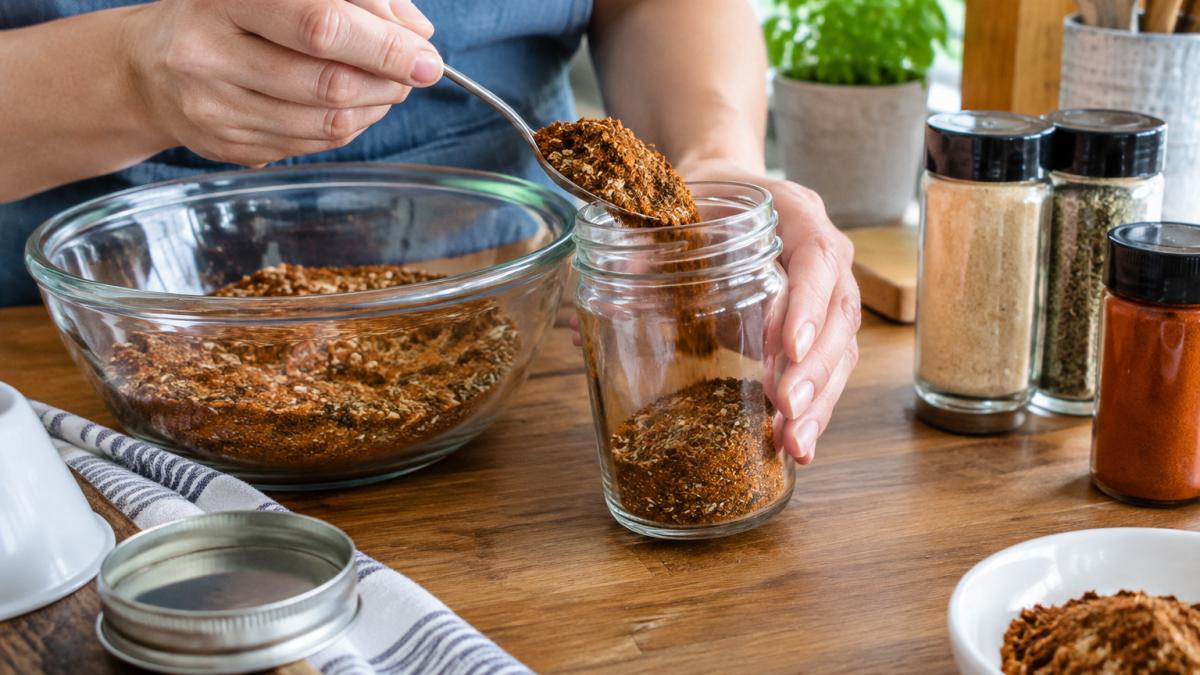
- Let the mix dry completely. Spread it on a plate for a few minutes if it feels damp.
- Choose a clean, dry container. Any leftover moisture will cause clumps.
- Fill the container and seal it tightly. Press out extra air if you can.
- Label it with the date you made it. This helps you track freshness later.
- Store it in a cool, dark cabinet. Keep it away from the stove, dishwasher, and oven.
- Check it before each use. Look for color changes, clumps, or weak smell.
Following these steps takes only minutes, and it protects the flavor for months.
Choosing the Best Container: Glass Jar vs. Plastic
Glass jars with tight-fitting lids are the most popular choice for homemade seasoning. Glass does not absorb odors, and it is easy to clean. Choose a dark or amber glass jar if you can, since it blocks some light.
Plastic containers work too, especially if you want something lightweight. Look for a sturdy one with an airtight lid. Thin plastic can let in air over time, so avoid it for long-term storage. Whichever material you pick, make sure the container is fully dry before you fill it.
How Long Does Homemade Taco Seasoning Last?
There is no single expiration date for homemade taco seasoning. The realistic window depends on how old and how potent your individual spices were on the day you mixed them, plus how well the finished blend is stored. A blend made from spices you opened last month will outlast one made from a jar that has been sitting in the cabinet since a previous move.
A practical way to think about it:
- Best flavor window: roughly 6 months for most blends stored in an airtight container in a cool, dark cabinet.
- Acceptable but fading: 6 to 12 months, with aroma and heat noticeably weaker.
- Time to replace: past 12 months, or sooner if the mix looks faded, smells flat, or has taken on moisture.
Treat any single number as guidance, not a rule.
Freshness is driven by the volatile oils in the spices. Ground spices have more exposed surface area than whole spices, so they lose aroma faster. Chili powder, cumin, and paprika are usually the first to fade, while salt and garlic powder hold up longer. That is why an older blend can still taste salty but lose its taco character.
To judge a batch, do three quick checks:
- Smell it. A strong, recognizable taco aroma means it still has life. A dusty or flat smell means it is fading.
- Look at the color. Bright reds and deep browns dull over time. Significant fading tracks with flavor loss.
- Rub a pinch between your fingers. If it feels damp or cakes together, moisture has gotten in.
Watch out: a weak smell is a quality issue, not a safety issue. If the blend is dry and smells merely flat, it is safe to use, just use more or replace it. Discard it if you see moisture, mold, insect activity, or an off odor that is not simply 'faded spice.'
Labeling each batch with the date you mixed it is the simplest way to stay ahead of this. When you make a bulk batch, write the date on the container and note which spices you used, so you can compare batches over time.
The table below summarises the freshness guidance and the signs to check for each batch.
| Stage | Timeframe or sign | What it means |
|---|---|---|
| Best flavor window | Roughly 6 months | Airtight, cool, dark storage |
| Acceptable but fading | 6 to 12 months | Aroma and heat noticeably weaker |
| Time to replace | Past 12 months | Or sooner if faded or moist |
| Smell check | Strong taco aroma | Still has life |
| Color check | Bright reds and deep browns | Dulling tracks with flavor loss |
| Pinch check | Damp or cakes together | Moisture has gotten in |
How to Store Spice Mixes to Prevent Clumping and Moisture
Clumping is the most common failure mode for homemade spice blends, and it almost always traces back to moisture. Understanding where the moisture comes from makes it easier to prevent.
Sources of moisture in a spice jar:
- Damp ingredients at mixing time. Garlic powder and onion powder can absorb humidity from the air, especially on a humid day or right after opening a fresh container. Let the blend sit uncovered for a few minutes before sealing if it feels at all damp.
- A wet or damp measuring spoon. Even a slightly damp spoon introduces water that the dry spices will absorb.
- Steam from cooking. A jar stored near the stove, dishwasher, or kettle is exposed to repeated steam cycles.
- Condensation from temperature swings. Moving a jar between a cold garage and a warm kitchen, or in and out of the refrigerator, causes moisture to condense inside the container.
- Opening the jar over a steaming pot. Steam rises into the open jar while you measure.
Practical prevention steps:
- Start dry. Make sure the container is fully dry before filling, and let the mixed blend air-dry briefly if it feels damp.
- Use a dedicated dry spoon. Keep a small dry measuring spoon in or near the jar so no one grabs a wet utensil from the sink.
- Seal tightly after every use. Press out excess air if the container allows it.
- Store away from heat and steam. A cabinet away from the stove and dishwasher is better than a shelf above the range.
- Keep the jar closed while cooking. Measure what you need, then seal the jar before you turn to the stove.
- Add a moisture absorber if needed. A few grains of uncooked rice in the jar can help absorb stray humidity. Replace the rice when you refill the jar.
If clumps do form, break them up with a fork before measuring. Small, soft clumps are usually just humidity and are fine to use. Hard, rock-like clumps, visible dampness, or any mold or off odor mean the batch should be discarded.
Watch out: do not store seasoning in the refrigerator door and then bring it out to a warm kitchen repeatedly. The temperature swings cause condensation inside the jar, which is a more reliable route to clumping than leaving it in a cool pantry.
A dated label helps here too. If a batch clumps within a few weeks, note what you did differently, a humid day, a new container, a different spoon, so you can adjust the next batch.
Should Homemade Taco Seasoning Go in the Fridge?
Most cooks do not need the refrigerator for taco seasoning. The fridge is cool but humid, and that moisture can cause clumping when the jar is opened and closed. A cool, dark pantry works better for most blends.
If you live in a very hot, humid home, a sealed jar in the fridge may help slow flavor loss. Let the jar come to room temperature before opening it to avoid condensation.
Start Your Next Batch: A Simple Taco Seasoning Recipe
Making your own taco seasoning is quick and gives you full control over flavor. Mix chili powder, cumin, paprika, garlic powder, onion powder, salt, and a pinch of oregano in a small bowl. Store the blend using the steps above, and it will be ready for your next taco night.
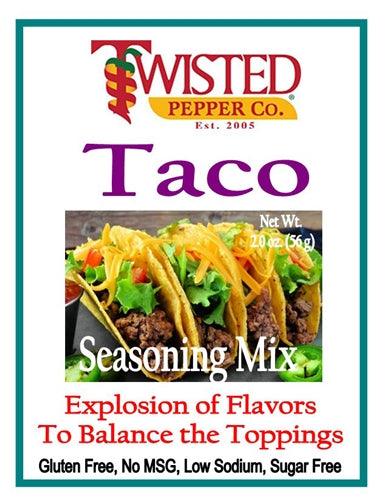
Want a ready-to-use option instead? Our Taco Seasoning Mix 2 oz. is a quick way to get bold flavor without measuring. Pair it with the MSG-free taco seasoning option if you want a clean-label choice for your family.
Ready to make taco night easier? Shop Now at Twisted Pepper Co.
Frequently Asked Questions
How long can you store homemade taco seasoning?
Homemade taco seasoning is best used within about 6 to 12 months when stored in an airtight container in a cool, dry, dark place. Quality fades over time even when the mix stays safe, so check the color and aroma before using an older batch.
Can dry taco seasoning go bad?
Dry taco seasoning does not usually spoil in a way that makes it unsafe, but it can lose its flavor, color, and aroma. Signs of stale seasoning include faded color, a weak smell, and clumps caused by moisture. If the mix smells musty or shows any mold, discard it. Otherwise, a stale blend can often be replaced with a fresh batch for better results.
Should homemade taco seasoning be stored in the fridge?
Refrigeration is generally not necessary for dry taco seasoning. A cool, dry pantry away from the stove and direct light works better. The fridge can introduce humidity every time the container is opened, which encourages clumping. If you do refrigerate, keep the jar tightly sealed and let it come to room temperature before opening to limit condensation.
What container is best for storing homemade taco seasoning?
An airtight glass jar with a tight-fitting lid is a reliable choice because glass does not absorb odors and blocks moisture well. Plastic containers also work if they seal properly. Use a small jar sized to the batch so there is less air inside. Store the jar in a cool, dark cabinet, and label it with the date you made the mix.
