

How to Season Chicken Quickly: Fast Flavor Every Time
Table of Contents
- Essential Spices for Chicken You Should Always Have on Hand
- How to Season Chicken Quickly Using the Right Technique
- Simple Chicken Seasoning Recipes Ready in Under 5 Minutes
- Dry Rub vs Marinade for Chicken: Which One Wins for Speed?
- How Long to Marinate Chicken (And When You Can Skip It)
- Seasoning Chicken Quickly for Different Cooking Methods
- Dietary Modifications: Low-Sodium, Gluten-Free, and MSG-Free Options
- Conclusion
Last Updated: August 7, 2026
Essential Spices for Chicken You Should Always Have on Hand
A well-stocked spice drawer means dinner goes from idea to table in under 30 minutes, no last-minute grocery runs, no bland results. At Twisted Pepper Co., we've built our seasoning philosophy around this principle: great flavor should never require a complicated shopping list.
Here are the pantry staples every home cook needs for chicken:
- Kosher salt, The foundation of every good seasoning blend, dissolving evenly for consistent seasoning.
- Black pepper, Freshly ground gives a sharper, more aromatic bite than pre-ground.
- Garlic powder, Adds savory depth without the prep time of fresh garlic.
- Onion powder, Rounds out the flavor profile and complements garlic powder naturally.
- Smoked paprika, Brings color, mild heat, and subtle smokiness that works on everything from grilled thighs to baked breasts.
- Dried parsley, Brightens herb-based blends and adds visual appeal.
- Thyme, A classic aromatic that pairs especially well with roasted chicken.
- Cayenne pepper, Use sparingly for heat; a pinch transforms a mild blend into something memorable.
These eight ingredients cover the full spectrum of savory, aromatic, and spicy flavor profiles. They're all shelf-stable, affordable, and available at any grocery store. Keep them in airtight containers away from heat and light, and most will stay potent for 12 to 18 months.
According to FDA guidelines on spice storage and shelf life, ground spices stored in airtight containers at room temperature retain their best quality for one to three years, though potency fades over time. Check your jars regularly; if a spice smells faint, it's time to replace it.
How to Season Chicken Quickly Using the Right Technique
Seasoning chicken quickly comes down to three steps executed in the right order. Skip any one and you'll get uneven flavor, poor adhesion, or a rubbery texture.
Step 1: Pat the Chicken Dry
Pat the chicken completely dry with paper towels before seasoning. Moisture on the surface dilutes your seasoning and creates steam during cooking, which prevents browning. Dry chicken means better adhesion, better color, and more concentrated flavor.
Step 2: Apply Your Spice Glue (Oil or Butter)
A thin coating of olive oil or melted butter acts as a "spice glue," helping the seasoning blend stick to the surface evenly rather than falling off in the pan or oven. Use roughly one teaspoon of olive oil per pound of chicken, brushing it over every surface before adding spices. Melted butter works equally well for oven roasting and baking. For high-heat grilling, stick with olive oil since butter can burn at extreme temperatures.
Step 3: Apply the Seasoning Blend Evenly
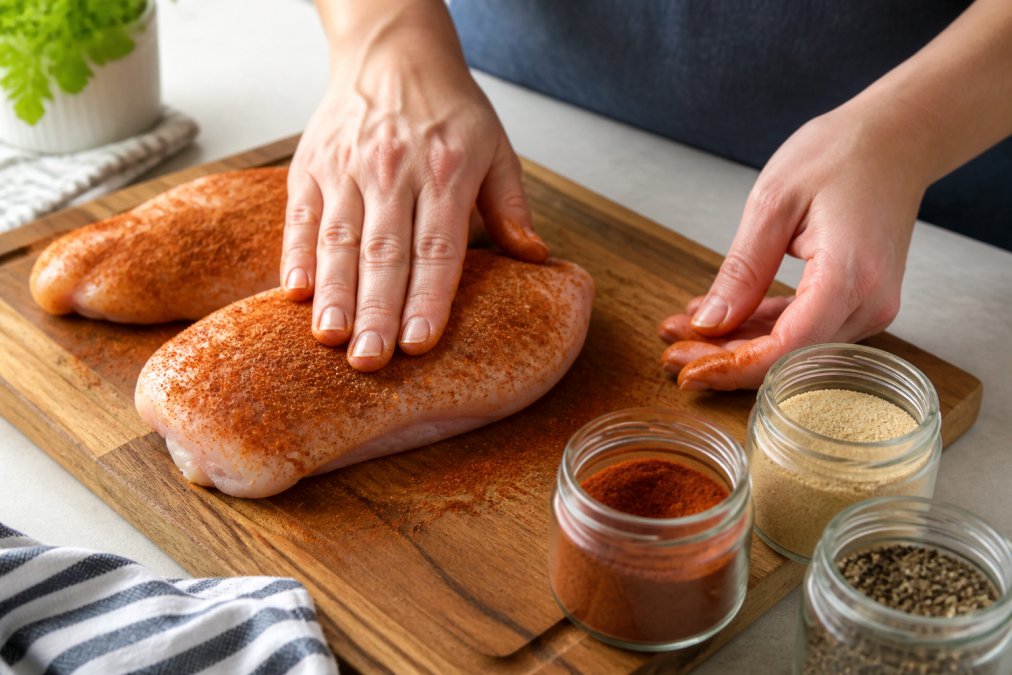
Sprinkle your seasoning blend from at least six inches above the chicken for better distribution. After sprinkling, press the blend gently into the meat with your fingertips to improve adhesion. Cover all surfaces: top, bottom, and sides. For bone-in pieces, work seasoning under the skin where possible for deeper flavor penetration.
| Step | Action | Time Required |
|---|---|---|
| Step 1: Dry | Pat chicken dry with paper towels | 30 seconds |
| Step 2: Spice Glue | Coat with olive oil or melted butter | 1 minute |
| Step 3: Season | Apply and press blend evenly on all sides | 1-2 minutes |
| Total | Ready to cook | Under 5 minutes |
Simple Chicken Seasoning Recipes Ready in Under 5 Minutes
Simple chicken seasoning recipes don't require exotic ingredients or precise measurements. Each blend below takes under two minutes to mix.
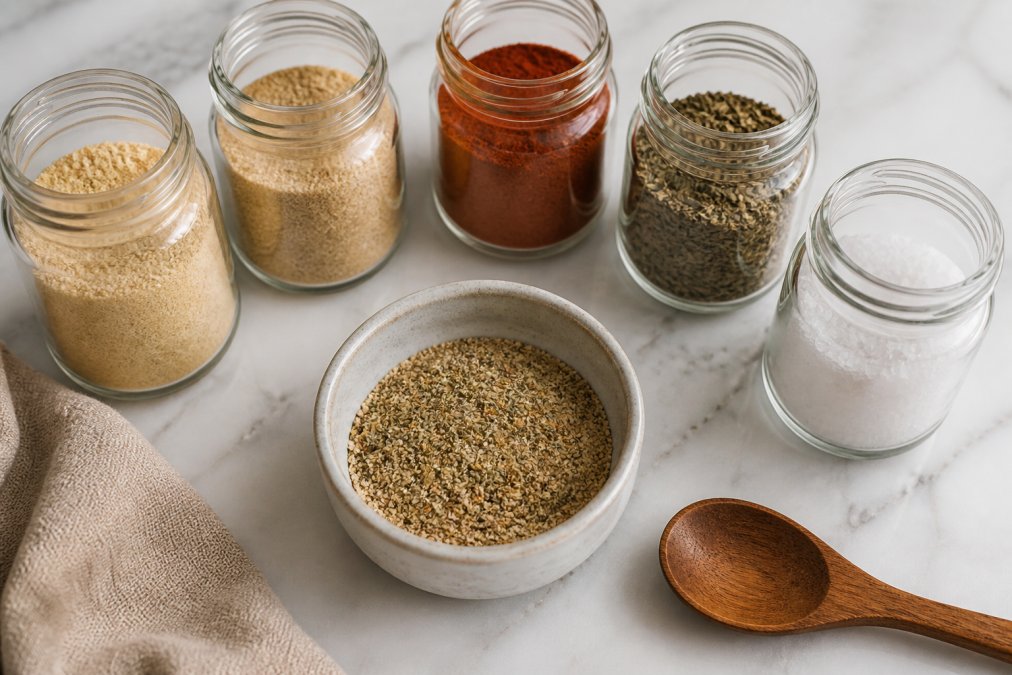
Classic Everyday Blend Mix together: 1 tsp kosher salt, ½ tsp black pepper, 1 tsp garlic powder, ½ tsp onion powder, ½ tsp smoked paprika, ½ tsp dried parsley. This all-purpose workhorse is savory, aromatic, and versatile enough for any cooking method.
Herb-Based Roast Chicken Blend Mix together: 1 tsp kosher salt, ½ tsp black pepper, 1 tsp garlic powder, 1 tsp thyme, ½ tsp dried parsley, ¼ tsp onion powder. The thyme makes this particularly well-suited to oven roasting.
Smoky BBQ Dry Rub Mix together: 1 tsp smoked paprika, ½ tsp kosher salt, ½ tsp garlic powder, ¼ tsp black pepper, ¼ tsp onion powder, ¼ tsp cayenne. Built for grilling and air frying, the smoked paprika creates a beautiful crust.
All three can be made in bulk and stored in airtight containers for up to three months.
For cooks who want consistent results without measuring every time, Twisted Pepper Co.'s handcrafted BBQ rubs and seasonings are gluten-free, no MSG added, and built for fast weeknight cooking.
Dry Rub vs Marinade for Chicken: Which One Wins for Speed?
For speed, dry rubs win every time. A dry rub is a blend of dried spices applied directly to the chicken with no liquid, no waiting, no extra dishes. You can apply a dry rub and cook immediately.
A marinade is a liquid mixture that the chicken soaks in before cooking. Marinades penetrate deeper but require time, usually at least 30 minutes for meaningful flavor development, ideally several hours.
Here's the practical breakdown:
- Dry rub: Apply and cook immediately. Best for stovetop, grilling, and air frying. Creates a flavorful crust.
- Marinade: Requires 30 minutes minimum, ideally 2-4 hours. Best for baked chicken and larger cuts where moisture matters more than surface crust.
A well-constructed dry rub with a proper spice glue base delivers excellent flavor in a fraction of the time. Save marinades for weekend meal prep when you have the hours to spare.
How Long to Marinate Chicken (And When You Can Skip It)
How long to marinate chicken depends on the cut and cooking method. Boneless, skinless breasts absorb flavor faster than bone-in thighs, and acidic marinades work more quickly than oil-only versions.
General guidelines:
- Thin cutlets or strips: 15-30 minutes
- Boneless breasts and thighs: 1-2 hours
- Bone-in pieces: 2-4 hours minimum; overnight is ideal
- Whole chicken: 8-24 hours
For most weeknight meals, you can skip marinating entirely. If you're pan-searing or air frying boneless chicken, a well-seasoned dry rub applied with a spice glue base delivers comparable surface flavor in under five minutes.
Marinating genuinely matters for large bone-in pieces going onto a grill for 45 minutes or more. The extended cooking time benefits from deeper moisture retention.
As noted in USDA food safety guidelines for marinating poultry, always marinate chicken in the refrigerator, never at room temperature, to prevent bacterial growth. Discard used marinade or boil it before using as a sauce.
Seasoning Chicken Quickly for Different Cooking Methods
The best seasoning approach changes depending on how you're cooking the chicken. Matching your seasoning technique to your cooking method ensures consistent results.
Pan-Searing and Stovetop
Pan-searing demands a dry surface and bold seasoning. Any moisture will cause the chicken to steam rather than sear, preventing crust and color. Pat the chicken completely dry, apply your olive oil spice glue, and press the seasoning blend firmly into the surface.
Use a slightly heavier hand with seasoning than you think you need. High heat can mellow spice intensity, so what tastes strong raw will taste balanced once cooked.
Oven Roasting and Baking
Oven roasting gives you more flexibility. Because the cooking environment is more controlled, you can use herb-based blends with dried parsley and thyme without worrying about them burning. Melted butter works better than olive oil here, browning more evenly and adding flavor complexity.
For baked chicken, season generously and let it sit at room temperature for 10-15 minutes before cooking. This brief rest allows the salt to begin drawing out surface moisture, which then gets reabsorbed along with dissolved spice compounds.
Grilling and Air Frying
Both grilling and air frying use high, circulating heat that can blow loose seasoning off the surface. The spice glue step is non-negotiable. Use olive oil rather than butter for grilling to avoid flare-ups, and press the seasoning blend firmly before placing the chicken on the grates or in the basket.
Air frying is one of the fastest cooking methods for chicken and pairs exceptionally well with a smoky dry rub. A boneless breast seasoned with smoked paprika, garlic powder, and kosher salt cooks in 18-20 minutes at 380°F with almost no hands-on time.
According to USDA safe minimum internal temperature guidelines for poultry, chicken must reach an internal temperature of 165°F regardless of cooking method. Use an instant-read thermometer to check.
Dietary Modifications: Low-Sodium, Gluten-Free, and MSG-Free Options
Dietary restrictions don't mean settling for bland chicken. With a few simple substitutions, you can season chicken quickly while staying within any dietary framework.
Low-Sodium Modifications
Replace kosher salt with fine sea salt and cut the quantity in half. Fine sea salt has a more intense flavor by volume, so you need less to achieve similar saltiness. Increase aromatic spices like garlic powder, onion powder, smoked paprika, and thyme to compensate; these add complexity without adding sodium.
Gluten-Free Modifications
Pure dried spices are naturally gluten-free. The risk of gluten contamination comes from fillers, anti-caking agents, and cross-contamination during manufacturing. When buying pre-mixed blends, look for products explicitly certified gluten-free or manufactured in dedicated gluten-free facilities.
Twisted Pepper Co.'s seasonings and BBQ rubs are handcrafted and gluten-free, making them reliable for households managing celiac disease or gluten sensitivity.
MSG-Free Modifications
Monosodium glutamate appears in some commercial seasoning blends as a flavor enhancer. Avoiding it is straightforward when building blends from scratch: use only pure dried spices and herbs. Garlic powder, onion powder, smoked paprika, thyme, and black pepper all deliver umami-forward flavor naturally without additives.
For more guidance on food labeling requirements, the FDA food labeling requirements for seasonings and spice blends provides clear standards on what manufacturers must disclose.
| Dietary Need | Key Swap | What to Increase |
|---|---|---|
| Low-sodium | Fine sea salt in smaller quantity | Garlic powder, smoked paprika, thyme |
| Gluten-free | Certified GF blends only | Any pure single-ingredient spice |
| MSG-free | Pure dried spices only | Onion powder, garlic powder for umami |
Seasoning chicken well under time pressure is a real challenge for busy home cooks. The difference between a flat weeknight dinner and a genuinely satisfying one often comes down to technique and ingredient quality. Twisted Pepper Co. makes it easier with handcrafted, gluten-free, no MSG added seasonings and BBQ rubs designed for fast, flavorful cooking. Whether you're looking for a low-sodium option, a bold smoky rub, or a versatile everyday blend, the Twisted Pepper Co. lineup ships fast and delivers consistent results. Shop now and find the blend that fits your table.
Frequently Asked Questions
How do you get seasoning to stick to chicken breasts?
Moisture is the enemy of adhesion. Pat chicken dry with paper towels first, then coat it lightly with olive oil or melted butter before applying your seasoning blend. This fat layer acts as a spice glue, helping the dry rub grip the surface evenly. Press the seasoning in with your hands rather than just sprinkling it on top. Even coating means every bite carries full flavor, not just the outside edges.
Do you need to marinate chicken for a long time to get flavor?
No. A well-built dry rub applied right before cooking delivers excellent flavor without any marinating time. If you prefer a marinade, even 15 to 30 minutes in the refrigerator makes a noticeable difference. Overnight marinating adds depth, but it is not required for a quick, flavorful weeknight meal. For the fastest results, a seasoning blend with aromatic spices like smoked paprika, garlic powder, and thyme will season chicken quickly and effectively.
What can I use if I don't have chicken seasoning?
Most pantry staples work well together. A simple blend of garlic powder, onion powder, smoked paprika, kosher salt, black pepper, and dried parsley covers the basics. Add a pinch of thyme for an herb-based note. These are all shelf-stable ingredients that store well in an airtight container. If you want to skip building your own blend from scratch, a pre-mixed handcrafted seasoning blend saves time without sacrificing flavor.
How do I season chicken for different cooking methods?
The cooking method changes how you apply seasoning. For pan-searing, use a thin oil coat and a savory dry rub to build a crust. For oven roasting, apply seasoning under the skin as well as on top for deeper flavor. On the grill, press the rub in firmly so it holds through high heat. In an air fryer, a light coat of olive oil plus a seasoning blend gives crisp, aromatic results in under 20 minutes.
This article was written using GrandRanker