

How to Cook Gluten-Free No MSG Pasta Perfectly
Table of Contents
- Why Gluten-Free No MSG Pasta Requires Different Cooking Techniques
- What You'll Need: Ingredients and Equipment
- Step-by-Step: Cooking Gluten-Free Pasta to Perfection
- How to Prevent Gluten-Free Pasta from Sticking
- Best Gluten-Free Dip Mixes and Seasonings for Flavor Without MSG
- Sauce Pairing and MSG-Free Flavor Science
- Meal Prep and Storage Tips for Gluten-Free Pasta
- Common Mistakes to Avoid
- Frequently Asked Questions
Last Updated: October 2, 2026
Why Gluten-Free No MSG Pasta Requires Different Cooking Techniques
Cooking gluten-free no MSG pasta requires different techniques because gluten-free dough behaves differently in boiling water, it absorbs more water, releases more starch, and breaks down faster than traditional pasta.
Without gluten's protein network, gluten-free pasta breaks down faster and releases excess starch, leading to mushy noodles and poor sauce emulsification. The fix involves three adjustments: water temperature, cooking duration, and post-cooking handling.
What You'll Need: Ingredients and Equipment
Starch-to-Water Ratio for Gluten-Free Dough
For homemade gluten-free pasta, the starch-to-water ratio determines whether your pasta holds together during cooking.
Aim for 1 part water to 3 parts flour blend by weight, tighter than traditional pasta dough because gluten-free flours absorb water differently. Too much water makes dough sticky; too little causes cracking.
Here's what you need on hand:
- Gluten-free flour blend (with xanthan gum already mixed in, or add it separately)
- Filtered water at room temperature
- Salt (for dough and cooking water)
- Olive oil (prevents sticking during drying)
- Large pot (at least 6-quart capacity for proper water circulation)
- Wooden spoon (metal can damage gluten-free noodles more easily)
- Colander (fine mesh, not perforated)
- Instant-read thermometer (optional but helpful for monitoring water temperature)
- Timer (critical for consistency)
Step-by-Step: Cooking Gluten-Free Pasta to Perfection
Getting the Boiling Point Right
Gluten-free pasta requires a rolling boil (212°F at sea level) to prevent sticking and manage starch release.
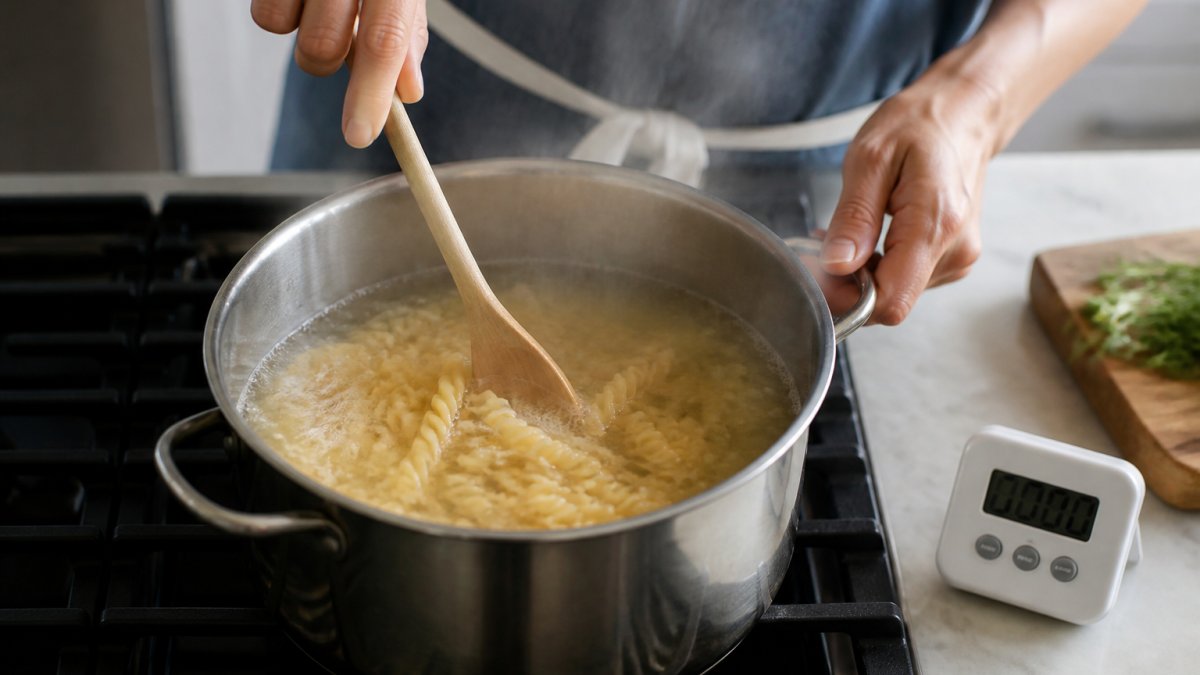
Use at least 4 quarts of water per 8 ounces of pasta for temperature stability. Add 1 tablespoon salt per gallon of water once boiling; salt seasons the pasta and helps it cook evenly.
Return water to a full boil before adding pasta; cold or warm water causes noodles to absorb moisture too quickly and break down.
Achieving Al Dente Gluten-Free Pasta Cooking Time
Al dente, tender with slight firmness, is harder to achieve with gluten-free pasta because noodles soften faster, but it's possible with proper timing.
Most packages recommend 8-12 minutes. Start testing at 7 minutes by pulling a noodle, cooling it 10 seconds, and biting for slight resistance in the center.
Pull pasta from water slightly before your target doneness; residual heat and sauce will finish cooking it.
Cooking Times by Pasta Shape
Different shapes cook at different rates because of surface area and thickness. Thin shapes cook faster; thicker ones take longer.
| Pasta Shape | Cooking Time | Best For |
|---|---|---|
| Spaghetti/linguine | 8-10 minutes | Light sauces, oil-based dressings |
| Penne/rigatoni | 9-12 minutes | Chunky sauces, baked dishes |
| Fettuccine | 10-12 minutes | Cream sauces, emulsified toppings |
| Shells/farfalle | 9-11 minutes | Salads, chunky vegetable sauces |
| Lasagna noodles | 10-14 minutes | Layered baked pasta |
Start testing 1-2 minutes before package recommendations; formulations vary by brand, so taste-testing is essential.
How to Prevent Gluten-Free Pasta from Sticking
Sticking is the most common complaint because gluten-free noodles release excess starch that acts like glue.
The solution has three parts:
During cooking: Stir every 30 seconds for the first 2 minutes, then every minute. This breaks up the starch layer forming on noodles.
Water management: Don't rinse pasta; reserve 1 cup of starchy pasta water before draining to help sauce coat noodles evenly.
Immediate sauce contact: Toss pasta with sauce within 30 seconds of draining. If sauce isn't ready, toss with 1 tablespoon olive oil per pound and keep moving.
Best Gluten-Free Dip Mixes and Seasonings for Flavor Without MSG
The real challenge is keeping gluten-free no MSG pasta flavorful; MSG creates umami (savory depth), so you must build it through other ingredients.
Quality seasonings use layered herbs, spices, and natural umami sources instead of MSG. Twisted Pepper Co.'s Tuscan Roasted Garlic Seasoning delivers depth through roasted garlic and Italian herbs; one tablespoon mixed into olive oil creates a finishing sauce.

For creamy pasta, mix 2 tablespoons Prairie Ranch Dip Mix with 8 ounces sour cream or cream cheese and toss with warm pasta for even coating without MSG.
Sauce Pairing and MSG-Free Flavor Science
Creating savory depth without MSG requires building umami through glutamates and other compounds that activate umami taste receptors.
The Three Pillars of Natural Umami
Umami comes from three types of compounds: glutamates, nucleotides (inosinate and guanylate), and sulfur compounds. Different ingredients provide different umami sources, and layering them creates depth.
Glutamates trigger umami directly. Sources: aged Parmesan (1,200 mg per 100g), slow-cooked tomatoes, dried mushrooms (porcini: 2,500 mg per 100g), nutritional yeast, and tamari or coconut aminos.
Nucleotides amplify umami. Sources: bone broth, dried seafood (anchovies, kelp), mushrooms, and aged cheeses.
Sulfur compounds add savory complexity: caramelized onions, roasted garlic, and miso paste.
Tuscan Roasted Garlic Seasoning 2.0 oz. →
Building a Layered Umami Sauce
The key to depth without MSG is layering, using multiple umami sources so no single ingredient dominates. Here's a framework:
Start with a glutamate base. Choose one primary glutamate source:
- For cream sauces: aged Parmesan (grate fresh, don't use pre-grated)
- For tomato sauces: San Marzano tomatoes, cooked low and slow for at least 30 minutes
- For oil-based sauces: nutritional yeast mixed into the oil, or finely minced dried mushrooms
Add a nucleotide layer. This amplifies the umami you've already created:
- Stir in 1 tablespoon of bone broth or mushroom broth per cup of sauce
- Add 2-3 minced anchovies (they dissolve into the sauce and add inosinate without a "fishy" taste)
- Use a small pinch of kelp powder (1/4 teaspoon per cup of sauce)
Finish with sulfur compounds. This adds savory complexity:
- Caramelize onions separately (30-40 minutes over medium-low heat) and fold them in at the end
- Add roasted garlic (roast whole cloves at 400°F for 20 minutes, then squeeze the soft paste into the sauce)
- Stir in 1 teaspoon of miso paste (dissolved in a little warm water first) per 2 cups of sauce
Sauce-Specific Strategies
Tomato-based sauces: Simmer whole San Marzano tomatoes for at least 45 minutes to concentrate glutamates.
Cream sauces rely on cheese and broth. Start with butter and shallots (cook the shallots until golden, about 8 minutes, to develop sulfur compounds).
Oil-based sauces (aglio e olio style) need umami sources that work in fat.
Mushroom-based sauces are umami powerhouses. Sauté sliced mushrooms (cremini, shiitake, or a mix) in butter until they release their liquid and it evaporates, about 15 minutes.
The Emulsification Step
Regardless of sauce type, emulsification is critical for gluten-free pasta. When starchy pasta water combines with fat and other sauce components, it creates an emulsion, a smooth, glossy coating that clings to the noodles instead of pooling at the bottom of the bowl.
Reserve at least 1 cup of pasta cooking water before draining. Add it to your sauce gradually while stirring constantly. Start with 2 tablespoons and whisk vigorously. You'll see the sauce transform from separated and thin to cohesive and luxurious.
Seasoning Without MSG
Quality seasoning blends replace MSG's role as a flavor amplifier. Look for blends that list specific herbs and spices, not vague "flavor enhancers" or "natural flavors." A blend with oregano, basil, garlic powder, and sea salt will taste more complex and satisfying than one relying on MSG shortcuts. Add seasoning in layers as you cook, some at the beginning to develop flavor, some at the end for brightness.
Meal Prep and Storage Tips for Gluten-Free Pasta
Cooked gluten-free pasta stores differently than wheat pasta. Because it's more delicate, it dries out faster and can become gummy if stored improperly.
Storage method: Keep cooked pasta in an airtight container with a light coating of olive oil.
Reheating: Warm gently in a pan with a splash of water or sauce over medium heat, stirring constantly.
Meal prep strategy: Cook pasta fresh the day you plan to eat it if possible.
For quick weeknight meals, prepare Twisted Pepper Co.'s Chicken Noodle Dry Soup Mix in bulk. The mix is gluten-free, no MSG, and ready in 30 minutes or less. Make a large batch and portion into containers. It reheats beautifully and maintains texture.

Common Mistakes to Avoid
Mistake 1: Using too little water. Gluten-free pasta needs space to move.
Mistake 3: Rinsing after draining. This removes the starch that helps sauce adhere.
Mistake 4: Cooking too long. Gluten-free pasta has a narrow window between al dente and mushy.
Mistake 5: Pairing with weak seasonings. Gluten-free pasta deserves bold flavor.
Mistake 6: Letting sauce sit on pasta. Toss gluten-free pasta with sauce immediately.
Cooking gluten-free no MSG pasta perfectly is learnable. The technique is straightforward once you understand how gluten-free dough behaves differently. The real difference between mediocre and excellent comes down to seasoning. Twisted Pepper Co.'s handcrafted blends, like the Tuscan Roasted Garlic Seasoning and Prairie Ranch Dip Mix, deliver the depth and complexity that MSG fakes. Start with the right technique, finish with bold flavor, and you'll create weeknight meals that rival restaurant quality. Shop Now and discover how simple delicious can be.

Frequently Asked Questions
Why does gluten-free pasta get mushy so easily?
Gluten-free pasta lacks gluten's protein network, which normally provides structure and elasticity. Without it, the starch absorbs water faster and breaks down more readily during cooking. This is why timing is critical, even 1-2 minutes over can turn gluten-free pasta mushy. Using the right starch-to-water ratio in your cooking liquid and maintaining a vigorous boil helps minimize this. Always start testing for doneness 2-3 minutes before the package suggests.
How long should you cook gluten-free pasta for al dente texture?
Al dente gluten-free pasta cooking time typically ranges from 8-12 minutes, depending on the pasta shape and brand, but always check the package instructions first. Thin pasta like angel hair cooks in 8-9 minutes, while penne or rigatoni needs 10-12 minutes. Start tasting at the lower end of the range. Al dente means the pasta should have a slight firmness when bitten, not soft or chewy. Since gluten-free varieties cook faster than wheat pasta, set a timer and taste frequently.
How do you keep gluten-free pasta from sticking together?
Stir gluten-free pasta immediately after adding it to boiling water and again every 2-3 minutes during cooking. Use plenty of water, at least 4-6 quarts per pound of pasta. Avoid rinsing after cooking, as this removes the starch that helps sauce cling to the noodles. If you must hold cooked pasta before serving, toss it lightly with a small amount of olive oil or butter. Drain well and serve immediately with sauce for best results.
What's the best way to add flavor to gluten-free pasta without MSG?
Build umami flavor using MSG-free seasonings and natural ingredients. Handcrafted blends like Tuscan Roasted Garlic Seasoning or Savory Italian Seasoning deliver depth without artificial additives. Toast whole herbs in your sauce base, use quality olive oil, add fresh garlic, and incorporate vegetable or chicken broth into your cooking water. These techniques create rich, satisfying flavor that rivals MSG-enhanced sauces. Pair your pasta with complementary seasonings and let the sauce simmer to allow flavors to emulsify and coat the noodles properly.