

How to Choose Clean Label Dip Seasoning Mixes
Table of Contents
- What Clean Label Means for Dip Seasoning Mixes
- How to Read Seasoning Labels on Dip Mixes
- Evaluating Low Sodium Dip Seasoning Mix Options
- Choosing Gluten-Free Dip Mix for Dietary Needs
- Making Your Own Homemade Dip Seasoning Blend
- Step-by-Step Guide to Selecting Your Clean Label Mix
- Common Mistakes to Avoid When Choosing Dip Seasoning
- Frequently Asked Questions
Last Updated: October 10, 2026
What Clean Label Means for Dip Seasoning Mixes
A clean label dip seasoning mix is a blend made with recognizable, minimal ingredients and free from artificial additives, preservatives, and unnecessary fillers. When you choose clean label dip seasoning, you're selecting a product where every ingredient serves a real purpose and you can pronounce what's on the list.
Clean label seasoning means transparency, knowing exactly what goes into your dip. Many home cooks are shifting away from mixes loaded with anti-caking agents and artificial flavors, preferring herbs, spices, salt, and recognizable ingredients.
The clean label movement isn't just marketing hype. People managing sodium intake, gluten sensitivities, or MSG sensitivity have real reasons to read ingredient lists carefully. A clean label dip seasoning mix gives you control over what you're serving to your family.
How to Read Seasoning Labels on Dip Mixes
Reading a seasoning label requires understanding how the mix performs with your chosen dip base, sour cream, Greek yogurt, cottage cheese, or plant-based alternatives. The base changes how much seasoning impact you need and how salt and acidity interact with flavor.
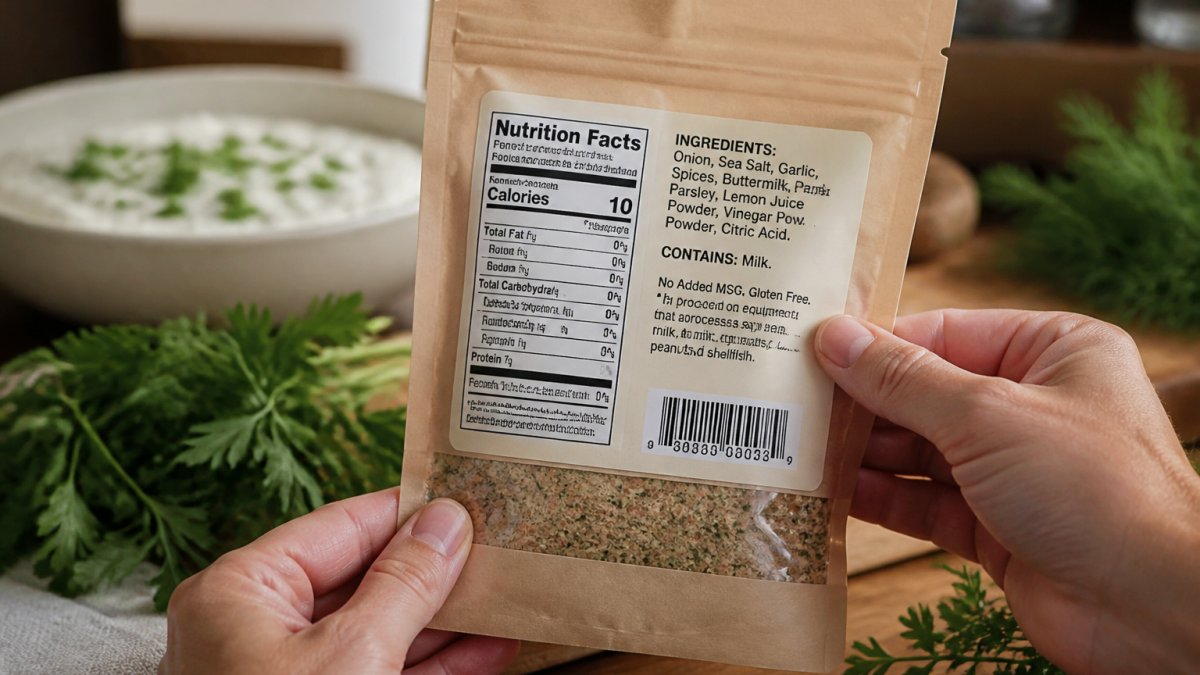
Understanding Ingredient Order and Dip Base Compatibility
The first ingredient listed makes up the largest percentage and dominates the mix's flavor profile.
Sour cream bases are rich and tangy, carrying bold flavors well. A mix with salt or onion powder listed first works here. Herbs listed first (parsley, chives) signal brightness, good for sour cream's heaviness.
Greek yogurt and cottage cheese bases are thinner and more acidic than sour cream. They amplify salt perception and spice intensity. A mix that works perfectly in sour cream may taste oversalted in yogurt. When choosing for these bases, look for mixes where the sodium is under 150 mg per teaspoon of dry mix. The acidity of yogurt or cottage cheese will make salt taste sharper.
Plant-based bases (cashew cream, coconut cream) lack dairy tang and need stronger seasoning. Look for mixes with visible acid ingredients (citric acid, dried lemon) or ones formulated for non-dairy use.
Recognizable Ingredients and Natural Flavors
Recognizable ingredients are the foundation of clean label seasoning: ground spices (oregano, thyme, cumin), dried herbs (parsley, chives), and salt.
The phrase "natural flavor" hides complexity and tells you nothing specific. Better labels say "garlic flavor from garlic powder" or list actual herbs and spices instead of vague compounds.
Identifying Fillers and Anti-Caking Agents
Fillers (maltodextrin, cellulose, silicon dioxide) bulk up a mix without adding flavor. A clean label mix minimizes or eliminates them.
Anti-caking agents like silicon dioxide prevent clumping but a clean label avoids them when possible. Rice flour or potato starch are more recognizable alternatives.
Red flags include silicon dioxide, maltodextrin, cellulose powder, dextrose, and gum arabic. If listed near the top, you're paying for filler, not flavor.
Comparing Sodium and Seasoning Strength Per Prepared Serving
Calculate sodium per prepared serving, not per dry teaspoon. A mix listing 200 mg per teaspoon used at 2 teaspoons yields 50 mg per serving (8 servings). A mix listing 150 mg per teaspoon but requiring 3 teaspoons yields 56 mg per serving, higher despite the lower per-teaspoon claim.
To compare: note the serving size, estimate your typical usage (1.5-3 teaspoons per 16 oz base), multiply per-serving sodium by that amount, and divide by servings (8-12). This reveals actual sodium per serving in your finished dip.
Evaluating Low Sodium Dip Seasoning Mix Options
Low sodium mixes cut sodium from the standard 300-500 mg per serving to 100-200 mg or less. Understanding how brands compensate for reduced salt is key to choosing a mix that tastes good.
How Brands Compensate for Reduced Salt
Salt preserves shelf life and carries flavor. Remove too much without compensation and the dip tastes flat. Good low-sodium formulations boost flavor through:
Increased spice and herb concentration. More garlic powder, onion powder, paprika, and dried herbs amplify flavor without sodium. Multiple spices in the first five ingredients signal good compensation.
Added acid. Citric acid, dried lemon, or vinegar powder brighten flavor and make salt taste sharper, requiring less sodium.
Umami boosters. Tomato powder, mushroom powder, or nutritional yeast add savory depth without sodium.
Salt substitutes. Some brands use potassium chloride or mineral salts instead of sodium chloride. These may leave an aftertaste. Check the ingredient list for these substitutes.
Spotting Misleading Serving-Size Claims
Manufacturers can make sodium look lower by using a tiny serving size. Check the Nutrition Facts label serving size and multiply by your actual usage (typically 1.5-3 teaspoons per 16 oz base) to compare fairly.
Example: Mix A lists 80 mg per 1/4 teaspoon; Mix B lists 150 mg per 1 teaspoon. At 2 teaspoons, Mix A totals 640 mg while Mix B totals 300 mg, Mix B is actually lower-sodium.
Evaluating Low-Sodium Mixes for Your Dip Base
The base you choose affects how much seasoning you need and how salt perception changes.
For sour cream: Sour cream's richness masks salt, so you can use slightly less seasoning. A low-sodium mix with strong spices works well here. Look for mixes under 150 mg sodium per teaspoon.
For Greek yogurt or cottage cheese: These bases are more acidic and amplify salt perception. A mix that tastes perfect in sour cream may taste oversalted in yogurt.
For plant-based bases: Cashew cream and coconut cream lack dairy tang. They need bold seasoning to avoid tasting flat. A low-sodium mix may not deliver enough impact. Look for mixes formulated specifically for plant-based use, or plan to add fresh acid (lemon juice, vinegar) and extra herbs to compensate.
Comparing Low-Sodium Options Side by Side
When evaluating: check sodium per teaspoon, read the first three ingredients for spices/herbs, look for acid ingredients, verify no artificial sweeteners, and test one batch before buying bulk.
Blazin' Onion Dip/Cheeseball Mix →
Choosing Gluten-Free Dip Mix for Dietary Needs
Gluten-free dip mixes matter for celiac disease or gluten sensitivity. Most pure spices and herbs are naturally gluten-free, but cross-contamination during processing is a real risk. A truly gluten-free mix should come from a facility handling no wheat, barley, or rye. Check if the brand tests for gluten, look for third-party certification, and ask about facility practices.
All Twisted Pepper Co. dip mixes are gluten-free. Our Blazin' Onion, Prairie Ranch, Cheddar Onion, and Tuscan Roasted Garlic mixes are safe for gluten-free diets.

Making Your Own Homemade Dip Seasoning Blend
Homemade dip seasoning blends give you complete control. You choose every ingredient and measure exactly what goes in.
Basic Herb and Spice Combinations
A simple ranch-style blend uses:
- 2 tablespoons dried parsley
- 1 tablespoon dried chives
- 1 tablespoon garlic powder
- 1 tablespoon onion powder
- 1 teaspoon dried dill
- 1 teaspoon salt (adjust to taste)
Mix these in a small jar and shake before each use. This makes enough for one batch of dip.
For a garlic-forward blend:
- 2 tablespoons garlic powder
- 1 tablespoon dried parsley
- 1 tablespoon dried basil
- 1 tablespoon paprika
- 1 teaspoon salt
- 1/2 teaspoon black pepper
These simple combinations beat store-bought mixes for flavor and cost.
Storage and Freshness After Opening
Homemade blends stay fresh for 3-4 months in an airtight container. Light and humidity degrade dried herbs and spices over time.
Store your blend in a cool, dark place. Glass jars with tight lids work best. Label the jar with the date you made it so you know when to refresh it.
Signs your blend has lost potency:
- The smell is faint or musty
- The color has faded significantly
- You need to use double the amount to get the same flavor
When in doubt, make a fresh batch. Dried herbs and spices are inexpensive, and freshness makes a real difference in taste.
Step-by-Step Guide to Selecting Your Clean Label Mix
Step 1: Define your dietary needs. Do you need gluten-free, low sodium, no MSG, or organic? Start here. This narrows your options immediately.
Step 2: Read the ingredient list. Flip the package over. Can you recognize at least 80% of the ingredients? If not, keep looking.
Step 3: Check the sodium content. Look at milligrams per serving. Compare 2-3 options side by side. A good clean label mix keeps sodium under 200 mg per serving.
Step 4: Identify the base. What's the first ingredient? Is it salt, a spice, or an herb? The first ingredient tells you what flavor dominates.
Step 5: Verify no artificial additives. Scan for artificial flavors, colors, or preservatives. These are the opposite of clean label.
Step 6: Test one batch. Buy a single mix and try it. Does it deliver the flavor you want? Is the texture right? One test beats endless research.
| Step | Focus | What to Check |
|---|---|---|
| 1 | Dietary needs | Gluten-free, low sodium, no MSG |
| 2 | Ingredients | Recognizable names, no fillers |
| 3 | Sodium | Under 200 mg per serving |
| 4 | Base ingredient | First listed item |
| 5 | Additives | No artificial flavors or colors |
| 6 | Taste test | Flavor, texture, versatility |
Common Mistakes to Avoid When Choosing Dip Seasoning
Mistake 1: Ignoring serving size. A mix might list "low sodium" but use a tiny serving size (like 1 teaspoon). Calculate sodium per actual dip batch instead.
Mistake 2: Assuming "natural" means clean. The word "natural" has no legal definition. A product can say natural and still contain fillers, anti-caking agents, or vague flavor compounds. Read the actual ingredient list.
Mistake 3: Buying based on price alone. The cheapest mix often contains the most filler. You're paying for bulk, not flavor. A slightly pricier clean label mix delivers better taste and value.
Mistake 4: Overlooking cross-contamination risks. For gluten-free or allergen-sensitive needs, facility practices matter as much as ingredients.
Mistake 5: Not testing before committing. Buy a single packet first. Make one batch of dip. If you don't love it, you haven't wasted money on bulk orders.
Choosing a clean label dip seasoning mix comes down to reading carefully and knowing what you need. Our Prairie Ranch Dip Mix, Blazin' Onion, Cheddar Onion, and Tuscan Roasted Garlic options deliver bold flavor without compromise. Shop our clean label dip mixes and taste the difference real ingredients make.

Frequently Asked Questions
What does clean label mean for dip seasoning mixes?
Clean label dip seasoning mixes contain recognizable, minimal ingredients without artificial additives, synthetic colors, preservatives, or fillers. Look for mixes listing herbs, spices, salt, and natural flavors you can identify. Avoid products with long chains of chemical names or ingredients you cannot pronounce. Clean label products emphasize ingredient transparency, allowing you to see exactly what goes into your dip before mixing.
How do I compare sodium in dip seasoning mixes?
Check the nutrition label for sodium content per serving. Compare serving sizes carefully, as some brands use smaller portions to appear lower in sodium. Twisted Pepper Co. offers low sodium dip seasoning mixes like Prairie Ranch and Blazin' Onion that let you control salt levels in your final dip by choosing your base ingredient.
Are gluten-free dip seasoning mixes automatically clean label?
No. Gluten-free certification means the mix contains no gluten, but it may still include artificial flavors, preservatives, or fillers. Always read the full ingredient list even on gluten-free products. Look for mixes that are both gluten-free and made with natural ingredients. Twisted Pepper Co.'s gluten-free dip mixes are also free of MSG and use natural seasonings, making them clean label options for those with celiac disease or gluten sensitivity.
What should I mix with dip seasoning to make a quick homemade dip?
The most common base is sour cream (2 cups per packet) or a blend of sour cream and mayonnaise (1.5 cups sour cream plus 0.5 cup mayonnaise). Refrigerate for 1 hour before serving. You can also make a cheeseball by mixing the seasoning with softened cream cheese and butter, then rolling in nuts. For a lighter option, try Greek yogurt or cream cheese thinned with a bit of milk. Experiment with different bases to find your preferred texture and flavor intensity.