

Gluten-Free Cooking Without Cross-Contamination
Table of Contents
- Understanding Cross-Contact vs. Cross-Contamination
- Essential Kitchen Tools and Setup for Gluten-Free Cooking
- Gluten-Free Kitchen Safety Tips for Shared Spaces
- Preventing Gluten Cross-Contamination in Appliances
- Safe Storage and Labeling Strategies
- Best Gluten-Free Seasoning Brands and Products
- High-Risk Zones and Practical Checklists
- Conclusion
Last Updated: August 25, 2026
Understanding Cross-Contact vs. Cross-Contamination
Cross-contact occurs when gluten physically touches gluten-free food through shared utensils, cutting boards, or surfaces. Cross-contamination refers to unintended gluten exposure through airborne flour particles, shared appliances, or trace amounts left after cleaning. Cross-contact is visible; cross-contamination is hidden. A toaster that's never touched gluten-free bread still harbors wheat particles. A colander that looks clean might have flour dust in its mesh.
For people managing celiac disease or severe gluten sensitivity, even trace amounts matter (peer-reviewed research). The Celiac Disease Foundation's guide to food safety emphasizes that people with celiac disease need to avoid microscopic amounts of gluten. If you're cooking for someone with celiac disease, cross-contact prevention alone isn't enough. You need to think about cross-contamination from every angle.
Essential Kitchen Tools and Setup for Gluten-Free Cooking
Dedicate specific tools entirely to gluten-free food preparation. Start with cutting boards, a dedicated gluten-free board should be clearly identifiable and stored separately. Non-porous surfaces like plastic or glass are easier to sanitize than wood. Many families use color-coding: blue for gluten-free, red for regular.
Colanders and strainers deserve special attention because mesh catches flour particles that are nearly impossible to remove completely. Dedicated gluten-free colanders solve this problem. Toasters are another high-risk zone. A shared toaster spreads crumbs across every batch. The best solution is a dedicated gluten-free toaster, but if that's not feasible, use toaster bags designed to contain crumbs while allowing heat circulation.
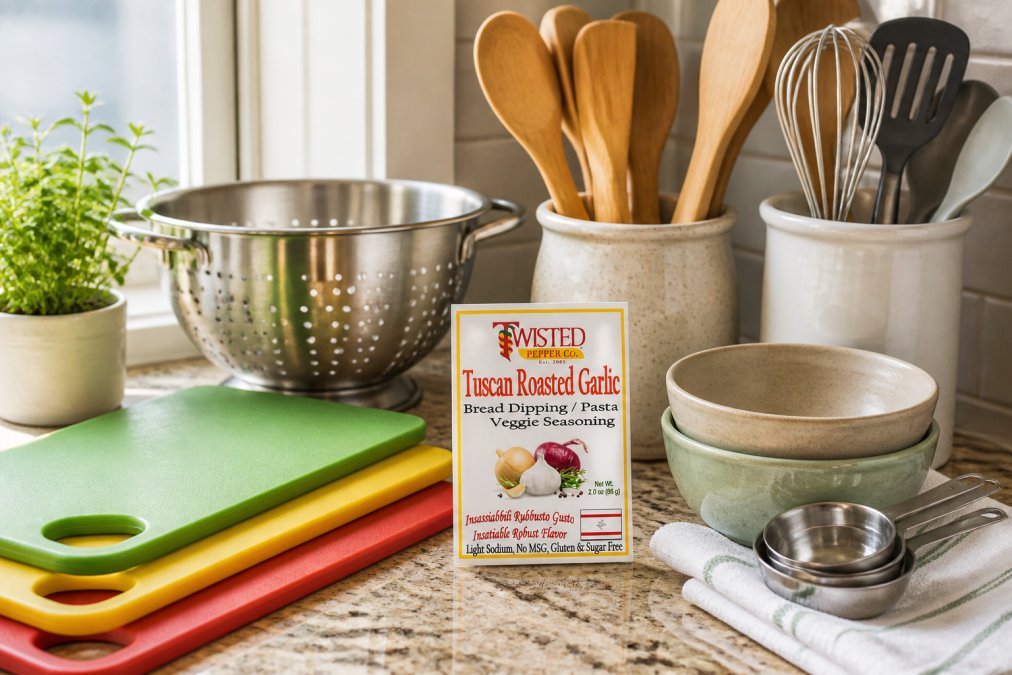
Baking sheets and cake pans should be dedicated, flour clings to metal even after washing. If you must share, line everything with parchment paper. Keep separate measuring cups and spoons for dry ingredients. Seasonings and condiments matter too. A shared butter dish or jam jar becomes a contamination point when someone uses the same knife for both gluten-containing and gluten-free foods. Use separate containers or enforce a "no double-dipping" rule with dedicated spreaders.
Gluten-Free Kitchen Safety Tips for Shared Spaces
Cooking gluten-free in a shared kitchen requires clear communication and consistent habits. Start with a conversation about what gluten-free means. Explain that tiny crumbs matter and flour dust lingers for hours. Most people adapt once they understand why it matters.
Create a designated gluten-free zone: one shelf in the refrigerator, one cabinet for dry goods, and one counter section for meal prep. Label everything clearly using color-coded containers or tape. Establish a hand-washing protocol, hands transfer flour particles constantly. Make hand-washing non-negotiable before anyone touches gluten-free food or utensils.
Clean as you go, not after. Wipe down counters immediately after someone prepares regular bread or pasta. Keep paper towels nearby for quick cleanups. Frame accommodations as normal food safety, not a burden, compare it to how restaurants keep allergens separate.
Preventing Gluten Cross-Contamination in Appliances
Shared appliances complicate cross-contamination prevention. A convection oven circulates air, so gluten particles from one dish can settle on another. A microwave that reheats regular bread leaves particles inside. A dishwasher might not remove all flour residue if items aren't rinsed first.
For ovens, bake your gluten-free items first when the oven is clean. Never bake regular bread and gluten-free items simultaneously. Allow time between uses for particles to settle before cleaning. Stovetops are less problematic but still require attention, keep your gluten-free cooking area separate from where regular pasta is prepared. store meal prep.
Clean microwaves thoroughly before using them for gluten-free food. Use a microwave-safe cover when heating gluten-free items. Rinse everything thoroughly before loading the dishwasher, as flour residue might not wash away completely. Cast iron pans are particularly tricky because they're porous. Maintain a separate seasoned pan exclusively for gluten-free cooking, or clean cast iron thoroughly and use a fresh layer of oil before cooking gluten-free items.
Safe Storage and Labeling Strategies
Storage prevents most cross-contamination problems before they start. Use permanent markers or printed labels on every gluten-free item, including the date opened. Color-coding works well, green for gluten-free or whatever system your household understands. Consistency is key.
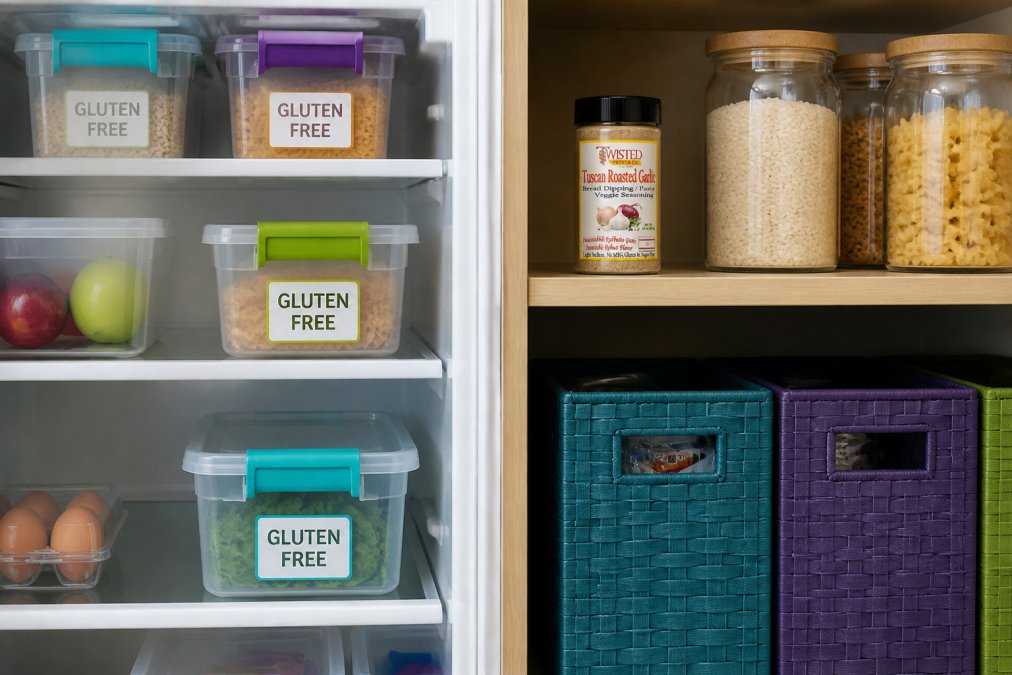
In the refrigerator, dedicate one shelf entirely to gluten-free items. Use clear containers so you can see contents without opening them. In the pantry, keep gluten-free flour, bread, pasta, and baking mixes in airtight containers separate from regular versions. Flour is particularly important, wheat flour and gluten-free flour look identical. Use containers with clear labels and consider different-shaped containers if possible.
Condiments and spreads deserve their own shelf. Use separate containers for each person or enforce a strict "use a clean utensil every time" rule. Label freezer items clearly with contents and date, keeping gluten-free frozen items in a dedicated area. Create a visual system everyone understands without asking questions.
Best Gluten-Free Seasoning Brands and Products
Quality seasonings make gluten-free cooking enjoyable. Twisted Pepper Co. specializes in handcrafted, gluten-free seasonings with no MSG and low-sodium options. Their Tuscan Roasted Garlic Seasoning ($6.99 for 2 ounces) works as a marinade, dip seasoning, or cooking spice. Mix 1-2 tablespoons with 1/4 cup olive oil for authentic Italian flavors.

Their Savory Italian Seasoning comes in a 4-ounce jar for $12.99, working for bread dipping oil, dip mixes, and vegetable seasoning. The Just Grill It Gift Bag includes three 5-ounce jars, Chicken Rub, Outlaws Season All, and Pig Sweat Rub, for $29.00. Each is handcrafted in small batches, gluten-free, no MSG, and low-sodium.
Their Cheddar Onion Dip Mix makes 2 cups for $5.95. Mix with sour cream or a combination of sour cream and mayonnaise. FDA guidance on allergen labeling and gluten-free claims requires manufacturers to clearly identify gluten-containing ingredients. Look for products that specifically state "gluten-free" on the label, not just products that don't list wheat as an ingredient.
High-Risk Zones and Practical Checklists
Every kitchen has zones where cross-contamination happens most frequently. The toaster zone is ground zero for airborne gluten, toaster crumbs scatter across counters and into the air. Use a dedicated gluten-free toaster or toaster bags that contain crumbs while allowing heat circulation.
The bread and pasta storage area accumulates flour dust. Keep gluten-free items in a separate, sealed cabinet. The butter and condiment zone creates problems through shared utensils. Enforce a rule: one knife per person, or use separate containers entirely.
The prep surface matters significantly. Wipe surfaces thoroughly between uses, or use separate prep areas. The dishwasher filter accumulates particles over time, empty and rinse it regularly.
Use this checklist to prevent cross-contamination:
- Dedicated toaster or toaster bags for gluten-free bread
- Separate cutting boards clearly labeled and stored separately
- Color-coded or labeled utensils (spoons, spatulas, knives)
- Separate colanders and strainers for gluten-free food
- Dedicated gluten-free cabinet or shelf in pantry
- Dedicated gluten-free shelf in refrigerator
- Separate butter, jam, and condiment containers for each diet type
- Hand-washing protocol established and posted
- Counter-wiping routine before gluten-free meal prep
- Dishwasher filter cleaned regularly
- Cast iron pans dedicated to gluten-free cooking (if applicable)
- Oven cleaned before baking gluten-free items
- All seasonings and spice blends labeled "gluten-free"
- Flour stored in sealed, labeled containers away from gluten-free items
Cooking gluten-free meals without cross contamination requires intentional systems, not just good intentions. The tools you choose, the spaces you organize, and the habits you establish determine whether gluten-free cooking feels manageable or overwhelming. Start with Twisted Pepper Co.'s handcrafted, gluten-free seasonings to ensure your food tastes exceptional while maintaining safety standards. Their products are specifically formulated for people who care about both flavor and dietary requirements, with no MSG and low-sodium options that let you control exactly what goes into your meals. Shop Now to discover how simple delicious can be.
Frequently Asked Questions
Q: How do you avoid cross-contamination when cooking gluten-free meals?
A: Avoid cross-contamination by using dedicated utensils, cutting boards, and food preparation surfaces for gluten-free cooking. Never share wooden spoons, colanders, or cutting boards with gluten-containing foods, as wood absorbs flour particles. Clean all non-porous surfaces like stainless steel with hot soapy water, sanitize appliances before use, and establish clear labeling and storage zones. Wash hands frequently and avoid touching gluten-free foods after handling wheat-based items.
Q: What are the most common sources of gluten cross-contact in a shared kitchen?
A: Common sources include shared toasters (flour dust settles inside), wooden utensils that trap flour particles, convection ovens with airborne flour, double-dipping in condiments, and shared colanders or strainers. Cast iron cookware and porous cutting boards absorb gluten and are difficult to fully clean. Flour dust from baking can linger on countertops and in the air. Shared condiments like tamari bottles and butter dishes are frequent contamination points when family members use the same utensil multiple times.
Q: Can an air fryer or convection oven cross-contaminate gluten-free food?
A: Yes, both appliances can cause cross-contamination. Convection ovens circulate air, which spreads flour dust throughout the cooking chamber. Air fryers with shared baskets can trap gluten particles in crevices. To prevent contamination, use dedicated air fryer baskets if possible, clean thoroughly before each use, and cook gluten-free items at different times than gluten-containing foods. Line convection oven racks with foil and use separate shelves. Always preheat and run a cleaning cycle before preparing gluten-free meals.
Q: How do you safely store gluten-free ingredients alongside gluten-containing items?
A: Store gluten-free ingredients on separate, clearly labeled shelves in the pantry and refrigerator to prevent accidental mixing. Use airtight, opaque containers with bold labels for all gluten-free products. Keep gluten-free flour and baking items in sealed containers on a higher shelf away from wheat flour. In the refrigerator, designate specific drawers or sections for gluten-free foods. Use color-coded containers or tape to visually distinguish gluten-free items. Store condiments separately and label them clearly to avoid double-dipping contamination.
Q: What makes Twisted Pepper Co. seasonings ideal for gluten-free cooking?
A: Twisted Pepper Co. seasonings are handcrafted, gluten-free, contain no MSG, and feature low sodium formulations. Products like the Tuscan Roasted Garlic Seasoning and Savory Italian Seasoning blend are perfect for gluten-free meal prep since they're free from hidden gluten sources and additives. Their dip mixes, including the Cheddar Onion Dip Mix, provide safe, flavorful seasoning options for those managing celiac disease or gluten sensitivities. Each product is made with natural ingredients, making them trustworthy choices for cross-contamination-free cooking.
Q: How do you decontaminate a kitchen after gluten exposure?
A: Clean all non-porous surfaces like stainless steel countertops and appliances with hot soapy water and a disinfectant. Wipe down cabinet handles, light switches, and door handles where flour dust may have settled. Replace or thoroughly wash wooden utensils, cutting boards, and wooden spoons, as they absorb gluten particles. Run your toaster through a cleaning cycle or replace the crumb tray. Vacuum or damp-mop floors to capture flour dust. Wash all cloth napkins, kitchen towels, and aprons that may have contacted flour. For shared appliances, run a full cleaning cycle before using them for gluten-free food preparation.
Q: Are there specific gluten-free seasoning brands that prevent cross-contamination?
A: Twisted Pepper Co. is a trusted gluten-free seasoning brand that prioritizes safety with handcrafted, gluten-free products and no MSG added. Their BBQ rubs, dip mixes, and seasoning blends are manufactured in small batches to maintain purity and prevent cross-contamination during production. When selecting any gluten-free seasoning brand, verify certifications, check ingredient labels for hidden gluten sources, and confirm that the manufacturer uses dedicated equipment for gluten-free products. Avoid bulk bins and shared scoops at grocery stores, which pose contamination risks.
This article was written using GrandRanker