

Best BBQ Rubs for Beginners: Top Picks for 2026
Table of Contents
- What Makes a BBQ Rub Great for Beginners
-
The Best BBQ Rubs for Beginners: Our Top Picks
- 1. Twisted Pepper Co. Jalapeno Lime Rub: Handcrafted, Gluten-Free, Low Sodium
- 2. Bad Byron's Butt Rub: Best All-Purpose Pick
- 3. Meat Church Holy Cow: Best for Brisket
- 4. Famous Dave's Rib Rub: Best for Pork Ribs
- 5. Traeger Pork & Poultry Rub: Best for Chicken
- 6. Killer Hogs The BBQ Rub: Best Competition-Style Pick
- Homemade BBQ Rub Recipe for Beginners
- How to Apply a BBQ Rub the Right Way
- How Long to Leave Rub on Meat Before Cooking
- Common Mistakes Beginners Make with BBQ Rubs
- Conclusion
Last Updated: August 8, 2026
What Makes a BBQ Rub Great for Beginners
A great BBQ rub balances salt, sugar, and spice to complement the natural flavor of the protein. The best starting rubs hit three notes: savory depth, gentle sweetness, and a finishing warmth that builds slowly.
Quick Picks:
- Best Overall: Twisted Pepper Co. Jalapeno Lime Rub - handcrafted, gluten-free, low sodium
- Best All-Purpose: Bad Byron's Butt Rub - versatile, pepper-forward, competition-trusted
- Best for Brisket: Meat Church Holy Cow - Texas-style, bark-building beef rub
- Best for Pork Ribs: Famous Dave's Rib Rub - sweet, smoky, award-winning
- Best for Chicken: Traeger Pork & Poultry Rub - apple-honey sweetness, gluten-free
- Best Competition-Style: Killer Hogs The BBQ Rub - mahogany bark, championship-proven
Understanding Flavor Profiles: Sweet, Savory, and Spicy
A BBQ rub's flavor profile is the ratio of its three core taste dimensions: sweet, savory, and spicy.
Sweet profiles (built on brown sugar, honey powder, or molasses) caramelize at low and slow temperatures, creating a glossy, mahogany-colored crust. They pair best with pork ribs, chicken, and pork butt.
Savory profiles lean on kosher salt, coarse black pepper, garlic powder, and onion powder. These form the backbone of Texas-style brisket seasoning, where the goal is a peppery, crackling bark.
Spicy profiles introduce cayenne pepper, chili powder, or smoked paprika for heat and color. Smoked paprika adds warmth without extra fire; cayenne provides genuine heat that builds with each bite.
Most beginner-friendly rubs blend all three, with ratios shifting based on the protein: pork loves sweet heat, beef prefers savory with a spicy edge, and chicken benefits from a lighter sweet-savory balance.
Store-Bought vs. Homemade: Which Should You Start With?
Store-bought rubs are the smarter starting point for most beginners. They're pre-balanced by experienced testers, removing a major variable while you're still learning technique. Start with a quality store-bought rub for your first three or four cooks, then experiment with homemade versions once you know what good results taste like.
The Best BBQ Rubs for Beginners: Our Top Picks
Six rubs made this list based on flavor balance, ingredient quality, dietary accessibility, and how forgiving they are in the hands of someone still dialing in their technique.
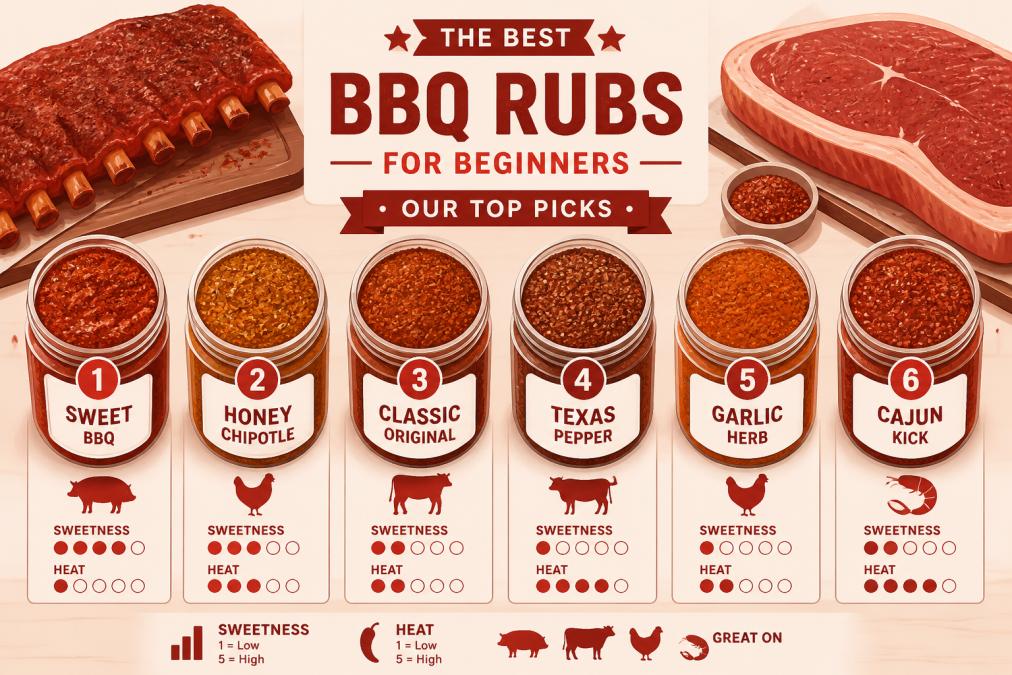
1. Twisted Pepper Co. Jalapeno Lime Rub: Handcrafted, Gluten-Free, Low Sodium
The Twisted Pepper Co. Jalapeno Lime Rub is our top pick for beginners. It solves the problems that frustrate new grillers most: salt overload, hidden gluten, and MSG. What you get instead is a handcrafted spice blend with bright jalapeno heat, citrus lift, and savory depth that works on chicken thighs, pork ribs, shrimp, and roasted vegetables.
The low sodium formulation is genuinely different from most "light" seasonings on the market. The gluten-free, no-MSG commitment matters for households managing celiac disease or MSG sensitivity.
What works: Handcrafted quality, genuinely low sodium, gluten-free, no MSG, bright flavor profile.
Worth knowing: The jalapeno-lime profile is bolder than classic all-purpose rubs. Pair it with a milder base layer if your crowd prefers traditional BBQ flavors.
2. Bad Byron's Butt Rub: Best All-Purpose Pick
Bad Byron's Butt Rub handles pork, beef, chicken, seafood, and vegetables without adjustment. It's a savory, pepper-forward spice blend built on salt, pepper, garlic, onion, and paprika, with clean chipotle heat. Competition pitmasters have trusted it for decades.
The flavor profile sits firmly in the savory camp with just enough heat to keep things interesting. It won't build the sweet mahogany bark that sugar-forward rubs produce, but it creates a beautiful, peppery crust.
Pros: Extremely versatile, balanced flavor, gluten-free, competition-proven. Cons: No sweet component, so less ideal for ribs. The chipotle may be too much for heat-averse cooks.
3. Meat Church Holy Cow: Best for Brisket
Brisket demands a rub that survives 12+ hours of low and slow smoking, builds a thick bark, and tastes balanced at the target temperature. Meat Church Holy Cow was formulated specifically for this challenge.
The Texas-style flavor profile is strong and beef-forward, built to create a deep, crackling crust on brisket, tri-tip, and steaks. It's gluten-free and MSG-free. According to Meat Church's product page, Holy Cow is available in 12 oz, 1 lb, and 5 lb formats.
Pros: Excellent bark formation, authentic Texas BBQ flavor, gluten-free and no MSG, versatile for burgers and chicken. Cons: The bold, beef-forward profile can overwhelm milder proteins.
4. Famous Dave's Rib Rub: Best for Pork Ribs
Pork ribs need a rub that caramelizes without burning, locks in moisture, and delivers classic sweet-smoky flavor. Famous Dave's Rib Rub does exactly that. The sweet and smoky blend with garlic and onion notes was designed specifically for pork.
It's gluten-free, fat-free, cholesterol-free, and low in calories. The sugar-forward formula creates a beautiful crust on ribs and pork chops and is forgiving enough that even uneven application produces good results.
Pros: Award-winning flavor, excellent crust formation on ribs, gluten-free, lighter nutritional profile. Cons: Sugar is the first ingredient, so it can burn at high direct-heat temperatures. Less suited to beef.
5. Traeger Pork & Poultry Rub: Best for Chicken
Chicken is the most unforgiving protein for a poorly chosen rub. The Traeger Pork & Poultry Rub threads this needle with a sweet and savory blend built around honey, paprika, and apple notes that enhance natural flavor without overwhelming it.
It's gluten-free, Kosher, and GMO-free. The apple-honey sweetness forms a nice crust on the smoker or grill without burning, making it genuinely beginner-friendly on chicken thighs, whole birds, and pork tenderloin.
Pros: Balanced sweet-savory profile, gluten-free and Kosher, excellent crust formation on white meats. Cons: May be too sweet for savory-preference cooks. Less effective on red meats.
6. Killer Hogs The BBQ Rub: Best Competition-Style Pick
Killer Hogs The BBQ Rub was developed by the Killer Hogs Championship BBQ Team. Its blend of sugar, salt, and spices is calibrated to create the deep mahogany bark that wins trophies. For a beginner wanting competition-quality results at home, it's a legitimate shortcut.
The balanced sweetness with subtle kick works on pork, beef, and poultry. The visual result alone, that rich mahogany crust, makes a backyard cook look like they know exactly what they're doing.
Pros: Competition-proven, beautiful bark color, versatile across proteins, balanced sweet-heat profile. Cons: Contains MSG, which some households prefer to avoid. The heat level may be too much for those wanting zero spice.
| Rub | Best For | Flavor Profile | Gluten-Free | MSG-Free |
|---|---|---|---|---|
| Twisted Pepper Co. Jalapeno Lime | All-purpose, dietary-conscious cooks | Sweet heat, citrus | Yes | Yes |
| Bad Byron's Butt Rub | All-purpose, any protein | Savory, pepper-forward | Yes | Yes |
| Meat Church Holy Cow | Brisket, beef | Bold, Texas-style savory | Yes | Yes |
| Famous Dave's Rib Rub | Pork ribs, chops | Sweet and smoky | Yes | Yes |
| Traeger Pork & Poultry | Chicken, pork | Sweet, apple-honey | Yes | Yes |
| Killer Hogs The BBQ Rub | Competition-style, all proteins | Sweet heat, mahogany bark | No info | No |
Homemade BBQ Rub Recipe for Beginners
Making your own rub is simpler than most recipes suggest. A good foundational spice blend requires five core ingredients.
Essential Ingredients and Rub-to-Meat Ratio
A foundational homemade BBQ rub is built on this base:
- 2 tablespoons kosher salt
- 2 tablespoons coarse black pepper
- 1 tablespoon smoked paprika
- 1 tablespoon garlic powder
- 1 tablespoon onion powder
From this base, add 1-2 tablespoons of brown sugar for a sweet profile, 1 teaspoon of cayenne pepper for heat, or 1 teaspoon of chili powder for deeper warmth.
Rub-to-meat ratio: A reliable starting point is 1 tablespoon of rub per pound of meat. For brisket and pork butt, increase to 1.5 tablespoons per pound and press the rub firmly into the surface. For chicken, 1 teaspoon per pound is sufficient, particularly under the skin.
Allergy-Friendly and Dietary-Specific Variations
Building your own rub solves allergen and additive issues completely.
Low-sodium variation: Replace kosher salt with a 50/50 blend of kosher salt and potassium chloride salt substitute. This cuts sodium content roughly in half while maintaining seasoning function. Increase smoked paprika and garlic powder to compensate for reduced saltiness.
Nightshade-free variation: Remove paprika, cayenne, and chili powder. Replace with ground cumin, dried thyme, and a small amount of ground ginger for warmth. This herb-forward rub works particularly well on chicken and pork.
Sugar-free variation: Substitute brown sugar with an equal amount of monk fruit sweetener or erythritol. These alternatives caramelize at similar temperatures, so bark formation remains intact.
According to the USDA FoodData Central database, individual spices like garlic powder, smoked paprika, and black pepper are naturally gluten-free, so a homemade rub built from pure ground spices is inherently safe for celiac households.
How to Apply a BBQ Rub the Right Way
Applying a BBQ rub correctly is where most beginners leave results on the table. The technique matters as much as the rub itself.
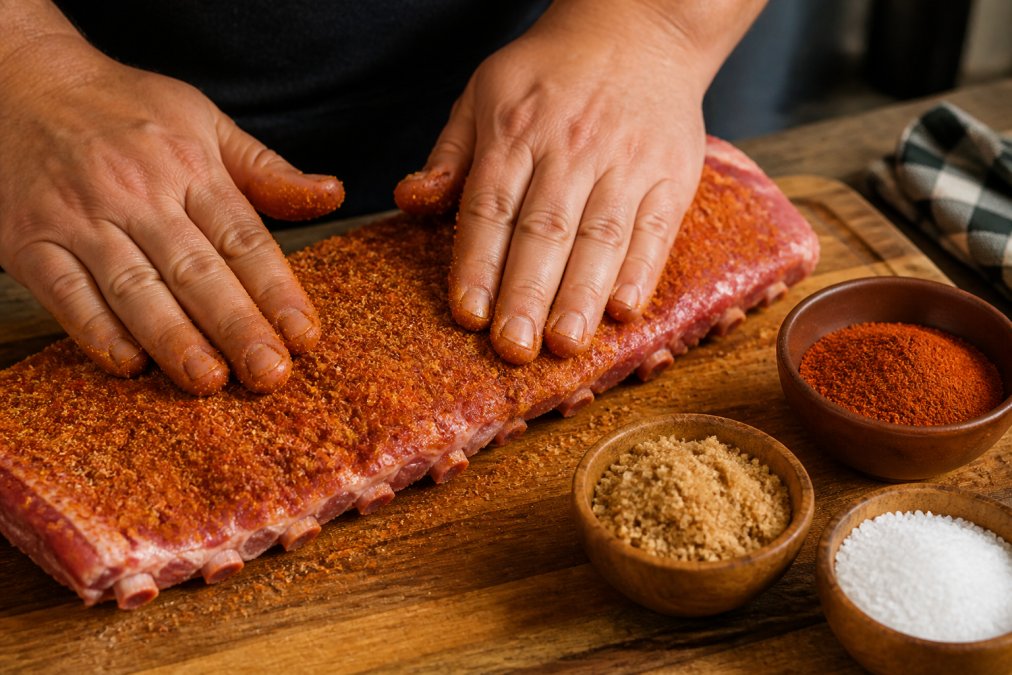
Here's the correct process:
- Pat the meat dry with paper towels. Moisture on the surface dilutes the rub and slows bark formation.
- Apply a binder if needed. Yellow mustard or olive oil creates a tacky surface that helps the rub adhere. The binder flavor cooks off completely.
- Apply the rub generously and evenly, covering all surfaces including sides and ends.
- Press the rub in firmly with your hands. Physical pressure helps the seasoning penetrate the outer layer and creates a denser crust.
- Work the rub under the skin on chicken for direct meat penetration, which produces significantly more flavor.
The Science of Bark Formation
Bark develops through the Maillard reaction, which browns proteins and creates complex savory flavors, and caramelization, which browns sugars and creates sweetness and color. Both require surface dryness and temperatures above 250°F. This is why patting meat dry before applying the rub is non-negotiable, and why low and slow cooking at 225-275°F produces the best bark.
The rub's salt content also plays a role. Salt draws moisture from the meat to the surface via osmosis. Given enough time before cooking, this moisture is reabsorbed along with dissolved spice compounds, creating deeper meat penetration.
How Long to Leave Rub on Meat Before Cooking
The ideal time to leave a rub on meat before cooking depends on the cut and cooking method.
General guideline: A minimum of 30 minutes at room temperature allows the salt in the rub to begin drawing moisture to the surface and starting the osmotic process.
Overnight (8-12 hours): Leaving the rub on overnight in the refrigerator, uncovered, produces noticeably better results on large cuts like brisket and pork butt. The extended contact time allows deeper seasoning penetration, and the uncovered surface dries out slightly, accelerating bark formation.
The 45-minute problem: There's a window between 30 minutes and 1 hour where the salt has drawn moisture to the surface but it hasn't yet been fully reabsorbed. Cooking in this window produces a slightly wetter surface. If you're short on time, aim for under 30 minutes or over 1 hour.
| Cut | Minimum Rest Time | Ideal Rest Time | Maximum Benefit |
|---|---|---|---|
| Chicken pieces | 30 minutes | 2-4 hours | 8 hours |
| Pork ribs | 1 hour | 4-8 hours | Overnight |
| Pork butt | 2 hours | Overnight | 24 hours |
| Brisket | 2 hours | Overnight | 24 hours |
| Steaks | 30 minutes | 1-2 hours | 4 hours |
Common Mistakes Beginners Make with BBQ Rubs
Using too little rub. A light dusting produces pale, under-seasoned meat. Cover the surface generously, press it in, and don't be shy about the sides and ends.
Skipping the binder. Yellow mustard or a thin coat of olive oil dramatically improves how well the rub adheres to the meat. Skipping this step leads to rub falling off during handling.
Applying rub to cold meat straight from the refrigerator. Cold meat placed directly on the grill or smoker creates condensation, which washes away the rub. Let the meat sit at room temperature for 30-45 minutes after applying the rub before cooking.
Choosing the wrong rub for the protein. A beef-forward rub on chicken produces an overpowering result. A sweet pork rub on brisket creates a crust that burns before the internal temperature reaches target.
Opening the smoker lid too often. Every time the lid opens, the cooking environment resets and the surface moisture that bark needs to evaporate is replenished.
According to the USDA's safe minimum internal temperatures guide, pork should reach 145°F and poultry 165°F before serving, regardless of how good the bark looks.
Getting the right rub is only half the equation. The other half is having a rub you can trust to deliver consistent results without hidden additives, excess sodium, or allergens that complicate your cooking. Twisted Pepper Co.'s handcrafted, gluten-free, no-MSG BBQ rubs are built specifically for cooks who want genuine flavor without compromise. With low and light sodium formulations and fast shipping to your door, it's easy to start cooking better tonight. Shop the full lineup at Twisted Pepper Co. and find the rub that fits your grill.
Frequently Asked Questions
What is the best all-purpose BBQ rub for beginners?
For beginners, an all-purpose rub with a balanced blend of kosher salt, coarse black pepper, garlic powder, onion powder, and smoked paprika covers most meats well. Bad Byron's Butt Rub is a widely trusted option for its savory, pepper-forward profile that works on pork, beef, chicken, and vegetables. If you prefer a handcrafted, gluten-free, low-sodium option, Twisted Pepper Co.'s BBQ rubs are a great starting point that lets you control seasoning levels.
Should I make my own BBQ rub or buy store-bought?
Both approaches work well for beginners. Store-bought rubs offer convenience and consistent results right away, and many competition-proven blends deliver excellent flavor without any guesswork. Homemade rubs give you full control over sodium, sugar, and heat levels, which matters if you have dietary restrictions or want to experiment. A good strategy is to start with a quality store-bought rub to understand the flavor profile you like, then adjust your own homemade version from there.
What are the essential ingredients in a basic BBQ rub?
A foundational dry rub for beginners typically includes kosher salt, coarse black pepper, smoked paprika, garlic powder, onion powder, and brown sugar. The salt draws out moisture and helps the rub penetrate the meat, while sugar promotes caramelization and crust development during cooking. Cayenne pepper or chili powder adds heat. From this base, you can adjust ratios to shift the flavor profile toward sweeter, more savory, or spicier results depending on your preference and the cut of meat.
Do BBQ rubs go bad?
Dry rubs do not spoil in the traditional sense, but they do lose potency over time. Shelf stability depends on storage conditions. Kept in an airtight container away from heat and moisture, most spice blends stay at peak flavor for 6 to 12 months. After that, the seasoning is still safe to use but the aroma and flavor will be noticeably weaker. Always check for clumping or off-smells as signs that moisture has gotten in and the blend should be replaced.
What is the difference between a dry rub and a wet rub?
A dry rub is a blend of dry spices and herbs pressed directly onto the meat's surface. A wet rub combines those same spices with a liquid binder such as yellow mustard, olive oil, or Worcestershire sauce to form a paste. Dry rubs are better for developing a firm bark during low-and-slow smoking because the surface stays drier. Wet rubs add extra moisture and help the spice blend adhere on cuts where the dry mix tends to slide off, such as smooth-skinned chicken.
This article was written using GrandRanker